

With R$3 billion in net revenue projected for 2025 and a strategic plan to reach R$10 billion in six years, the Brazilian pharmaceutical company Libbs projects growth in the development of a vaccine production line, in addition to expanding its presence in the biosimilars market.
In this context, there is the creation of the first national vaccine against Covid-19, a disease that still kills in Brazil, even though in a scenario far removed from the peak of the pandemic in 2020 and 2021. All those used in the country during the crisis, such as those from Pfizer and AstraZeneca, came from abroad.
Even Coronavac, whose final production and distribution phase was the responsibility of the Butantan Institute in São Paulo, used raw materials from China, produced by the pharmaceutical company Sinovac.
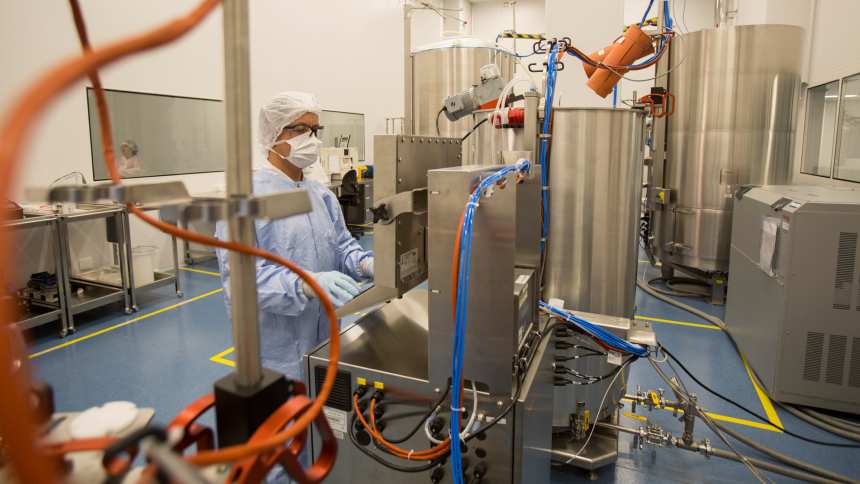
“We are producing the raw material for clinical research. We had an industrial plant that perfectly suited the UFMG initiative,” says Marcia Martini Bueno, director of institutional relations at Libbs, to NeoFeed . The first batches are already being produced.
The pharmaceutical company's idea is that, after this stage, it will take over the bottling and total production of the vaccine, based on a new contract with UFMG, which is still to be discussed. The development of the active pharmaceutical ingredient (API) was funded by the Financing Agency for Studies and Projects (Finep), of the Ministry of Science and Technology.
“The biggest bottleneck was precisely the production of the active pharmaceutical ingredient (API), since there was no factory in Brazil capable of developing this product,” says Anna Guembes, director of innovation and business development at Libbs. “And now we are evaluating the next phase, which is the production of the vaccine.”
The investments for this have already been made. The company invested R$ 630 million in the development of Biotec, which is the company's main factory in Embu das Artes (SP), and in the construction of a pilot plant, used for the production of the vaccine's active pharmaceutical ingredient (API). The pilot unit was inaugurated in December 2024.
According to the company, there is capacity, initially, following the pilot plant, to include new lines, should Libbs actually close the contract for the effective production of the Covid-19 vaccine, with the delivery of the material ready to be used.
“We have the possibility of including new manufacturing reactors. And there are already projects for other types of medicines. Libbs has the capacity to expand its capabilities. And we will certainly make new investments, because there are many opportunities regarding vaccines,” says Guembes.
Even so, the pharmaceutical company has already been prospecting land near the factory and in other cities, precisely to expand production volume by creating a specific line for vaccines.
Libbs already has a partnership with the Bio-Manguinhos Institute for the bottling of the yellow fever vaccine. In this case, the pharmaceutical company receives the active pharmaceutical ingredient (API) and produces the vaccine. Last year, the company bottled 12.8 million doses.
Of this total, 3.3 million doses were distributed in Brazil and 9.5 million were sent to Africa and Latin America, in partnership with the Pan American Health Organization (PAHO) and the United Nations Children's Fund (UNICEF).
The addressable vaccine market in Brazil explains Libbs' interest in the segment. Data from IQVIA shows that the private sector registers an annual revenue of R$ 1.6 billion.
In the public sector, the National Immunization Program (PNI) currently distributes more than 50 vaccines in 36,000 vaccination centers. Annually, approximately 350 million doses are distributed to municipalities.
According to data from the Ministry of Health, the country recorded 1,536 deaths caused by Covid-19 in 2025, of which 10,427 were confirmed severe cases. Between mild and moderate cases of the disease, there were 430,086 registered cases.
Weight-loss pens are also on the radar.
And, like many national pharmaceutical companies, Libbs plans to enter the market for GLP-1 analog drugs, the so-called slimming pens, starting in 2026.
“Like all companies in the sector, we are keeping a close eye on this market, also with a vision of advancing public health. Obesity is a disease that needs to be treated, as it causes other illnesses in patients,” says Guembes.
Libbs submitted registration requests to Anvisa for the production of liraglutide, whose patent expired in November 2024, and semaglutide, currently exclusive to Novo Nordisk with Ozempic, and whose patent expires in March 2026.
It is not yet defined whether, with the approval, the company itself will produce the pens in its factory in the city of São Paulo, or whether it will license the product through an agreement with a foreign company. "We will evaluate what is most economically viable," says the innovation director.
Libbs' plan also includes increasing the volume of products in its portfolio, with more investment in research and innovation. Currently, Libbs has 98 product brands in seven specialties, including four biosimilars.
By 2032, R$ 1 billion will be invested in projects for the development of new medicines. The projected pipeline includes 50 products.