

Approved by the Chamber of Deputies in early December, the bill that punishes habitual debtors will be signed into law by President Luiz Inácio Lula da Silva by the end of the year. The measure is seen as the main opportunity to truly stifle the economic side of organized crime.
According to federal deputy Júlio Lopes (PP-RJ), president of the Parliamentary Front for a Competitive Brazil, the enactment of the measure will ensure the financial unviability of groups that are at the top of the list of tax evaders in the country, such as the Manguinhos Refinery ( Refit ).
"She will have great difficulty surviving, given the size of her debt. It will be quite difficult to continue operating," says Lopes, in an interview with NeoFeed .
"Those who are habitual debtors, due to the stock of debts they manage, will generally find their operations unfeasible," he explains.
The company, targeted by the Federal Police's "Hidden Carbon" and "Lobato Well" operations, has debts exceeding R$ 24 billion in taxes owed to the governments of São Paulo and Rio de Janeiro, in addition to federal taxes.
Before the action, Refit was responsible for supplying 10% of the São Paulo market and 20% of the Rio de Janeiro market. The Superior Court of Justice (STJ) suspended the company's operations.
Data from the Brazilian Institute of Petroleum and Gas (IBP) shows that the company, while it was operating, failed to collect R$ 15 million in taxes per day in São Paulo and Rio de Janeiro.
Recently, the president of the Ipiranga network , Leonardo Linden, told NeoFeed that the company could open 700 gas stations per year, double the current number of openings, if it weren't for the significant presence of organized crime in the sector.
According to the federal congressman, however, despite the progress the project will bring, further progress is necessary. One solution, he says, is to implement the National Fuel System Operator, a project he authored that should be voted on in 2025.
The model is similar to that of the National Electric System Operator (ONS) and ensures real-time monitoring of the entire fuel chain, identifying the quality and quantity of the product.
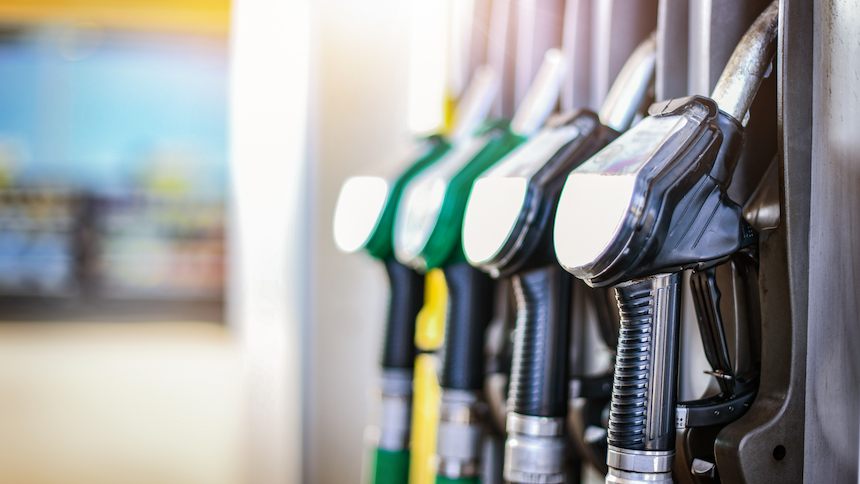
"We want to check online how the 130,000 fuel pumps are working at the 41,000 gas stations in Brazil," says Lopes.
Below are the main excerpts from the interview:

With the approval of the bill targeting habitual debtors, what is the practical path to eliminating organized crime from important sectors of the economy?
It will be sanctioned by the President of the Republic and regulated by federal government agencies. With this implementation, we will see the eradication of several companies operating in the markets with the deliberate purpose of fraud. And then we will have a major cleanup, especially in the fuel market, but also in the cigarette and beverage markets.
Is the fraud linked to products with high taxes?
Wherever there is a very high tax rate, there is an opportunity for these tax evaders to engage in fraud. These markets will be the main beneficiaries. It's impossible to compete in a sector with 30% or 35% taxation, where one pays tax and another doesn't. This competitive imbalance needs to end. They were choosing to commit fraud.
Can we say that these irregularities will end in Brazil?
No. Fraud won't end, but it will improve. They will have to invent another way to proceed. But the leniency towards habitual debtors will end. The crime of tax evasion is like liquid; it seeps through layers until it completely infiltrates. It won't end, but there will be a major interruption. And these criminals will have to infiltrate somewhere else. The measure will prevent these criminals from opening new CNPJs (Brazilian company registration numbers) and continuing to operate.
Will the bill concerning habitual debtors, when it comes into effect, mean the end of Refit?
I don't know if it's the end, but it's a fact that it will have great difficulty surviving, given the size of its debt. It will be quite difficult to continue operating. Those who are habitual debtors, due to the stock of debts they manage, will generally find their operations unviable.
"I don't know if it's the end, but it's a fact that it [Refit] will have a lot of difficulty surviving, given the size of its debt. It will be quite difficult to continue operating."
But will these measures also apply to the owners of these companies?
Without a doubt. When there is a real impossibility of opening new CNPJs (Brazilian company tax IDs), it's because the original CPF (Brazilian individual tax ID) is blocked. The block applies not only to the CNPJ but also to the CPF. They will not be able to conduct new business.
What should be the next steps to further stifle Brazil's major tax evaders?
We need to create laws for digital controls. I am working to get a bill I authored approved this year that creates the National Fuel System Operator. I believe that fraud will always happen. But if you give the fraudster less time, the less likely they are to succeed. When there is this digital control, there is less chance of fraud.
Would the model for the National Fuel System Operator be similar to that of the National Electricity System Operator?
Exactly. Today we have built a very high level of consensus among stakeholders in the fuel sector. The project ensures the digitalization of the entire fuel chain, through a real-time dashboard, from import to manufacturing and distribution. It is possible to verify the quality and quantity of products. With this, we will have permanent auditing, reducing the time available for tax evaders.
Would this change any of the responsibilities of the National Petroleum Agency?
Nothing would change. My project doesn't replace any of the ANP's responsibilities. It continues with all its duties. What the National Fuel System Operator will do is monitor all this transportation in real time.
Does this control extend all the way to the fuel pump?
We want to check online how the 130,000 fuel pumps at 41,000 gas stations across Brazil are working, measuring the quality and quantity of fuel that goes directly into vehicle tanks.
And why hasn't this control existed until now?
Because it was in the interest of many people not to have this control. These billion-dollar frauds benefited many people. But now we are evolving. And we will have this measure in Brazil.