


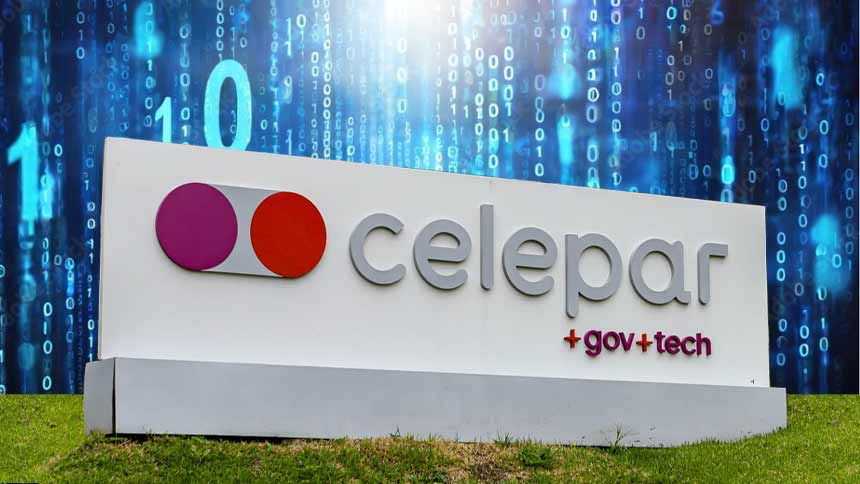
In recent years, privatization processes in the country have involved companies marked by chronic underinvestment, operational inefficiencies, or an inability to keep up with the competition – cases ranging from state-owned sanitation companies to energy companies.
The privatization of the Paraná Information and Communication Technology Company (Celepar), a state-owned company whose more than 35 applications automate various public services in the state governed by Ratinho Jr., however, falls into a different category.
Technically sound and with financial indicators considered to be of "excellent performance" by market stakeholders, the Paraná-based technology company faces a rare dilemma in the state-owned sector: it is solid, but has nowhere else to grow within the constraints of the public model.
“Although solid and profitable, Celepar faces a rapidly transforming technology market with strong international competitors,” says Alex Canziani, Paraná's state secretary of innovation and artificial intelligence, in an interview with NeoFeed .
Therefore, in Canziani's view, the privatization of Celepar is not an operation to "fix" the company, but rather to make it a larger, more competitive player capable of offering solutions beyond the government.
“We detected that it functions like an autonomous entity, with rigidity and an outdated culture, hindering modernization; in other words, we concluded that a state-owned IT company cannot compete in the current market,” says Canziani.
The auction, which has been subject to many twists and turns, is scheduled for March 17th at B3, according to the announcement published in early February. The auction will be based on the highest bid to acquire, in a single lot, all shares held by the State. The Paraná state government is relying on Bradesco BBI to structure and execute the sale of the asset.
The minimum reference value was set at R$ 1.3 billion. The winning bidder will inherit 121 contracts from Celepar with government entities, which generate R$ 2.6 billion for the company's coffers.
Interest should be high, judging by the financial performance of Celepar, a mixed-economy company with around a thousand employees, gross revenue of R$ 575 million and a 30.6% EBITDA margin.
Total debt is R$354 million, mostly in escrow deposits, deferred taxes, and other long-term liabilities. Total assets are R$717 million, meaning the company is not leveraged. All data is from 2024.
A financial market manager who wished to remain anonymous stated that the auction is expected to be competitive. "Since the bidding rules require technical IT expertise from competing companies, the likely outcome is the formation of consortia involving technology companies and investment funds or banks," the source said.
In August of last year, shortly before the process was halted by an action from the TCE-PR (Court of Accounts of Paraná), the government of Paraná announced that multinational companies from Italy, Canada, and Ireland, two major banks, and some technology groups in the country had expressed interest in Celepar.
At the time, the state government opened a data room for potential buyers with a range of technical, financial, and operational information about the company. NeoFeed learned that, with the confirmation of the auction, banks, asset managers, and private investors once again contacted the state government.
After the process is completed, the State will retain a special class of share ( golden share ), a mechanism that ensures veto rights over strategic decisions. However, the golden share does not grant a seat on the board nor veto power over other operational decisions.
The state government, however, included in the tender the requirement to maintain the data centers – physical data storage structures – as well as the company's headquarters, in Paraná for at least ten years.
Founded in 1964 as the first company of its kind in Brazil, Celepar is also expected to be the first to be privatized, potentially serving as a model for other states and, in the future, for the federal government.
"There is also market interest in following the process, aiming for new auctions of this type of asset, which should indeed attract investors, including from abroad," says this financial market manager.
Among potential state-owned companies seen as candidates for privatization, Prodesp is the most frequently mentioned. Prodam (AM), Prodepa (PA), ATI-PE (PE), and Prodemge (MG) are also considered privatizable.
Brazil's largest state-owned IT company, managed by the São Paulo state government and whose services include Poupatempo (a citizen service center), Prodesp was included in a privatization plan during the administration of Governor João Dória (2019-2022). However, the plan faced resistance and did not move forward.
Data protection and controversies
The unprecedented privatization of a state-owned data company has generated months of controversy regarding the role of the State in the management of technology, citizens' personal data, and digital services. After all, this is the first public technology company being privatized in the era of the General Data Protection Law (LGPD).
Secretary Canziani states that the state government has taken all precautions to preserve the protection of citizens' data, as guaranteed by the LGPD (Brazilian General Data Protection Law), which prohibits its sale by the future private management company.
“The citizen is the data owner; the State, the controller; and Celepar, the operator. This structure will be maintained,” says Canziani. In this configuration, according to the LGPD (Brazilian General Data Protection Law), the controller decides what is done with the data, while the operator is limited to executing the processing, according to the controller's terms.
Public safety data, as per a specific article of the LGPD (Brazilian General Data Protection Law), has been segregated and will remain under the exclusive control of the State, not being managed by the privatized company.
According to Rony Vainzof, partner at the law firm VLK Advogados and specialist in data protection, the fear that personal data will lose protection with the privatization of Celepar is unjustified.
"From the perspective of the LGPD (Brazilian General Data Protection Law), public companies and mixed-economy companies, when operationalizing public policies and within the scope of their execution, will receive the same treatment afforded to public bodies and entities," says Vainzof.
According to him, if the future privatized company continues to operate merely as a contractual executor for the State, with rigid governance, active oversight, and robust control clauses, the risk is manageable. "That is what will happen, by all indications."
The privatization process of Celepar, initiated in 2024, went through public hearings, approval in the Legislative Assembly, and analysis by the State Audit Court (TCE), which temporarily suspended it. After addressing all requests and overturning three class-action lawsuits, two direct actions of unconstitutionality (ADIs), and two writs of mandamus, the state government published the tender notice.
There is still a Direct Action of Unconstitutionality (ADI) pending before the Supreme Federal Court (STF), which the government does not seem concerned about, as the Attorney General's Office (AGU) has expressed its support for state jurisdiction. The Voluntary Dismissal Plan (PDV), which was suspended by the courts, continues its procedure and awaits a decision.