

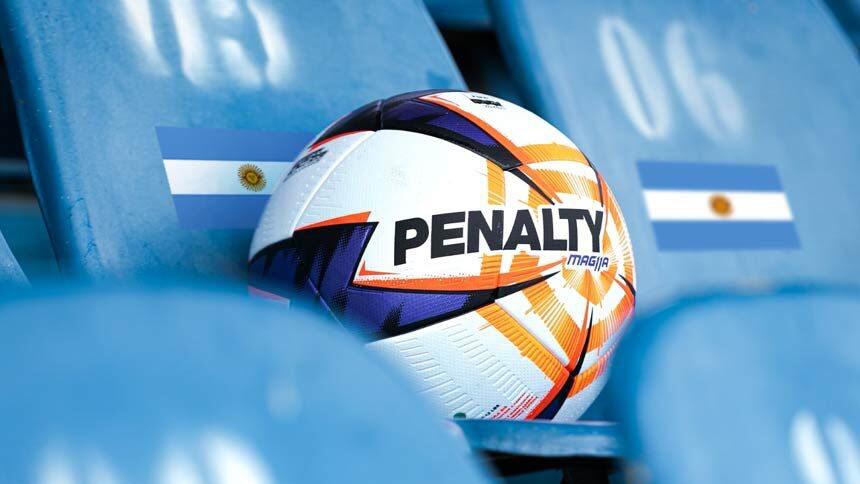

After leaving the Argentinian market in 2024 due to the country's economic uncertainties at the time, Penalty , a sporting goods brand controlled by the Cambuci company, decided to return to Lionel Messi 's homeland. The company will resume operations in Argentina starting in 2027.
The main argument to explain the return lies in the labor issue. While Brazil is moving towards allowing a reduction in the workweek from 44 to 40 hours, Argentine President Javier Milei recently managed to approve his reform in the sector, which extends the workweek to up to 48 hours.
“This return is already in our plan, taking into account the maintenance of the policy that is being implemented there. The measures taken by the government are very interesting and the country will take off,” says Roberto Estefano , chairman of the board of Cambuci and founder of Penalty, in an interview with NeoFeed .
According to him, with this change, the cost of production in Argentina will be lower than in Brazil, making the local market attractive to companies again.
“We are a developing country. We are not in the first world. There is a rule, which always works, that those who work harder, earn more. There's no discussion. China and Vietnam, which work very hard, are growing. And Brazil is going in the opposite direction. This is shooting ourselves in the foot,” says the businessman.
Initially, according to the chairman, the entry will be through the importation of products from the company's three Brazilian factories, two in Bahia and one in Paraíba.
With the recovery consolidated, the trend is to establish its own factory in the country – but possibly in 2028. This involves the manufacture of footwear and balls, one of the company's main products in terms of volume and revenue.
At the peak of its time in the neighboring country, Penalty's total revenue came from the Argentinian market. At the time, the company had outsourced production and imported finished products into Brazil.
“Since there is a free market in Argentina, because of Mercosur, the initial focus, in this recovery, is indeed to send the items there, from our own operation. But we will be able to have a factory in Argentina to be very competitive in the local market,” says Estefano.
The plan is that, upon returning to the country, Cambuci will be able to make the Argentinian market once again represent between 10% and 12% of its total revenue. Currently, the company has only one distributor in Argentina, which represents a small volume of its revenue.
One point in favor of this return is that the majority of Argentina's population, which today numbers 46 million inhabitants – similar to that of the state of São Paulo – is passionate about sports, especially soccer. This positions them as major potential consumers of Penalty products.
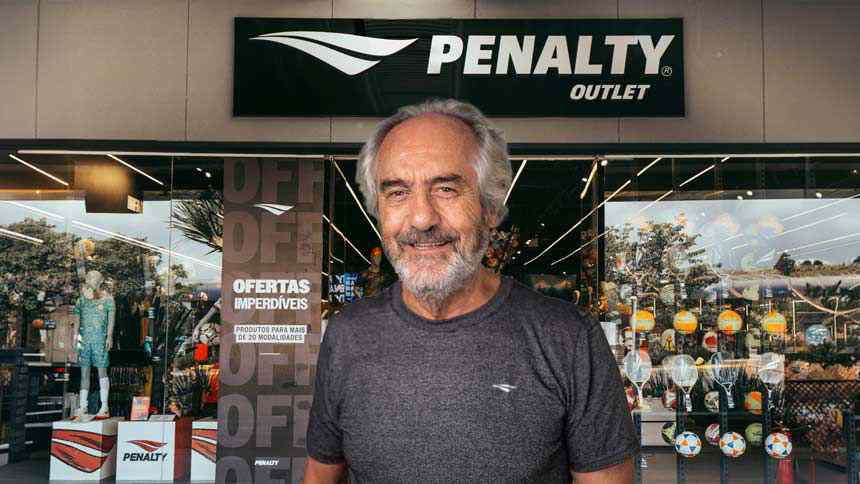
“Even in rugby , a sport that doesn’t exist in Latin America, they are a powerhouse. They also love tennis. Not to mention the national teams and the Argentine national football team itself. It’s in their DNA. You can’t ignore this market,” says the founder of the Brazilian brand.
Although the focus now is precisely on returning to Argentina, the founder of Penalty does not rule out, soon after, considering expansion into Paraguay, as several companies have been doing, such as Lupo , in the textile sector, and Be8 , in the biofuel segment.
The company once had a unit in the country, focused on the clothing industry, with raw materials coming from China. But, according to him, the production line faced difficulties in color and fabric matching. Therefore, manufacturing returned to Brazil.
“Paraguay is indeed an alternative. The workforce there is good and productive. Taxes are lower and electricity is cheaper. Brazilian companies that are going there are satisfied,” says Estefano. But this should only happen in at least two or three years. “It’s a future path.”
More labor in Brazil
In Brazil, according to Estefano, the challenge is dealing with the impact of increased costs from this new work schedule model, advocated by the government of Luiz Inácio Lula da Silva. The measure was approved by the Chamber of Deputies by a large margin and is now being processed in the Senate, with no date yet set for a vote.
“With the increased cost, many people will consider the possibility of importing and ceasing production in Brazil. This change directly increases labor costs by 10%. And we no longer have productivity at the international level,” says Estefano.
Penalty has around 2,500 employees and, according to the chairman of the board, the company already operates on a 5x2 schedule, distributing the hours that would normally be for Saturdays throughout the week.
“It wasn’t worth turning on compressors and boilers for a workday of only four hours. So, we made an agreement and increased the work week,” he explains. But with the change, it will be necessary to change the model, which could mean more hiring. And more costs.
Of Penalty's product volume, soccer balls alone represent 40% of the total. Footwear accounts for 30%, and apparel the remaining 30%. The company manufactures three million balls annually, which are sourced from Bahia.
The company plans an annual capital expenditure of R$ 30 million, which involves the development of new technologies in balls and clothing, and new machinery. "Even with high interest rates, we have to invest. We can't stand still. And the company has the cash for it."
Although he considers it difficult to achieve, precisely because of these challenges, Estefano still believes in a 10% growth in revenue by 2026. Last year, the company closed with R$ 383.1 million.
In the first quarter of 2026, the company recorded net revenue of R$ 99.2 million, a 1.3% increase over the same period of the previous year. Net profit, at R$ 19.7 million, grew by 3.1%. EBITDA, however, showed a decline of 12.4%, reaching R$ 20.5 million.
In the accumulated total for 2026, CAMB3 shares on the B3 stock exchange registered a 3.2% drop. The market value of Penalty's parent company is R$ 408 million.