

Petrobras President Magda Chambriard said on Wednesday, April 1st, that the company is studying the possibility of making Brazil self-sufficient in diesel oil production within five years. Currently, the state-owned company produces about 70% of Brazil's demand for the commodity.
According to her, Petrobras' current business plan already foresaw increasing diesel production by 300,000 barrels/day, reaching 80% self-sufficiency.
“Given the new global scenario, the company is reassessing its goal to reach 100% within the same period,” Chambriard stated during the CNN Talks infrastructure event in São Paulo, adding that this production increase is “an ongoing internal discussion,” driven by Petrobras’ ability to overcome challenges.
The executive stated that Petrobras' domestic oil and gas production capacity already protects Brazil from international energy fluctuations and crises, bringing stability to the domestic market.
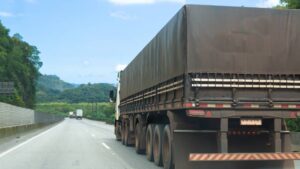
"For the consumer, it means the certainty that external volatilities will not haunt us, because that is our policy," he stated, recalling the dependence of road transport, especially trucks, on diesel. "For our shareholder, it is the guarantee of a market that is perhaps the largest consumer market in Latin America."
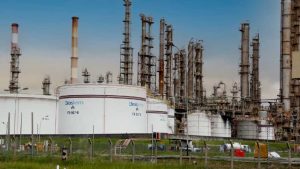
To achieve diesel self-sufficiency goals, Chambriard said that Petrobras is already investing in expanding refineries such as the Abreu e Lima Refinery (RNEST), in the Suape Complex, in Pernambuco, which will have its capacity increased to approximately 300,000 barrels/day.
In addition, the Duque de Caxias Refinery (Reduc), in Rio de Janeiro, will increase its production from 240,000 to 350,000 barrels of oil per day. Furthermore, the units are being adjusted to maximize diesel production at the expense of other derivatives, such as fuel oil.