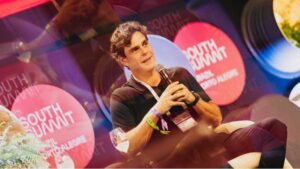


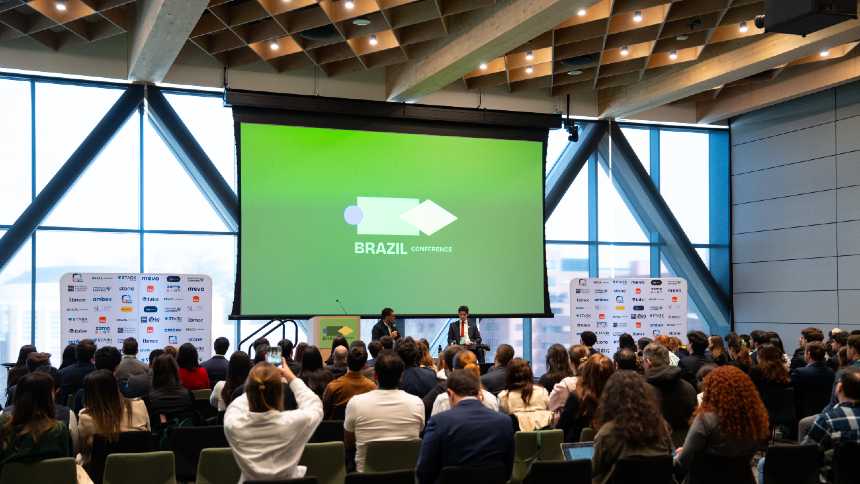
Boston and Cambridge (USA) - It wasn't just the sub-zero temperatures that were present this weekend in Boston and Cambridge, USA, during the 12th Brazil Conference . More than a thousand registered participants attended the event in person, held on the premises of MIT and Harvard University.
Organized by Brazilian students from the two institutions and 65 other American universities, the conference brought together more than 60 panelists – from Mansueto Almeida, Cristovam Buarque and Bernard Appy to MMA fighter Charles do Bronx, singer Vanessa da Mata and five-time world champion Cafu.
From this traditionally diverse program, as well as the series of advice given to those present, two themes dominated the discussions: the 2026 elections and artificial intelligence . And, as usual, the debates drew parallels between what is happening in Brazil and, especially, in the United States.
Check out some of the highlights of the Brazil Conference 2026 below:
Calcification and "swing voters"
Felipe Nunes, PhD in Political Science and founding partner of the Quaest research institute, emphasized that Brazilian elections are becoming increasingly similar to American elections, where "everyone knows how California and Texas will turn out."
According to him, in the Brazilian version, taking into account the last electoral cycles, 70% of voters in the Northeast region voted for candidates from the Workers' Party (PT), while about 65% of the votes in the South and Midwest regions went to the strongest anti-PT candidate.
"This is building what I call a calcification in the Brazilian electorate, which causes the important electoral geography to remain in those spaces that Americans call swing voters," he stated.
Nunes then "chose" which postal codes could be the deciding factors in this year's elections: São Paulo, the metropolitan region of Belo Horizonte, the Baixada Fluminense, and, in the Northeast, the Camaçari region. "Ultimately, by looking at these regions, we will understand where things are headed."
From polarization to the invisible
Iracema Rezende, director of IR Pesquisas, also addressed this scenario, stating that the path to winning this year's election will be precisely to move beyond the extreme and growing polarization that has marked discussions in the country in recent years.
“It’s going to be a war of rejection,” Rezende stated. “And I think the winner will be the one who manages to engage, connect with, and get the pulse of that undecided voter, the disengaged one. And the invisible ones who want change.”
AI at the heart of the election. For better or for worse.
Duda Lima, the marketing strategist behind Jair Bolsonaro's 2022 campaign and São Paulo Mayor Ricardo Nunes' 2024 campaign, highlighted that artificial intelligence (AI) will play a fundamental role in Brazil in 2026, especially in connecting with this electorate.
“In my assessment, what will happen is a great leap forward, similar to what occurred in the US with social media during Obama's election,” he stated. “That's what I see now in the world, in electoral marketing, starting in Brazil.”
Conversely, he highlighted that the rapid advancement and relevance of AI in the electoral process must necessarily be accompanied by tools that minimize the risks inherent, on the other hand, in the use of this technology – in particular, in the production and dissemination of fake news.
"We'll need AI software precisely to identify whether something is AI or not. And at a rapid speed," he said. "So, if we can find a mechanism to stop this, we'll remove the incentive for those who are going to spread fiction so that people start voting on fiction."
Cambridge Analytica version 2026?
Mat Velloso, former vice president of product and AI/Machine Learning development at Meta and Google DeepMind, was another name to point to the misuse of AI as a risk to the 2026 electoral process in Brazil. And to reinforce this point, he referenced a recent case in the US.
“I’m afraid of manipulation in the elections. There are businessmen who will get rich selling Brazilian democracy,” said Velloso. “What you saw with the Cambridge Analytica case is nothing.”
Back to 1,500?
Velloso also emphasized that this ease of manipulating the population is a matter of sovereignty, not the creation of national language models in this space. He added that Brazil, whether in elections or in a broader spectrum, faces great risks under the effects of this wave of artificial intelligence.
“I’ve always been very enthusiastic about AI. Now, that’s starting to be replaced by fear,” he said. “Because Brazil is nowhere near prepared and doesn’t have a strategy. And that starts at the political level. I don’t think Brazilian politicians are qualified for what we’re going to face.”
He cited that China, for example, has plans spanning 10, 15, 50, and 100 years in preparation for this increasingly AI-driven future, which involve, among other things, increasing its energy capacity. Meanwhile, in Brazil, polarization overshadows the issues that should actually be discussed.
“What fills me with despair is that we’re going to see these countries take off 100 years in five. It’ll blink, and suddenly we’re back to 1500, where you have the colonizers and we’re the jungle,” he said. “So, look for qualified politicians. This will be this country’s last chance to become a first-world country.”
Call-ups
Connecting this to Velloso's speech, Francisco Gomes Neto , CEO of Embraer, highlighted what is still needed for Brazil to produce more examples of companies like the aircraft manufacturer, capable of competing with their rivals worldwide.
“What’s lacking is continuity. Perhaps it’s a technological ambition on the part of public and private sector leaders to think in terms of decades, not short cycles,” he stated. He took the opportunity to make a call to action to the students present at the event.
"You, who are having the opportunity to study in these islands of excellence, can be the leaders of the future who will help build this long-term vision to promote Brazil's technological development in strategic sectors, just as it was in aviation," he added.
Along the same lines, but in his own "square," marketer Duda Lima made an appeal to the audience: "I know there are many doors and windows for you here," he said. "But look at politics with care. Brazil needs minds, brains, and people like you. Please, get into politics."