

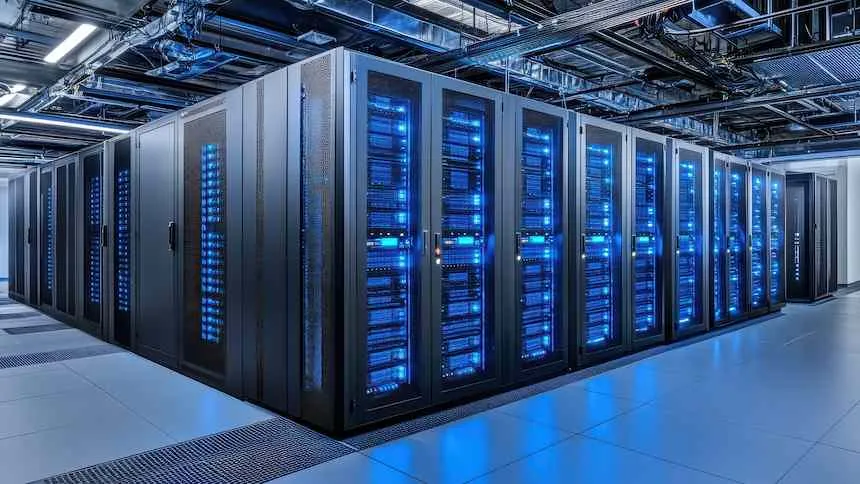
The rapid advancement of cloud computing and artificial intelligence is redefining the global map of energy consumption. Estimates from the International Energy Agency (IEA) indicate that global energy demand could grow by up to 35% by 2035, primarily to meet the expansion of data centers.
This trend is also occurring in Brazil , where there is a shortage of data centers to run all the cloud services used in the country. According to a report by Research and Markets, becoming self-sufficient would require a 250% increase in installed data center capacity .
In this data center race, the financial information platform TradeMap indicates that CPFL could be one of the winners among the electricity companies listed on the B3 (Brazilian stock exchange).
In a report that NeoFeed had exclusive access to, the platform's economic data team points out that the company should benefit from its exposure to São Paulo and Rio Grande do Sul, two of the three states with the largest number of data centers.
According to a survey by TradeMap, of the 195 data centers installed in Brazil, 95 are in São Paulo and 13 in Rio Grande do Sul.
The report also highlights that CPFL has an average tariff of R$ 0.72/kWh [kilowatt hour], below the national average of R$ 0.78/kWh, which may encourage new projects near the areas it serves.
"The company acknowledges that the rapid expansion of data centers in Brazil is already posing unprecedented challenges to the electrical infrastructure, with requests totaling 8 GW [gigawatts] from just two distributors in the interior of São Paulo state," says TradeMap.
Precisely because of the price of energy, Copel is also seen as one of the most benefited. The company, privatized in 2023, has the lowest average tariff among those listed, at R$ 0.64/kWh, and serves Paraná, with 12 installed data centers. "It is a company that stands out as one of the most benefited by digitalization and artificial intelligence."
Another listed company that TradeMap sees as having the potential to benefit from this new cycle, although it has lower liquidity, is Celesc. Based in Santa Catarina, a state with 6 data centers, the company has the second lowest energy tariff among the listed companies, at R$ 0.70/kWh.
"Companies with lower tariffs may be more attractive for attracting new investments in energy-intensive sectors, such as data centers, which increases demand and distribution volume," the report points out.
On the other hand, TradeMap points out that Cemig is more on the margins of this movement, due to having a more expensive average tariff of R$ 0.86/kWh and being outside the geographical area with the highest concentration of data centers. Minas Gerais, which is the fourth largest state in the country in terms of territorial extension, has 9 data centers and one of the most expensive energy tariffs in the country.
"Energy companies with average tariffs below the national average are more competitive in attracting new electricity-intensive contracts, such as data center installations, given their greater attractiveness to large consumers," says TradeMap.
In international comparisons, Brazil occupies an intermediate, yet competitive, position in the global race for data centers. With a land area of 8.5 million km², an average energy price of US$ 0.16/kWh, and 195 data centers, the country combines significant physical scale with lower energy costs than traditional European economies.
Countries such as Germany (US$ 0.44/kWh, 486 data centers), the United Kingdom (US$ 0.41/kWh, 497 units), and Italy (US$ 0.43/kWh, 209 units) concentrate a large number of facilities, but face significantly higher energy prices and territorial limitations, which tends to restrict future expansion.
Countries with cheaper energy, such as China (US$ 0.08/kWh, 379 data centers), India (US$ 0.07/kWh, 270) and Russia (US$ 0.07/kWh, 180), have large land areas, but face regulatory and geopolitical challenges.
The United States, the largest global hub, is home to 4,098 data centers and operates with an average energy price of US$0.19/kWh.