


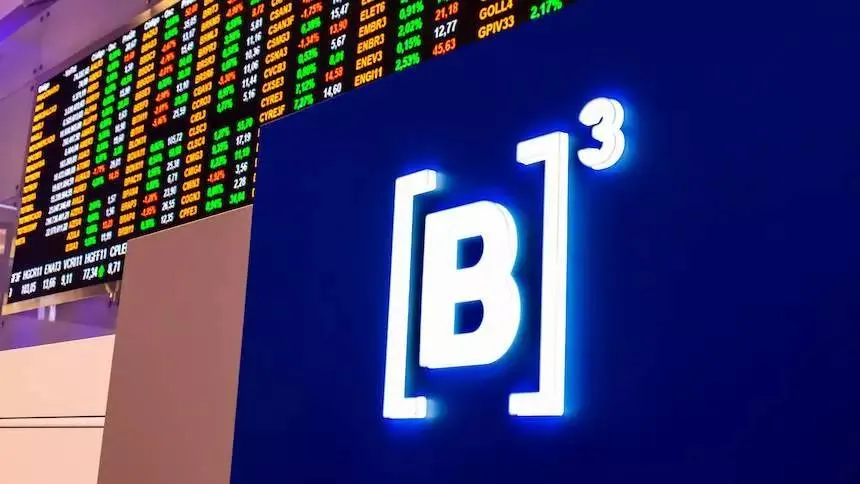
B3 has decided to fully enter the tokenization market by announcing, at its annual meeting with investors, that it will launch its own blockchain-based technology in 2026. Focusing on the tokenization of real assets, the company will start with the stock market.
The tokenization of real assets already moves an estimated market of US$407 billion, according to data from RWA.xyz, US$130 billion more than at the beginning of the year. By 2030, this market could reach US$4 trillion, according to Citi, but more optimistic estimates project growth to as much as US$30 trillion.
In Brazil, the main use cases are credit tokenization , with Mercado Bitcoin, Nexa Finance, and AmFi among the relevant players. Within this rapidly growing universe, tokenized shares still represent a small slice, less than 1%.
“We are building an even more resilient, innovative B3, prepared to seize opportunities in this more challenging and competitive environment,” says Gilson Finkelsztain , CEO of B3.
The model envisions the original share remaining registered with B3's traditional depository, while a token backed by that share is issued in parallel. "The token can serve a range of other products and use cases that we and the market will work on," says Viviane Basso, Vice President of Operations.
The first use case that B3 envisions for tokenized shares is the possibility of 24/7 trading. "With these technologies, we don't force all brokers to operate 24/7, but those who want to will be able to do so through this fully tokenized infrastructure," says Rodrigo Nardoni, vice president of technology.
According to B3, the tokens will have the same liquidity as stocks. This is because trading will be done on the Exchange's own tokenized infrastructure, integrated with the central trading books, allowing orders for traditional and tokenized assets to meet in the same liquidity environment.
To facilitate token trading, B3 stated that it will launch its own digital currency, a stablecoin pegged to the Brazilian real. This initiative places the company in a market that already includes other projects, such as BRL1, developed by a consortium of brokerage firms, and BBRL, from Braza Bank.
In addition to serving as a medium of exchange for purchasing tokens, stablecoins have been increasingly used as a solution for international payments , offering a faster and cheaper alternative to the traditional Swift system.
B3 did not detail all the plans for its stablecoin, but stated that the opportunity in this market has expanded after the Central Bank reduced the scope of the Drex project, which envisioned the creation of the digital real.
“B3’s stablecoin fills a bit of a void left by the end of Drex. The market has this demand for an asset to settle the entire digital economy, and we believe that a B3 stablecoin is very well positioned to be that independent asset.”
An empty bag won't stand upright.
While seeking to gain ground in new businesses, B3 continues to adjust its strategies to capture a potentially more favorable cycle in the capital market — which remains the most relevant axis of its operations.
Since 2021, the average daily trading volume on the B3 stock exchange has decreased by approximately 31%, to R$ 21.8 billion. Even so, the company believes that a potential favorable "tailwind" in the capital markets could cause these numbers to jump to levels far exceeding those observed in recent years.
"It is very likely that, in a more favorable economic climate, we will see the company's ADTV (Adjusted Value Added) rising from R$25 billion, not to R$30 billion, but towards R$50 billion, R$60 billion or R$70 billion in the equity market," says André Milanez , CFO of B3.
To arrive at these figures, B3 combined historical market behavior during interest rate decline cycles with structural changes that have occurred in recent years, such as the increase in the base of individual investors and the greater ease of access to the market after the transformation of the financial product distribution model in the country.
According to Finkelsztain, this scenario should begin as early as 2026, when the market anticipates the start of the interest rate cut cycle. "I think 2026 could be a positive surprise in terms of volume and capital flows. A lot of that is a function of the interest rate cuts, which begin next year."