

Brasilia - Just like the World Cup, every four years it is common for executive secretaries to take over from ministers who leave in the last year of government, always an election year, to compete in the polls.
In 2026, with the third term of President Luiz Inácio Lula da Silva (PT), 14 new ministers will assume important portfolios for the economic agenda. There have been changes in the Finance, Planning, Transport, Civil House, Education, Agriculture, Environment, Development and Industry (MDIC), among other ministries.
The new heads of the economic ministries will inherit a heavy agenda until December 31st, which includes everything from the fuel crisis and the 2027 budget to delivering a surplus in an election year and dozens of auctions for concessions of highways, railways, ports and airports.
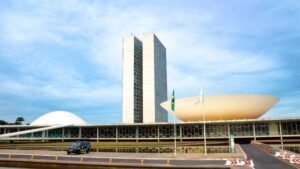
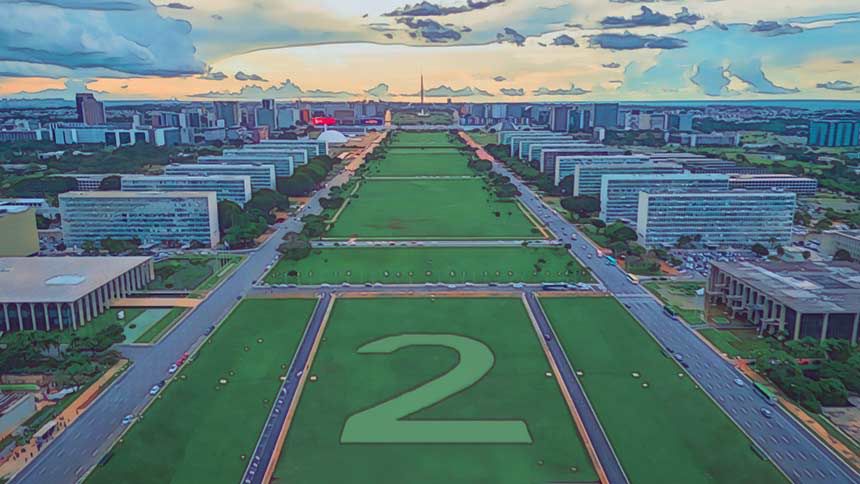
Because they have held the most important position, after the minister, in the hierarchy of any department in the Esplanada dos Ministérios (the area in Brasília where government ministries are located), the so-called "02" or "number 2 of the ministry" have in-depth knowledge of the day-to-day operations and demands of the agencies they are taking over.
This does not mean, however, that they will have an easy path ahead, according to market sources and even the government itself, as reported by NeoFeed .
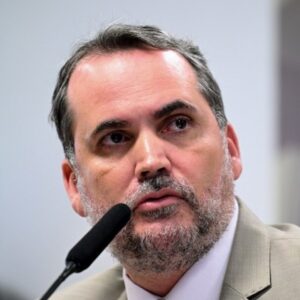
Bruno Moretti, the new Minister of Planning, who replaces Simone Tebet (MDB), gives an example of these challenges. Although he was not an executive secretary, he is a respected technician within the government and was previously the Special Secretary for Government Analysis at the Civil House.
At the helm of the Planning Ministry, he will now be an active voice in the discussion of next year's budget, which the next President of the Republic will have to execute. By April 15th, the Planning and Finance Ministries must submit the 2027 Budget Guidelines Law (LDO), which will contain the main rules for the budget, and by August 31st the Annual Budget Law (LOA) – both must be voted on by Congress by the last day of the year.
“The big challenge that the new economic team will have to address in 2027 will be the Budget Guidelines Law (LDO). It will determine whether the government ultimately has a chance of achieving a primary surplus in 2027. In my view, it is unlikely,” says former Treasury Secretary Jefferson Bitencourt, head of macroeconomics at ASA.
The economist argues that in the latest bimonthly report on expenses and revenues, released last week, the government already indicated that this year's surplus target (0.25% of GDP) could in practice be zero. "Most likely, the primary result could be worse," says Bitencourt.
There are still doubts as to whether Moretti's team, along with the Finance Ministry's team, will have to answer questions regarding government spending on court-ordered payments, which, depending on how they are addressed in the Budget Guidelines Law (LDO), could further compromise the fiscal target for 2027, according to Bitencourt.
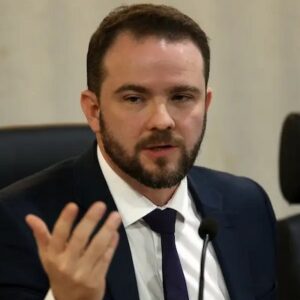
Unlike Tebet, a former senator and politician who had a low-key role in the government's power structure and openly signaled behind the scenes that she was part of her party's (MDB) quota in the government, Moretti has the backing of the Civil House, where he comes from, and has a smooth relationship with the also new Minister of Finance, Dario Durigan.
A source says that Moretti is a member of Lula's government who "is not afraid of Faria Lima" and a name that the financial market appreciates.
Reserved and considered a technocrat who "keeps the public machine running," he will also have to participate in the ever-controversial debate on parliamentary amendments, which have been closely scrutinized by Supreme Federal Court (STF) Justice Flávio Dino in recent years.
In addition to the usual budget cuts in ministries, which tend to become even more prominent in election years, this is a task that the new Planning Minister will have to share with Durigan .
For the new Finance Minister, the challenge is even greater: in addition to the extensive agenda he received from Fernando Haddad, who brought forward his departure from the Esplanade to run for governor of São Paulo, he immediately faced the fuel crisis.
As soon as he took over the ministry two weeks ago, he had to devise an additional solution to the diesel tax reduction package proposed by Haddad in his final days in office: proposing a subsidy of R$ 1.20 per liter of imported diesel, which would be partly funded by the states. But some governors have already said no.
A source close to Durigan told NeoFeed that the strategy has been to engage in dialogue with governors and invite them to cover half the cost of diesel, unlike the previous administration of former President Jair Bolsonaro (PL), which forced states to reduce ICMS (a state sales tax).
President Lula expressly instructed the Finance Ministry to adopt measures to mitigate the pressures of international oil prices on Brazilian diesel. " The diesel measure was fully offset fiscally. But everything is unpredictable in a wartime situation," says the source.
As if the diesel problem, which also depends on the duration of the war in the Middle East, weren't enough, Durigan will also have to submit a bill to the National Congress this year to regulate the rates of the Selective Tax, nicknamed the "sin tax," which will apply to alcoholic beverages, cigarettes, sugary foods, and products harmful to health and the environment. All this in the midst of an election, a source points out.
The issue has enormous potential for political damage to the government, as it could be interpreted by the opposition as yet another tax coming from the economic team.
“The fiscal challenge already existed regarding a possible impetus from the government to try popular measures on the eve of the election, but the war helped to mask this discussion. So, it remains to be seen what is the legitimate search to soften the prices caused by the war or what is a greater impetus due to the election,” adds Bitencourt, from ASA.
Another bombshell for the economic team will be the 55% increase in the price of aviation kerosene for distributors in April, promoted by Petrobras this week.
According to a source closely following the matter within the government, Durigan and the Minister of Mines and Energy, Alexandre Silveira – who remained in the government – will have a "huge problem" to manage in this regard. Airlines are even talking about reducing flights.
Among the legacies of the economic team are a digital regulation agenda, which depends on Congress and currently faces resistance: regulation of big tech companies; artificial intelligence; and Redata, a program of tax incentives to boost investments in data centers in Brazil.
In addition to an environmental agenda, such as structuring the TFFF, a fund to encourage countries that preserve their forests, the main announcement made by Brazil at COP30 in Belém (PA) in 2025.
The enormous “infrastructure agenda”
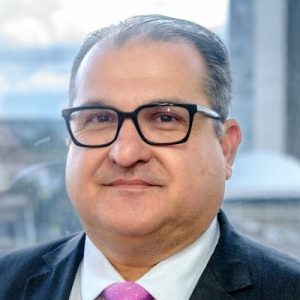
Another executive secretary who enters the scene as a minister is George Santoro , in the Ministry of Transport. A close associate of Renan Filho , for whom he served as Secretary of Finance in Alagoas, he took office on Wednesday, April 1st, with the challenge of implementing 13 highway concession auctions by the end of the year.
There is still the promise of nine railway auctions between 2026 and 2027, among them Ferrogrão , much anticipated by the private sector, which will connect northern Mato Grosso (the leading grain-producing state) to the port terminals of the so-called Northern Arc in Pará. However, the debate over potential environmental impacts and a lawsuit in the Supreme Federal Court (STF) are stalling the project, raising doubts in the market as to whether it will actually be auctioned this year.
“Everything that Minister Renan announced in January, the entire portfolio of projects, we will fulfill. We won't leave anything behind, but there won't be anything new either,” Santoro told NeoFeed . “We have to focus heavily on delivering the projects. There are more than 80.”
The market views the infrastructure project pipeline , particularly highways, with optimism, but with reservations. "This [highway] portfolio is progressing well and is quite mature, with significant demand and interested players," says Ronei Glanzmann, CEO of MoveInfra, an organization that brings together some of the largest companies in the Brazilian infrastructure sector.
“There are also many railway projects, but the market is skeptical about whether they will actually be completed this year. Because they have to test this model. They [the government] would hold six auctions this year alone, but if they manage to hold two, that would already be a victory,” he adds.
Glanzmann points out, however, that there is a railway concession with a better chance of being finalized by the end of 2026: the Southeast railway ring, which will connect ports in Espírito Santo to Rio de Janeiro. "This one is the most advanced; it should be finalized towards the end of the year, at the very last minute, if everything goes well."
Ports and airports
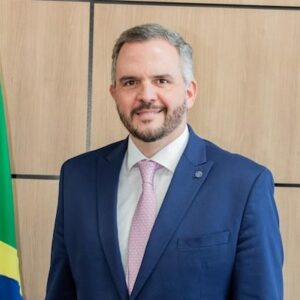
The Ministry of Ports and Airports also has an extensive agenda of major projects planned to move forward this year. Now, however, the responsibility for making them viable will fall to Tomé Franca, the ministry's former executive secretary.
The port auction portfolio alone foresees the bidding for 18 terminals (15 of which are scheduled for this year), with an estimated R$ 17 billion in investments, to expand cargo handling capacity and modernization. The concession of channels is also planned, such as in the ports of Santos, Rio de Janeiro, and Itajaí (SC).
In the list of concession auctions, the most anticipated is the bidding for the Tecon-10 megaterminal at the Port of Santos. Former minister Silvio Costa Filho intended to launch the tender in March, but due to pressure from then-minister Rui Costa (Chief of Staff) and even President Lula, the tender, which was ready to be published, was put back into discussion.
Previously, the Federal Audit Court (TCU) had ruled that companies already operating in the port should not participate in the first stage of the auction. However, the Civil House has since begun to advocate for the inclusion of large shipowners.
In a statement to NeoFeed , the ministry responded that the project "remains a strategic priority" and the bidding process is being drafted by Antaq, the regulatory agency for ports and waterways, and is awaiting deliberations from the Federal Court of Accounts [TCU].
“At this moment, the National Secretariat of Ports and Antaq are working in a coordinated manner to implement the determinations of the [TCU] Plenary, promoting the necessary adjustments to the draft tender and contract,” the ministry informed in a statement. “The actual holding of the auction depends on the completion of the technical analyses and adjustments.”
There is also market anticipation regarding the first waterway concession in Brazil, which could be the Lagoa Mirim waterway in Rio Grande do Sul. And the long-awaited Paraguay Waterway, which runs through Brazil, Paraguay, and Bolivia, depends on negotiations involving the governments of the three countries.
The Ministry of Ports, responsible for waterways, says the concession is in an "advanced stage of structuring" and projects that the tender will be published in the second half of this year. NeoFeed has learned, however, that the market believes the project may not go ahead until 2026.
Regarding airports, the Ministry also plans to auction off 21 air terminals this year, including the renegotiation of the Brasília Airport contract, similar to Galeão (RJ), approved this Wednesday, April 1st, by the TCU (Federal Court of Accounts). And the concession of regional airports within the scope of the second phase of the AmpliAr program – which last year already granted concessions for 13 airports in the North and Northeast regions, among them Jericoacoara (CE).
“Our mission is to maintain the pace of work, making it clear to the market that predictability and dialogue will be maintained, and to the population that Brazil's demands are our priorities,” said Tomé, upon taking office on Wednesday, April 1st.