

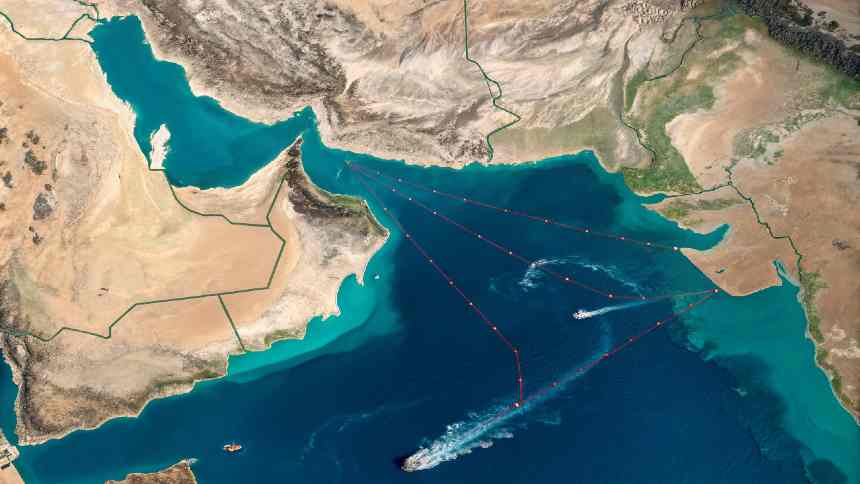
Brasilia - With the escalation of attacks by the United States and Israel on Iran, Brazilian exports are becoming more threatened, and the industry is already outlining a plan to minimize the potential impacts caused mainly by the closure of the Strait of Hormuz, an important port channel in the Middle East.
Chicken meat companies, for example, are already discussing with the Brazilian government changes to logistics routes, seeking alternative ports via the Red Sea and Oman. These alternative routes could increase transport time to the final destination of containers by up to two weeks and raise costs; however, exporters argue that it is a commercially viable solution to ensure that Brazil, the world's largest exporter of poultry meat, does not cease shipments.
“It’s a crisis that’s already on our radar, but it’s manageable, and today we can also go through the Red Sea, a route that wasn’t viable before. The Suez Canal is closed, it’s true, but it’s also possible to get around it. It takes 10 to 15 days longer and increases the cost, but not by much,” Ricardo Santin, president of the Brazilian Association of Animal Protein (ABPA), told NeoFeed .
According to him, the situation, for now, requires caution and may cause delays. "I spoke personally with the minister [Carlos Fávaro, of Agriculture] and he said he will do everything to help," Santin added.
Almost 50% of Brazilian chicken meat exports to the Middle East pass through Hormuz, moving up to 250 containers per day, according to Santin. However, he points out that Brazilian exporters are already in contact with importers using alternative routes in Asia and Africa to minimize these potential impacts. Currently, the organization has no information about ships being held up to clear Brazilian chicken cargo.
To redirect the routes, the Ministry of Agriculture needs to streamline bureaucratic procedures, such as the exchange of the International Sanitary Certificate (ISC), a mandatory document issued by the importing country after a trade agreement that allows exports from a specific country.
This administrative process with the ministry is the same one that was carried out during last year's avian flu outbreak, when 28 markets were closed to Brazilian chicken meat. Now, with the war in Iran, 12 suspended markets have already been identified, of which three are completely closed (United Arab Emirates, Qatar and Kuwait) and another nine that would have these alternative routes.
BRF even has a chicken meat processing plant in the United Arab Emirates; however, Santin assures that it will not be affected, since it already serves regional markets normally.
The Middle East absorbs about 30% of Brazilian chicken meat exports, equivalent to 1.5 million tons. Brazil is a leading global producer and exporter of halal meat, which meets strict Islamic production standards.
Agriculture at risk
According to the Parliamentary Agricultural Front (FPA), better known as the agribusiness caucus in Congress, which brings together dozens of entities from the sector, "although the duration and intensity of the tensions are uncertain, instability in strategic logistics routes and energy markets tends to have a rapid impact on global production and trade chains."
Last year alone, Brazil exported US$12.4 billion in agricultural products to Middle Eastern countries. Iran accounted for 23.6% of this total exported, being the main buyer of these Brazilian agricultural products in the region during that period, with US$2.9 billion, followed by Saudi Arabia (23.3%) and the United Arab Emirates (20.4%).
The region, however, accounted for only 7.4% of Brazilian exports in 2025, mainly of chicken meat, corn, sugar, beef, and soybeans.
Iran, the main focus of the conflict, was also the main importer of Brazilian corn last year, with 9 million tons. Other agricultural raw materials produced by Brazil and purchased by the Iranians include soybeans, with 1.3 million tons, and sugar, with 499,000 tons, for example.
"In this context, a prolonged disruption of trade flows to the region could generate significant risks," FPA states in a note.
Fertilizers
But it's not just Brazilian agribusiness that's suffering from the blockade of the Strait of Hormuz. The closure of the channel is also causing a ripple effect on other supply chains besides oil.
Damage to infrastructure and production facilities in the Middle East is already affecting sectors such as fertilizers, petrochemicals, manufacturing, and mining, reducing the global supply of these inputs.
The Iranian attack on the natural gas plant in Qatar – the world's second-largest supplier of liquefied natural gas – doubled the price of the product and affected Europe, at a time when a particularly harsh winter depleted European gas reserves.
Gas inventories across the bloc are at less than 30% of capacity, according to data from Gas Infrastructure Europe, compared to a five-year average of around 45% for this time of year. Reserves in countries such as the Netherlands, Sweden, Croatia, and Latvia are particularly low.
The natural gas supply crisis is impacting another key sector of the global economy: fertilizers. The Middle East is one of the world's largest fertilizer producers, and the Strait of Hormuz is a crucial shipping route. Approximately 35% of global urea exports pass through this waterway.
Natural gas is the main raw material used in the production of nitrogen fertilizers, such as ammonia and urea, which means that rising gas prices can quickly increase production costs.
Industry experts, in turn, warn of the impact of low fertilizer supplies on global food production. Delays in getting these inputs to market could lead to a 50% drop in the first food harvest.
The disruption is occurring at a particularly sensitive time for farmers. In parts of Europe and the northern hemisphere, producers are entering the spring fertilizer application season, when they purchase and spread nutrients that determine the productivity of crops later in the year.