



Domo.VC announced the launch of a Credit Rights Investment Fund ( FIDC ) with the potential to reach up to R$ 100 million, earmarked for startups.
The initiative marks the debut of the venture capital firm's structured credit vertical, which aims to use structured credit solutions to help companies that need working capital without diluting their shareholder base.
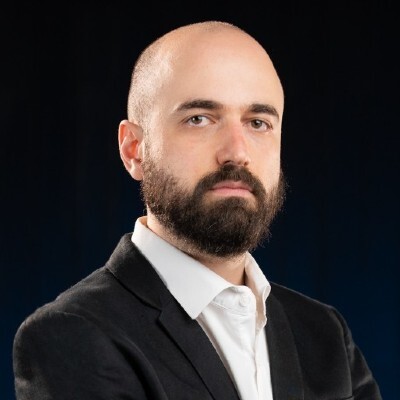
“We are early-stage investors in these companies, giving them the initial boost,” Eduardo Bierrenbach, partner at Domo.VC and head of the area, told NeoFeed .
“However, between this investment and Series A, startups go through a scaling phase where access to capital for operations is important, but the options available on the market are not the best,” he adds.
The FIDC will have three classes of shares: junior subordinated (10%), mezzanine (30%), and senior (60%), with Domo and the originating startups participating in the subordinated share. The target return for the senior share is CDI plus 5.5%, and for the mezzanine share, CDI plus 8%.
Aimed at qualified investors, the fund has Vórtx as its administrator and Bertha Capital, a firm with over R$ 600 million in assets under management, as the manager responsible for selecting the receivables from Domo's portfolio companies that will be included in the fund.
The expectation is that the fund will reach R$100 million within 15 to 18 months. In the format designed by Domo, the asset manager will make capital calls to investors who have already committed resources, as receivables are incorporated into the fund.
The vehicle will initially be directed towards the 104 startups in the manager's portfolio, including Fretadão, MeuTudo, Mission, Willfly, and Nuvidio, with Bertha responsible for defining which receivables will be allocated to the fund.
The first initiative in the structured credit area, the FIDC seeks to meet a demand from investors: to obtain resources for working capital without giving up equity or paying high prices for it.
A subsequent funding round dilutes the founder's equity and expands the cap table , in addition to being a process that takes time to complete and, if done at the wrong time, can harm the company's valuation.
“Equity money is considered the most expensive because you are handing over your company to someone,” says Bierrenbach. “ Equity is better suited for investment rounds aimed at driving growth.”
Debt brings with it the issue of financial cost, which weighs heavily at a time of very high interest rates . Bierrenbach also points out that few banks conduct transactions with startups because these companies often have unorthodox business models and structures, have already undergone strategic pivots, and do not always have the required governance, such as audited financial statements.
In the case of venture debt , in addition to the cost issue, Bierrenbach states that there is always a kicker related to equity participation in the company, whether through subscription bonuses, personal guarantees from partners, or future receivables. "And any debt today has IOF (tax on financial transactions), which is heavy," says Bierrenbach.
Domo decided to start its structured credit operation with a FIDC (Investment Fund in Credit Rights) precisely because it is a vehicle with lower costs and does not dilute the companies, helping to reduce the mismatch between payment and collection terms. Furthermore, it is a format that has gained traction in a scenario of high interest rates and greater market caution regarding credit events.
“The FIDC was also the best fit because these are companies that, although they are in their early stages, are already in a scaling phase, with customers, revenue, and recurring income,” says Bierrenbach.
He explains that the idea is for this FIDC (Investment Fund in Credit Rights) to be the flagship , with Domo envisioning a second series of shares in the future and even new funds. The intention is also to offer, further down the line, other types of products, such as securitization operations, through the contracting of a securitization company, always with the objective of providing capital for day-to-day needs.
“What we focus on are capital market structures, regardless of what they are,” says Bierrenbach. “The focus is on bringing, for each moment, the best possible structure to serve the company.”