


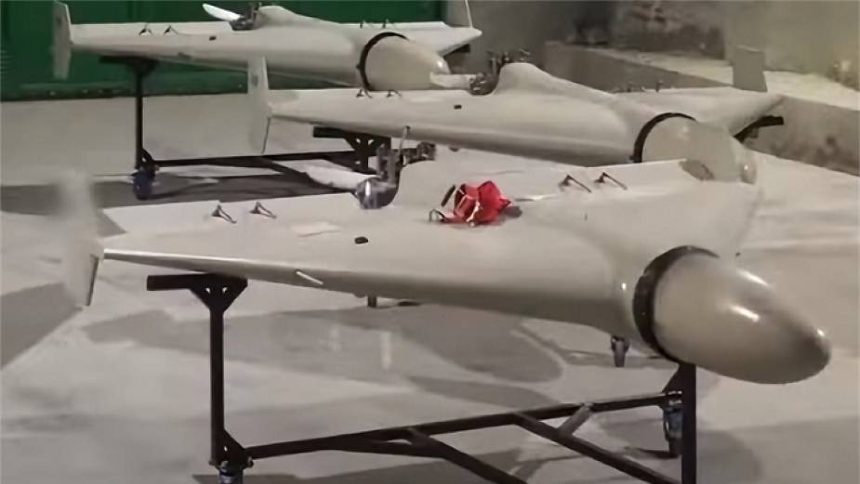
The war in the Middle East is showing that the imbalance of power does not necessarily harm the weaker side. While the United States and Israel possess technologically advanced and precise weapons, Iran has developed a fleet of inexpensive drones that has managed to cause both military and financial damage.
To destroy one of the thousands of unmanned aerial vehicles developed by the Iranians, which cost only tens of thousands of dollars, the American military is being forced to use missiles that, individually, cost around US$1 million.
The strategy, also used in the war between Russia and Ukraine , demonstrated the need to develop cheaper defense systems to deal with this increasingly present threat on the battlefield, a problem that startups are seeking to solve.
Many companies are redesigning projects, using readily available parts and migrating to automated manufacturing to reduce costs. The promise is to produce missiles that will cost tens of thousands of dollars, not hundreds of thousands or more, according to industry representatives interviewed by The Wall Street Journal (WSJ) .
One of the companies looking to capitalize on this situation is Persus Defense. The startup, co-founded by Jason Cornelius, a former NASA employee, is committed to creating an anti-aircraft defense system with missiles that cost US$10,000 per unit. The nearly 40-centimeter projectile can be launched from drones, ground vehicles, and boats, with a range of about 1,000 meters.
Another company developing more affordable drone interception systems is the Estonian firm Frankenburg Technologies. The company claims its missiles can fly at over 965 kilometers per hour and have a range of up to 1.6 kilometers. They also cost tens of thousands of dollars and take only a few hours to manufacture.
In addition to startups, major players in the defense industry are presenting new, cheaper defense systems to combat drones. The European company MBDA signed an agreement with Germany last year to produce a low-cost missile called DefendAir, designed for small and medium-sized drones. The Swedish company Saab is negotiating with several countries to sell a low-cost missile it has developed.
Cambridge Aerospace is among the startups seeking to reduce production costs using modern technologies such as 3D printing and artificial intelligence. The British company is developing a missile called Starhammer, designed for high-speed targets such as ballistic missiles, as well as an anti-drone interceptor and cruise missile called Skyhammer.
Although still in the testing phase, these missiles are in high demand from governments in the Persian Gulf and the West, according to startups. Recently, the United States and Germany placed large orders for these projectiles to deal with drones.
The urgency is related to the current costs of dealing with drones . It is estimated that the Pentagon spent approximately US$5.7 billion on interceptors to shoot down Iranian ballistic missiles and drones in just the first four days of the war, which began more than a month ago. The Persian Gulf countries have also spent hundreds of millions of dollars dealing with the threat.
This high cost is leading countries to seek cheaper alternatives, including from startup companies that could become significant suppliers to the American military.
“Smaller and newer companies are offering the Department of Defense new options in terms of affordability and scalability,” said Lieutenant General Frank Lozano, portfolio acquisition executive for U.S. Army armaments, at a recent Senate Armed Services Committee hearing on low-cost munitions, according to the WSJ .