


At a time when money is still scarce in the Brazilian and Latin American venture capital market, and when doubts remain regarding the political and economic environment, the resumption of IPOs could help attract more interest from foreign investors to the region.
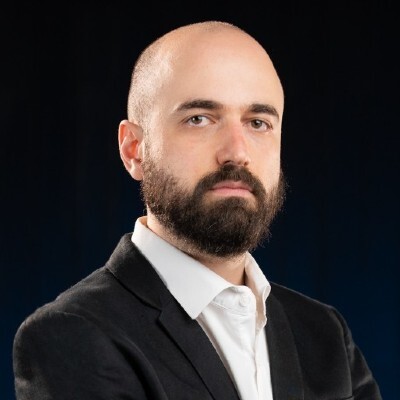
The assessment comes from Paulo Passoni , managing partner of Valor Capital Group , one of the leading investment firms in early-stage startups in the Brazilian and Latin American markets, and former partner at SoftBank Latin America. According to him, successful IPOs from names within the local VC ecosystem are indications that the region is capable of producing success stories.
"The industry doesn't depend on what happens with the Brazilian government or the exchange rate , but on the success or failure of the companies in which it invests," he says in an interview with NeoFeed .
"If the story is very good, the story wins. If the company's numbers are very good, the numbers win," he adds.
He emphasizes that investors need to see a return on their investment to increase their contributions to the region. Therefore, scale is important, especially when the world's attention is focused on artificial intelligence (AI) , a topic that is still in its early stages south of the Equator.
“The challenge for Brazil and Latin America is to create large companies. With these companies going public, capital starts flowing back to investors, who see that this industry makes sense,” says Passoni.
He says that those currently in the market are micro-investors, those who follow companies and trends. The result is less liquidity than in periods of greater optimism, promoting stock picking .
This also affects fundraising, even though the scenario is better. In April, NeoFeed reported that the firm founded by former Brazilian ambassador Clifford Sobel and his son Scott, and whose portfolio includes names like Wellhub and CRMBonus , managed to raise approximately US$100 million in its fifth VC fund to invest in early-stage startups. When questioned about fundraising, Passoni declined to comment.

Because of this, entrepreneurs need to adapt to the environment, making their companies profitable, considering that the current moment is still one of stock picking – last year, Valor made a total of 11 investments in all the regions where it operates and in the growth and venture phases, with undisclosed values.
"The lack of money makes entrepreneurs creative, forces them to be profitable, and to discover more sustainable business models. That's a good thing," he says.
Read below the main excerpts from the interview:
What are the prospects for venture capital?
Global capital is being drawn into AI investments. In this context, things in Latin America are lagging behind. AI initiatives in Latin America are attracting capital, but they are very new and not yet large-scale, having started only recently. Entrepreneurs are learning how the tools work, what they can do differently, and which business models might work. But we will see these companies doing well and attracting capital. That said, we see opportunities in the region despite this simplistic way of thinking.
Like this?
There are many good companies being created, reaching impressive sizes in Brazil. In our portfolio, we have Cloudwalk , which is doing very well, for example. There are several companies in the market doing very well, starting to become robust. We are seeing IPOs, something I didn't think would happen before the elections. I believe we will start to see more IPOs of large Brazilian companies, regardless of the Brazilian election or the macroeconomic situation. The market is basically saying the following: if you have a high-growth, quality story, like Nubank or Mercado Livre , I'll pay a premium.
What does this show about the current state of this market?
What this industry does is idiosyncratic, not macro-level. The success or failure of this industry depends on companies growing from 1% market share to 5%, then to 10%, then to 20%. When you reach that point, then it becomes a company that depends on macroeconomics. The industry doesn't depend on what happens with the Brazilian government or the exchange rate, but on the success or failure of the companies it invests in. We are still in a learning and maturing process, and nothing is more important than the success of IPOs to validate the industry.
"What we need in the ecosystem are examples of companies with more than R$ 6 billion in revenue. Because it's only when a company becomes gigantic that it matters."
Could a change in government accelerate this process?
I don't think it matters which government comes in. In the next two years, we have many companies that could go public, like Wellhub and Cloudwalk. There's even a curious risk of a more investor- friendly government coming in, attracting much more capital. The current moment is one of a slight lack of money for growth entrepreneurs; in the early stage there's enough capital. But the lack of money makes entrepreneurs creative, forces them to be profitable, and to discover more sustainable business models. That's good.
Is the economic situation weighing less on you?
What happens to the economy shouldn't impact the sector so much. What we need in the ecosystem are examples of companies with more than R$5 billion, R$6 billion in revenue. Because it's only when a company becomes gigantic that it matters. To do an IPO, to be well-received on the stock exchange, to have liquidity, you need to be big. The challenge for Brazil and Latin America is to create large companies. With these companies doing IPOs, capital starts returning to investors, who see that this industry makes sense.
Regarding IPOs, you said about two years ago that now was the time to invest, not to sell. That being said, have we reached the point of selling?
An IPO isn't about selling; it's about selling 10% or 15% of the company. Investors will sell their entire investment two or three years after the IPO, and this obviously depends on each investor. But now is the time to buy, not sell. In growth markets , there are more opportunities than capital. It's a stock-picking market. If the macroeconomic situation improves in Latin America, something possible in two years, there might be too much capital coming in. And then perhaps it will be the time to sell, not buy. But the current moment is for buying.
The issue of selling touches on the topic of portfolio recycling, returns to investors…
This is something that needs to happen regardless of whether the moment is right to buy or sell, no matter the environment. Managers have some options, such as making a secondary sale to a secondary fund, a type of structure that has grown a lot worldwide. They have considerable capital and have become a frequent exit strategy for early-stage funds. Each fund, each company is a unique situation, so that's why it's difficult for me to give you a generic answer.
But it seems, then, from the scenario, that managers have to look much more at alternative sources of return on capital than relying on a sale.
The alternatives are secondary investors or other new shareholders entering the company, who may also want to buy a stake. These are the two things that are happening more frequently than five years ago, when this hardly existed. Nowadays it's super common. But this type of option only exists for the best companies. The key is to have good companies in the portfolio.
"If raising funds were easy, there would be much more money in the market. I think there's enough capital in the early stage."
We are also at a point where many portfolios were built during the pandemic, when valuations were inflated, with some investment theses not performing well.
But some of them are doing really well, being worth more than they were valued at during the pandemic. And some aren't doing well, so it depends.
But is the current moment one that calls for more selective investments?
When you make a bet, believing that the company will continue on that path, and five years pass, some have exceeded expectations, some have met expectations, and some have fallen short. The difficult part is dealing with those that fall short of expectations. And each fund will have a different mix of companies.
How is the current situation for fundraising? Does the lack of strong AI adoption in Brazil and Latin America hinder fundraising efforts?
If raising funds were easy, there would be much more money in the market. I think there's enough capital in the early stage, and it's not that Latin America needs more early-stage capital. Where it's difficult is in Series B, Series C, and Series D. The so-called "right" investor for the industry invests for micro reasons, not macro. But that's harder to find. And nobody is excited about the region because of the uncertainties of the year due to the elections. Right now, there's only the micro investor, but that should change.
What needs to happen for this to change?
Presenting a perspective of superior performance compared to the American market. When everyone invests in the United States and prices rise, future returns fall. When nobody invests in Latin America, future returns rise. Then, eventually, people see this and rush to invest. Right now we have less capital due to macroeconomic uncertainties. With IPOs going well, companies doing well, and exciting new stories emerging, all of this will create interest in the region. And there are AI companies emerging in the early stages .
It is often said that the region's potential lies in companies that apply AI, not in companies developing "cutting-edge technology," the next OpenAI. Is that really the case?
There are two types of AI companies: those that create tools for anyone to use and those that apply the tools. In Latin America, there are more companies that apply the tools. If you're going to make a tool, it has to be for the whole world, especially the United States. It doesn't matter where the company started; if it's making a tool, it has to make a tool focused on the American market. Winning that market, which is the most difficult, and then going to the rest of the world. We see few cases of this in Latin America, but they exist. The most common are those focused on application.
"With IPOs going well, companies doing well, and exciting new stories emerging, interest in Latin America will grow."
Given this scenario, what is Valor's appetite for investment?
In the early stage , we're investing as we always have. In the growth phase , we occasionally invest in global companies that we help bring to Brazil. Sometimes, we invest in local companies that we believe have the potential to become giants. Each fund like ours will make between four and six investments per year. That's not much, so you need a very large number of players to meet market demand. You have to choose only a few things to do per year, and the situation is complex when it comes to early growth.
In the case of Valor, considering your experience in Latin America, how are you working?
In our case, we made some early growth investments. We can't have a portfolio solely focused on early growth or in just one region. A manager can't only invest in Series B; they have to do some Series B, some Series C, some pre-IPO. It needs to be diversified in terms of regions. You balance the portfolio in terms of risk to ensure a continuous return on investment for your investor, not just in ten years.
So how do we put Latin America and Brazil on the map?
It's possible to include it. If the story is very good, the story wins. If the company's numbers are very good, the numbers win. What happens is that there are many stories you don't know yet, that remain in that place where conviction isn't very high, so the entrepreneur needs to become profitable, instead of raising capital.
The company has to be a diamond, then, because times are tough for the region…
Each fund will have its own vision of what a diamond is. And it's not as negative as it seems, because there's the side that everyone turns to. And the $4 billion that flowed into the region last year is no small amount of money. You can live on $4 billion.