





The pharmaceutical company Merck, known as MSD outside the US and Canada, has been betting on artificial intelligence to accelerate the development and arrival of new treatments to the market.
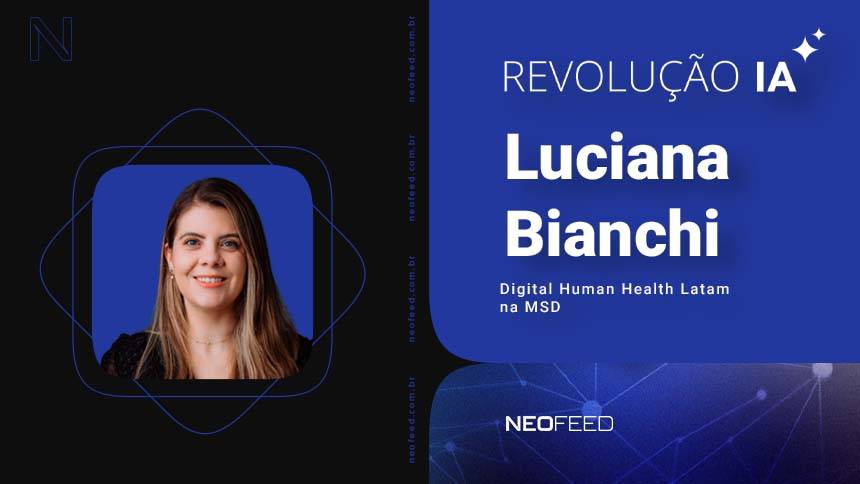
In a global company with over 135 years of history and a focus on innovation, Luciana Bianchi, digital human health for Latin America, says that technology has ceased to be a support tool and has become an integral part of the business strategy.
“Our goal is to bring new molecules and treatments to patients as quickly as possible. And artificial intelligence is one of the pillars for that,” says Bianchi, in an interview with Revolução IA, from NeoFeed .
In practice, the application of AI begins in research and development, an area that concentrates the largest investments in the sector. The company recently announced a global partnership with the Mayo Clinic to cross-reference large volumes of clinical and scientific data. The idea is to reduce the time needed to generate relevant conclusions, which is currently one of the main bottlenecks in the industry.
Outside of laboratories, MSD has been advancing the use of technology to increase productivity in operational and commercial areas. One example is the use of language models to translate scientific studies in near real-time, within a secure environment.
In two years, more than 55,000 documents have already been processed, with a significant reduction in cost and time. "This type of solution brings efficiency and also reduces risks, because it ensures that people access the correct information within the company's policies," says Bianchi.
Another trend involves the use of data platforms with a conversational interface, which allow sales teams to access performance information more easily. Instead of relying on reports and dashboards, professionals interact directly with the tool to extract insights.
For Bianchi, the competitive advantage of using AI in the pharmaceutical industry lies not in the technology itself, but in the ability to connect it to the business. "The tool is the least important thing. What matters most is understanding what problem we are solving and how that translates into value," he says.