











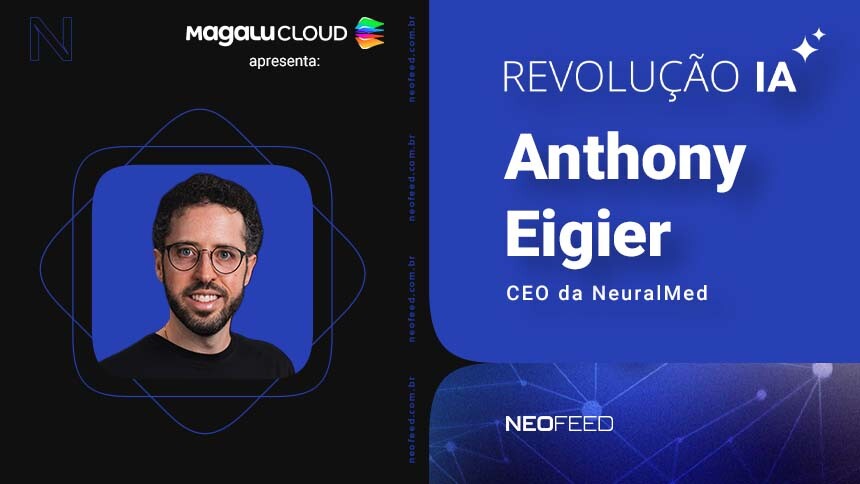












Rising costs, an aging population, and a shortage of professionals are putting pressure on the Brazilian healthcare system, leading hospitals and health insurance providers to seek solutions for increased efficiency. According to Anthony Eigier, CEO and co-founder of NeuralMed, the biggest bottleneck in the sector is the excess of fragmented data in systems that don't communicate with each other.
In an interview with Revolução IA, a NeoFeed program supported by Magalu Cloud, Eigier defended artificial intelligence as the main way to avoid the collapse of the healthcare system, by allowing the integration of clinical data, anticipating diagnoses, and reducing avoidable hospitalizations.
“The healthcare system doesn’t suffer from a lack of data, but from an excess of poorly organized information. When you manage to structure this data at the right time, it completely changes the logic of care,” says Eigier.
NeuralMed works by connecting information scattered across different hospital systems, from electronic medical records and imaging exams to prescriptions and family histories. Through this integration, AI algorithms help identify risks, prioritize patients, and organize care flows within hospitals, clinics, and healthcare networks.
According to Eigier, the proposal is not to replace doctors or nurses, but to reduce the time spent on operational tasks and prevent healthcare teams from functioning as "data operators," navigating through multiple screens in search of information that already exists but is not organized. By structuring this data, the technology gives time back to the teams and allows for greater focus on direct patient care.
One of the main effects of this model is the anticipation of diagnoses. By cross-referencing clinical findings that, in isolation, might seem irrelevant—such as tests performed for another reason, family history, or continuous use of medications—AI can identify risks before the disease progresses.
In one example reported by the entrepreneur, a patient was admitted to the emergency room after a traffic accident and underwent a series of tests focused solely on the trauma. However, the artificial intelligence identified a combination of a pulmonary nodule, a history of smoking, and a family history of cancer, generating an alert for oncological evaluation.
Based on this, the patient underwent a biopsy and began treatment for early-stage lung cancer. "Without this combination of data, this diagnosis would likely have come months later, with a much more complex outcome," says Eigier.
Another factor that reinforces the need for structural changes, in Eigier's view, is the rapid inversion of the Brazilian demographic pyramid.
Starting in the next decade, the country is expected to have more elderly people than children, which will likely permanently increase the demand for medical care, management of chronic diseases, and recurrent use of the healthcare system. Therefore, maintaining a hospital-centric model focused solely on treating acute episodes may become financially unsustainable.
The alternative, according to the co-founder of NeuralMed, involves using artificial intelligence as a care coordination tool, with the goal of monitoring patients outside the hospital environment and using data to prevent simple conditions from evolving into highly complex situations.
Eigier believes that the adoption of artificial intelligence in healthcare should accelerate in the coming years, driven by both economic necessity and the growing maturity of the technology. "It's no longer a discussion about innovation. It's a discussion about the sustainability of the system," he states.