








Gerdau is using digital twins to reposition the steel industry in the age of artificial intelligence and take decision-making to a new level within the production process.
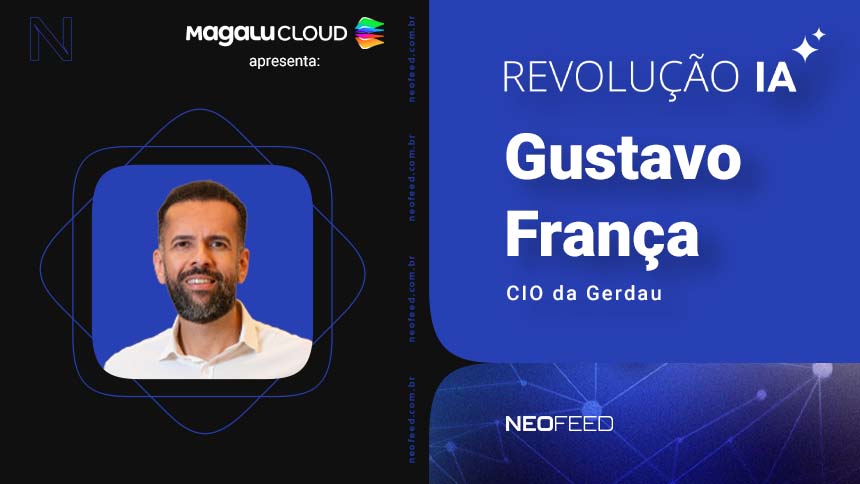
In an interview with Revolução IA , a NeoFeed program supported by Magalu Cloud, Gustavo França, the company's CIO, explained that the technology creates virtual replicas of industrial plants, powered by operational data and sensors, allowing for the simulation of scenarios, anticipation of failures, and testing of adjustments before they are actually implemented in the factory.
“The concept is simple: take the data from the production process to a virtual layer. This allows us to make simulations, predictions, and prescriptions to gain efficiency and reduce costs,” said França, who sees digital twins as the foundation of the factories of the future.
The first major project was implemented at the company's largest unit, in Ouro Branco (MG), starting with the steel mill — considered the heart of steel production. Using the digital twin, Gerdau began to reorganize production sequences, optimize the use of inputs, and redesign operational routes in a virtual environment.
"We were able to simulate routes that offer better efficiency and lower costs, without needing to physically modify the equipment," said França.
The practical impact is evident in the response time. According to the executive, situations that previously took between 30 and 40 days to correct now take only a few hours. And in many cases, Gerdau has managed to recover production within the same month.
To support this model, the company needed to advance in data governance. The strategy included the creation of a centralized repository in Belo Horizonte, to which more than a thousand devices are connected. The system allows for comparisons between factories in different countries, real-time performance measurement, identification of bottlenecks, and replication of best practices across units.
Despite the advance of automation, Gerdau keeps humans at the center of its decisions. "It's not humans versus artificial intelligence. It's humans with artificial intelligence. AI amplifies human performance," stated França.
According to him, the models are supervised and the final decision rests with the operational teams. Another pillar of the strategy is internal training. The company has created programs to train professionals in data science within the organization itself, including engineers and employees from industrial areas.