

The global economy is at a critical inflection point, dependent more on the full reopening of the Strait of Hormuz to resume oil flows than on resolving the conflict in Iran. A positive outcome to the strait impasse could eliminate the energy risk premium and boost markets.
A prolonged lockdown, however, could trigger a severe energy crisis, stagflation, and a deep correction in financial markets, impacting even the monetary policy of the Central Bank of Brazil.
Hence the importance of the 15-day ceasefire between the United States and Iran, in effect from Wednesday, April 8, resulting in the full opening of the Strait of Hormuz and the normalization of the global flow of oil transport.
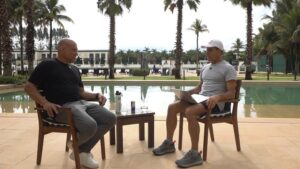
The warning comes from Spaniard Alex Fusté , chief economist at Andbank , a financial group specializing in private banking, in this interview with NeoFeed . Headquartered in Andorra and present in 11 countries, Andbank – founded 95 years ago – manages the equivalent of R$360 billion worldwide.
“The current scenario can only be sustained for another month or two using mobile and strategic oil reserves, which are already almost exhausted,” says Fusté. “Beyond that limit, the world would enter a recession with high inflation, characterizing global stagflation.”
According to him, the duration of the shock is the central factor, as each additional day exponentially increases the risk of a systemic liquidity crisis. Fusté states that the oil shock is the most damaging to the global economy and no country – neither the United States, nor China, nor Russia – is immune to its effects.
“There are several types of shocks, but the most dangerous of all is the energy shock, because oil is the trigger that affects everything — inflation, interest rates, liquidity and growth,” he says, predicting in the worst-case scenario the price of a barrel at US$200 and financial market indices, such as the S&P, falling by up to 30%.
Two other warnings from the economist are noteworthy. First, that markets have not yet adequately priced in the political risk associated with the new style of governance in the US, which adds a structural layer of uncertainty.
"The new Republican generation – such as President Donald Trump, Vice President JD Vance, and Secretary of State Marco Rubio – differs from the traditional one and tends to generate more volatility and uncertainty, increasing the risk premium," says the economist.
"The market hasn't understood that this new republican way of doing politics, in a world where it seems there are no longer any rules—and whoever follows the rules, loses," he adds.
He also does not rule out the possibility of the Central Bank of Brazil reversing its current monetary policy and raising interest rates again if global instability persists in the coming months.
“Faced with an energy shock, the correct monetary policy is always to raise interest rates, even if they are already close to 15%, as is the case in Brazil. Monetary policy needs to adapt to reality: I cannot maintain the same interest rates as a month ago when I am now facing an energy shock that did not exist before,” says Fusté.
Read below the main excerpts from the interview:
The ceasefire in the war with Iran brought relief to the markets, but we still don't know what will come next. In your assessment, what will be the biggest impact of the conflict on the global economy in the medium term?
The central point for me is very simple: everything depends on the Strait of Hormuz. It's not the conflict itself that worries me, but how long the strait will remain closed. If the ceasefire truly leads to the definitive reopening of the strait and alleviates the energy shock, the market will breathe. If not, we enter dangerous territory. The situation, therefore, is binary: it could result in a very good or very bad scenario for the global economy.
What would the best-case scenario look like?
If the ceasefire results in a more pragmatic Iran, without sanctions and without incentive to provoke oil shocks, we — portfolio managers — could finally eliminate the energy risk premium we have carried for years, which would strongly boost risk assets.
What does this energy risk premium consist of?
It's the cost of protecting myself against market shocks. There are several types of shocks, but the most dangerous of all is the energy shock, because oil is the trigger that affects everything—inflation, interest rates, liquidity, and growth. And every two years, on average, we have some kind of energy shock, almost always with the same protagonists: Russia or Iran. Therefore, since 2010, I've needed to maintain long positions in energy futures to ensure that, if oil prices exploded, my portfolio would be protected. But this "insurance" is extremely expensive. If I had maintained this protection continuously since 2010, for example, I would have lost 70% of the portfolio's accumulated return.
"The energy shock is the most dangerous because oil is the trigger that affects everything: inflation, interest rates, and liquidity."
And what about the negative scenario?
If the Iranian regime continues as it is, repressive and capable of keeping the Strait of Hormuz closed, the global financial market will come under stress. With four weeks of blockade, we have already seen the price of a barrel of oil reach US$145 in the spot market. With eight more weeks, the price would reach US$200. This could generate further declines in the markets, due to a 50% reduction in earnings per share growth and compression of valuation multiples.
So, two months would be the deadline for the full reopening of the Strait of Hormuz to avoid a global economic collapse?
The current scenario can only be sustained for another month or two using mobile and strategic reserves, which are already almost exhausted. Beyond that limit, the world would enter a recession with high inflation, characterizing global stagflation. In financial markets, front-running accelerates the collapse: investors anticipate the worst and sell beforehand, which can bring down indices like the S&P by up to 30% without having to wait two months.
What other effects are there for the global economy?
All profit estimates made at the beginning of the year would no longer be valid, requiring revisions to zero or negative growth in 2026, both in Europe and possibly in the US. With lower profits and contracting multiples, the impact on markets would be severe. Thus, two months of this scenario would already be enough to generate global panic and trigger an economic collapse.
The Trump administration has been controversial, with tariffs, the invasion of Venezuela, threats to European allies, and now, a war in the Middle East. Have countries and markets learned to deal with the risk that Trump represents?
The market has not yet absorbed the risk associated with the new profile of the Republican Party. The new Republican generation – such as Trump, Vice President JD Vance, and Secretary of State Marco Rubio – differs from the traditional one and tends to generate more volatility and uncertainty, increasing the risk premium. Betting platforms are already pointing to a Republican as the favorite for 2028, but the market has not yet priced in this risk.
How do we assess this political risk?
A higher risk premium means more pressure on the market. Although there is no mechanical relationship between politics and volatility, there are clear episodes that show this effect. In 2025, with the announcement of Trump's tariff policy, the US government's foreign policy generated strong uncertainty and caused the VIX index ( or "fear index," an indicator that measures the expected volatility of the US stock market for the next 30 days ) to jump from 13 to 30. The point that worries him most is not the isolated jump, but the increasing frequency with which the market needs to price in extreme scenarios.
What criteria should we take into account when pricing this "Republican risk"?
The market hasn't understood that this new republican way of doing politics, in a world where it seems there are no longer rules—and those who follow the rules lose—creates an environment where Europe, for example, loses competitiveness by trying to be politically correct and follow norms. We are in a world without rules, and in a world without rules it is easier to see extreme events more frequently.
For now, the US stock and Treasury bond markets have not been significantly affected by the war. Why?
Because there is simply no market anchor. The alternation between negative news and abrupt changes in opinion generates cycles of decline followed by strong recoveries, characterizing a "counter-trend era"—a period in which the market frequently moves in the opposite direction to what investors expect.
"We are in the 'era of the backtrack', a period in which the market moves in the opposite direction to what investors expect."
How does this 'era of backtracking' translate into times of uncertainty, like the present?
What we are experiencing is a market that is constantly on the defensive. I make a decision today, and the next morning it already seems wrong; I do the opposite, and it also goes wrong. Just yesterday I wanted to sell risky assets because I imagined that, this Wednesday, the deadline set by Trump for Iran to back down, all the refineries in the Middle East could be destroyed—and knowing that a refinery takes five to ten years to rebuild, that would be devastating. Many people sold. But, at night, everything changed, and the market opened 4% higher. Those who sold were caught off guard.
Does this volatility tend to change market behavior?
Yes, in fact the market has learned not to make drastic decisions, nothing like "seeing everything and then turning". What we do now is reduce risk gradually, following the ups and downs. That's why the falls have been gradual: the MSCI World fell 9%, but linearly, not in a collapse. Nobody wants to risk making a large volume mistake, because such a setback hurts a lot.
In what sense?
Imagine if I halved my clients' stock exposure and, the next day, the market went up 5%. I'd be finished. That's why we proceed with slow and prudent adjustments—and that's what prevents a sharp drop, because nobody wants to make Solomon-like decisions in such an unpredictable environment.
Does Brazil's large oil production mitigate the damage caused by the shock, or will the impact on inflation be the same?
Yes, it will be the same. Even as an oil producer, Brazil cannot isolate itself from international prices—nor can the United States. To shield the domestic market, it would be necessary to prohibit exports, but this would destroy investments, reduce supply, and harm companies in the sector, something politically unfeasible. Therefore, the global price always ends up reaching the domestic market.
What is the best monetary policy to deal with an oil shock?
Monetary policy in the face of an oil shock is ambiguous because, to anchor long-term interest rates—essential for business financing—the central bank needs to raise interest rates. But, in doing so, I destroy demand, which is already being weakened by the increase in energy costs. Standing still doesn't solve the problem, because long-term inflation expectations may continue to rise, and when that happens, I am forced to act. Therefore, even with high interest rates, it is often necessary to raise them even further to prevent long-term rates from spiraling out of control.
"The correct monetary policy is always to raise interest rates, even if they are already close to 15%, as is the case in Brazil."
Does this apply to Brazil, with an interest rate of 14.75% per month?
Faced with an energy shock, the correct monetary policy is always to raise interest rates, even if they are already close to 15%, as is the case in Brazil. This may be the necessary level to anchor long-term inflation expectations. If I don't do this, these expectations become unanchored and long-term rates rise even further. Monetary policy needs to adapt to reality: I cannot maintain the same interest rates as a month ago when I am now facing an energy shock that did not exist before.
Why does this happen?
Because there is a correlation between energy shocks and increased long-term inflation expectations. As an investor, when I perceive that the central bank may not be able to control this process, I demand higher interest rates to protect myself. If the central bank remains inactive, I interpret this as a sign of weakness. But when it acts quickly and raises interest rates, it signals to the market that it will not allow inflation to spiral out of control—and this helps keep long-term rates under control. If the situation continues like this for another two months, we will begin to see rate hikes at several central banks.
What is the impact of the oil shock on China?
Many people believe that China is well-positioned because it can buy oil from Russia and is not as dependent on the Middle East. But this does not insulate it from energy shocks. Even Russian oil will become more expensive if the international price rises, so China will continue to pay dearly for energy. Furthermore, its economic model is highly based on cost competitiveness and is very energy-intensive; when energy becomes more expensive, its main advantage disappears.
In this respect, will China be more affected than the US?
The final price of what China produces depends much more on energy costs than in the case of the United States economy, making the country more sensitive to shocks. There is also a third point: China is heavily export-oriented. If the world enters a crisis, including its Asian partners, it will sell less and grow less. Therefore, even with access to Russian oil, China is not protected: it will pay high energy prices, see its costs rise, and face weaker global demand. No one is isolated from this crisis.