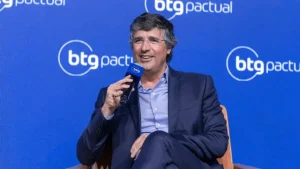


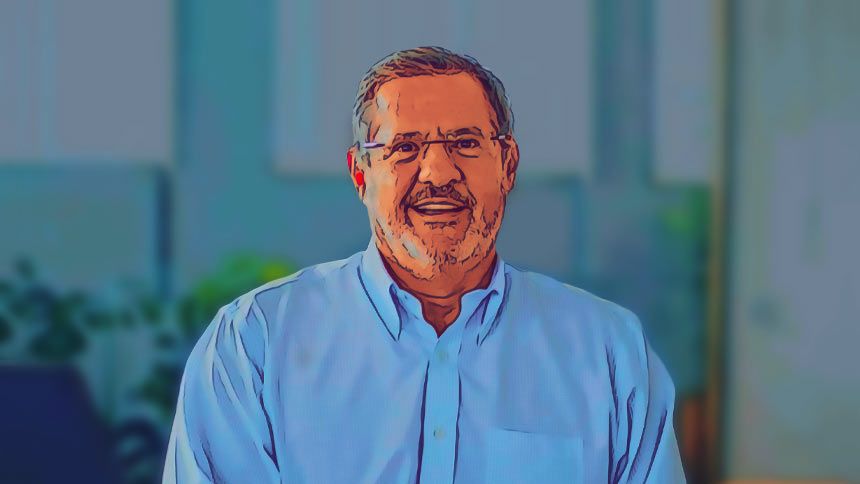
Luiz Fernando Figueiredo, former Director of Monetary Policy at the Central Bank and a respected name in the financial market, does not hide his surprise and indignation at the scandal involving Banco Master – especially the recent interventions of the Supreme Federal Court (STF) and the Federal Court of Accounts (TCU), which are contesting the bank's liquidation process conducted by the Central Bank.
“I consider it an unprecedented attitude; the legal responsibility for liquidating Master belongs precisely to the Central Bank, so much so that the liquidation is officially called extrajudicial liquidation, as it follows a different process than the judicial procedure,” says Figueiredo, in this interview with NeoFeed .
He is particularly outraged by the confrontation – later replaced by a separate deposition to the Federal Police, scheduled for the afternoon of Tuesday, December 30, at the STF headquarters – of Aílton de Aquino Santos , director of supervision at the Central Bank; Daniel Vorcaro , owner of Banco Master; and Paulo Henrique Costa , former president of Banco de Brasília (BRB).
"The Central Bank is the liquidator and regulator, and yet the TCU (Federal Court of Accounts) and the STF (Supreme Federal Court) want to confront a director of the Central Bank with a defendant who allegedly bankrupted the institution and was arrested for excessive fraud? I can't understand it," Figueiredo adds.
The executive, who recently left JiveMauá , where he served as Chairman of the Board, and is now a partner and advisor at the asset management firm Jubarte Capital , asserts that he has never seen anything like the collapse of Master in over 40 years of working in the financial market.
While praising the Central Bank's performance since gaining autonomy in 2021, Direto noted that the Central Bank was slow to decree the liquidation of Master and stated that the episode offers lessons for the financial market.
"Even if there was no proof of fraud, there were strong suspicions, indications that those CDBs sold by Master would not be paid and that the FGC would be the one to pay," he says, referring to the Credit Guarantee Fund , which guaranteed payment of R$ 250,000 per CPF affected by the bankruptcy.
Read below the main excerpts from Figueiredo's interview, in which he also talks about the political and electoral scenario for 2026, recalls his time at the Central Bank between 1999 and 2003, when he implemented the inflation targeting regime, and his philanthropic work at the Fefig Institute, which he founded in 2018, focused on literacy for children aged 0 to 6.
How do you assess the interference of the Supreme Federal Court (STF) and the Federal Court of Accounts (TCU) in the liquidation of Banco Master?
I consider this an unprecedented action, which has no legal basis, because the legal responsibility for liquidating Mastercard lies precisely with the Central Bank – so much so that the liquidation is officially called extrajudicial liquidation, as it follows a process different from the judicial procedure.
What caught your attention the most in this case?
First, what is being questioned by the TCU (Federal Court of Accounts) and STF (Supreme Federal Court) seems to me to be the attitude of someone who doesn't understand how a liquidation process works and what the Central Bank does. Requesting information from the Central Bank is not wrong; the Central Bank is a transparent institution. But the decision regarding liquidation rests with a board of nine members, not just one director of the Central Bank, who was summoned for the confrontation, which I cannot understand.
Why?
The Central Bank is the liquidator and regulator. And now the TCU (Federal Court of Accounts) and the STF (Supreme Federal Court) want to confront a director of the Central Bank with a defendant who allegedly bankrupted the institution and was imprisoned? The other defendant, incidentally, was the president of another institution and was removed for allegedly colluding with the first defendant in this purchase using fraudulent assets. A bank with this alleged volume of fraud and malpractice only shows that this confrontation makes no sense whatsoever. The TCU now saying that the liquidation was premature gives an air of prejudgment about something that, in my view, was exactly the opposite. That is, it was not premature.
"What is being questioned by the TCU (Federal Court of Accounts) and STF (Supreme Federal Court) seems to me to be the attitude of someone who doesn't understand how a liquidation process works."
In your opinion, should the Central Bank have declared Master bank insolvent sooner?
The Central Bank acted too late. Of course, the directors have more information than I do. But the fact is that Master's financial hole was very large, more so than the market had been talking about for over a year. I learned that the FGC ( Credit Guarantee Fund ) sent 38 documents to the Central Bank warning them, and many institutions did the same. I read that the big banks were afraid of competition. Well, this institution didn't have a business , it wasn't a competitor to absolutely anyone: it bought assets, all problematic, often overestimating the value of these assets to show positive equity, but in practice it wasn't a competitor to anyone. It didn't have a business, it wasn't very good at credit, mergers and acquisitions, or fund management. In other words, it wasn't part of any major business.
Have you ever seen a bank failure like the one at Mastercard?
Nothing like this in over 40 years in the market. There was the case of Banco Santos and also Banco Cruzeiro do Sul, among others, but never this big, this giant hole for an institution that has no real market presence. Master was very small. It's astonishing: there's a very poorly written rule from the FGC (Credit Guarantee Fund) that allowed this. I don't know if this needs a change in the law, but if the FGC accepts any amount, regardless of the institution's assets, at R$250,000 per CPF (Brazilian individual taxpayer ID), you can create a monster like this, of R$40 billion. It should be proportional to the institution's assets.
What lesson, besides the one from the FGC (Credit Guarantee Fund), does the financial market need to learn from this episode?
Without a doubt, even if there was no proof of fraud, there were strong suspicions and indications that those CDBs (Certificates of Deposit) sold by Master would not be paid and that the FGC (Credit Guarantee Fund) would be the one to pay. That's why they were sold this way, at absurd rates and commissions. So, there's an important issue here for the market to mature. They didn't know how to handle this conflict of interest, knowing that I'm selling a business that I doubt will pay because I earn a large commission and because it has a guarantee from a third party. In the end, the FGC will pay the 40-odd billion reais to the investors. And there will be a huge capital call for all these banks. So, I think it's a lesson for these banks: their compliance failed. Undoubtedly, the conflict of interest was poorly managed. That's very clear.
"The financial market didn't know how to handle this conflict of interest, of selling a business that I doubt will pay for itself because I earn a large commission."
Is there a chance that the liquidation of Banco Master could be reversed?
From a practical standpoint, I can't see a way to reverse this. After all, there's a hole of R$40 billion or R$60 billion. Who's going to fill that hole? It's difficult. Can a public entity capitalize a private entity, simply because it disagrees with the process that's happening, on a scale of billions of reais? And bypassing the institution dedicated to this, which is the Central Bank, and the Constitution?
Another unprecedented experience ever seen before?
This has never happened throughout history. They're pushing their luck, but again, I don't see any real chance of this liquidation reversing. I don't even know how I would do it because the hole that's there isn't going to disappear. On the contrary, you'll find an even bigger hole, because you'll be revaluing the assets based on their true value, not what's on the balance sheet.
Could this type of interference from the Supreme Federal Court (STF) and the Federal Court of Accounts (TCU) be considered the biggest attack on the operational independence of the Central Bank since the 2021 regulatory framework, which consolidated the bank's autonomy?
President Lula made a great effort to inhibit the independence of the Central Bank; he even tried, and Congress said, 'No, sir.' The way Lula dealt with Roberto Campos Neto, the former president of the Central Bank, was not even delicate; the way he acted was absurd. So, this is the second attack on the Central Bank's responsibilities. Last year, it was regarding monetary policy, and now it's the function of regulator and supervisor of the financial system. The Central Bank is a guardian of the health of the financial system.
What is your assessment of the performance of this independent Central Bank?
Very high, because it's not enough to just pass the law and formally become independent. It needs to be tested, and this independent Central Bank is being thoroughly tested. It happened last year, with the President of the Republic himself frontally attacking the president and the institution. And now again. But, in practice, even those appointed by this government are doing very well and are firm from a technical point of view, doing things right, both in terms of monetary policy and in this chaos that is the Central Bank. Impeccable.
Given this scenario, what are your expectations for the economy in 2026, an election year?
It will be a year more of expectation than of major changes. The year's volatility will largely depend on election polls. On the one hand, we have a president with low popularity, but not to the point of preventing him from being competitive. On the other hand, at least so far, the right and center are at odds. Not because of Lula's virtues, but because of the right's lack of virtues, we are in a situation where Lula is the favorite.
Is it possible to predict a sharp drop in interest rates next year, or could this electoral volatility harm the Central Bank's cycle of Selic rate cuts?
The problem is that this government doesn't believe the country is facing a very large fiscal problem. They think spending is essential for life, so we really have a huge diagnostic problem. If a real adjustment isn't made at the beginning of the next term, the environment will become chaotic. If we have an adjustment in 2027—it doesn't have to be all in one year—the country will grow more, with low inflation, much lower interest rates, but much lower if we start to have a fiscal trajectory. On the right track, the interest rate today, which is at 15% per year, can easily come down to 3.5%, 4%.
During his time at the Central Bank as director of monetary policy, the inflation targeting regime was adopted. Two decades later, is it still the best regime for controlling inflation?
Without a doubt. When we implemented the regime, some countries already had inflation targets. Since then, the United States, Europe, most countries have moved in that direction. So, it's the best regime.
On a personal level, he recently left JiveMauá, where he was the Chairman of the Board, to become a partner and advisor at Jubarte Capital. How was that transition process?
For me, the entire journey at Mauá, and later JiveMauá, was wonderful. Since we merged the two companies, we've made a series of improvements in governance, costs, and focus. A clearer separation into business units, to reduce the company's leverage. After this whole process, I felt that a cycle was coming to an end, despite having a very dear group of people there.
And what are the plans for Jubarte Capital?
It's an asset management firm that currently has three businesses: one focused on macro multi-market funds, one on real assets (assets in the real economy), and a third that we call Jubarte Ventures, which are more embryonic ventures. We had a very good year, with a performance that placed our funds in the industry's top 10. We are always looking for assets that have some symmetry and great long-term potential. It's a new company, and that's the beauty of it—with highly experienced people who have worked together for a long time, driven by passion and wanting to create things that truly add value to the market.
Is joining Jubarte preventing you from dedicating more time to the Fefig Institute?
Today, 60% to 70% of my time is dedicated to the institute. This year we have truly impacted the support of over 104,000 children in various states, such as Tocantins, Rio Grande do Norte, Piauí, Paraíba, Santa Catarina, Bahia, and São Paulo. We strive to be present where the state has the most difficulty in helping children aged 0 to 6 receive a quality cognitive education, so that they are prepared for the next stages of life. Everything we do at Fefig is measured. So I know if the children are becoming literate or not, if they are developing or not. I am privileged because being able to do this is a privilege.