


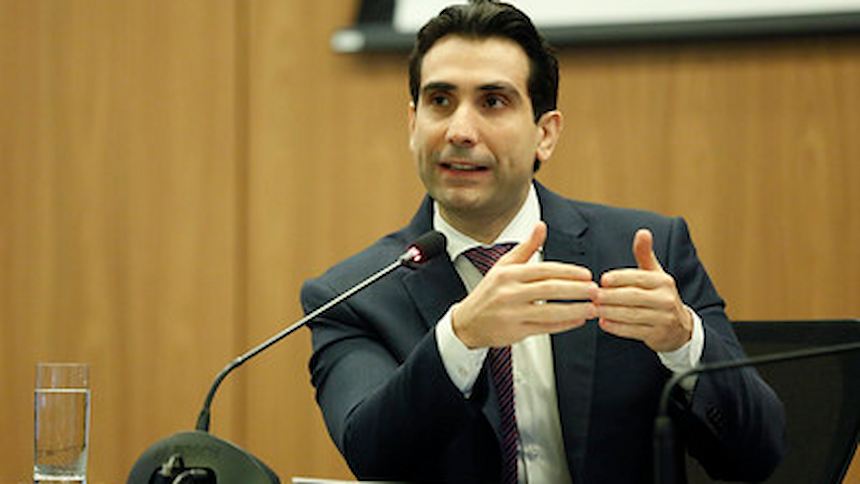
The decision by the Monetary Policy Committee (Copom) of the Central Bank , which on Wednesday, January 28, kept the Selic rate unchanged at 15% per year - the highest level in two decades - did not surprise the market.
But it reinforced the resilience of the Central Bank president, Gabriel Galípolo , who resisted pressure from the federal government and a large part of the productive sector to begin the interest rate cut cycle now in January – which should occur at the next Copom meeting in March.
In its statement, the Copom – which maintained the Selic rate at 15% for the fifth consecutive meeting – affirms that “the current scenario, marked by high uncertainty, demands caution in the conduct of monetary policy.” According to the committee, the decision to maintain interest rates at 15% is compatible with the strategy of converging inflation towards the target over the relevant horizon.
"The Committee anticipates, should the expected scenario materialize, initiating the easing of monetary policy at its next meeting, but reiterates that it will maintain appropriate restraint to ensure inflation converges to the target," the statement added.
Caution, incidentally, accompanied Galípolo's management at the helm of the Central Bank, which completed one year this January. His performance was marked by three central axes: the careful conduct of monetary policy , with a high Selic rate, the confrontation of political and market criticism regarding high interest rates, and firm action in theBanco Master case.
Nominated by President Luiz Inácio Lula da Silva and having served on the economic team of Finance Minister Fernando Haddad, Galípolo took over the Central Bank amid expectations that he would adopt a stance more aligned with the government.
Some sectors of the government expected faster cuts, but Galípolo maintained a conservative stance, citing the need for stability and credibility. Throughout the year, criticisms arose on social media and in political debates that the Central Bank was "hindering" the economy – criticisms he countered by saying that decisions follow technical criteria and that misinformation on social media distorts the debate.
The government also pushed for an expansion of the Central Bank's regulatory scope, especially after scandals involving fintechs and Banco Master, which placed Galípolo at the center of debates about financial supervision. But, just as when he countered criticism of the monetary policy conducted by the Central Bank, the head of the institution demonstrated political skill in avoiding controversy.
Experts interviewed by NeoFeed give a positive assessment of the Central Bank's monetary policy conduct under Galípolo and praise his performance in the crisis caused by the attempted interference of the Federal Audit Court (TCU) in the Central Bank's decision to decree the liquidation of Banco Master, highlighting his political skill.
Economist Marcos Mendes, a researcher at Insper , was one of those who didn't have high expectations when President Lula nominated Galípolo to head the Central Bank, describing him as "a heterodox economist with strange opinions on interest rates."
In an interview with NeoFeed , he admitted to being surprised by Galípolo's rapid adaptation to what he called the BC's traditional script, even in adverse situations, amid criticism of the previous management he was part of before taking over the bank.
"There was a good transition with the departure of Roberto Campos Neto , with the board deciding to raise interest rates for three consecutive Copom meetings, giving Galípolo room to adapt without having to make controversial decisions," he says.
Mendes claims to have two hypotheses about the government's relationship with the current management of the Central Bank. The first, according to him, is that the PT (Workers' Party) would prefer a monetary policy of low interest rates. Galípolo, by contradicting this expectation, reinforced the consolidation of the Central Bank's autonomy – an institutional maturation in a national scenario where institutions are not performing well.
"There is also a second hypothesis: Lula attacks the Central Bank in public, but deep down he concedes and even thinks the high interest rate policy is good because it keeps inflation in check – since high inflation would be a defeat for his government," says the economist.
"This balance favors Galípolo and, at the same time, allows Lula to pursue the typical PT policy, which is to distribute subsidized credit and create programs with electoral impact, conducting a populist policy with low inflation," he adds.
Seriousness
According to economist José Francisco de Lima Gonçalves , a professor at FEA-USP, despite the initial distrust from the financial market due to President Lula's nomination, Galípolo demonstrated seriousness and competence, according to him, "acting by the book ," following the rules, which did not surprise the economist.
“Galípolo has a political profile suited to the position; he knows how to modulate his discourse, listen, understand arguments, and delimit the conversation,” says Gonçalves, who has a long career in the financial market. “His stability in dealing with people and intellectual honesty are strong points,” he adds, emphasizing that he “converses” instead of just making statements.
Gonçalves also highlights Galípolo's firmness against government pressure to reduce interest rates, which he expected. "The discussion about interest rates is inherently political and distributive. The challenge is to reconcile this pressure with the inflation targeting regime, something Galípolo achieved without yielding," he emphasizes.
Another aspect of the Central Bank president's management considered successful is seen in the analysis of the trajectory of interest rates and exchange rates. "Although external factors, such as the policies of US President Donald Trump, helped in the fall of the dollar, the calibration of monetary policy was crucial," observes Gonçalves. "The focus should not be only on the Selic rate, but on the entire yield curve, as long-term interest rates influence investment and employment decisions."
Felipe Salto , chief economist at Warren Investimentos, also praises Galípolo's work at the head of the Central Bank, which, according to him, is eminently technical and, therefore, should be commended.
“The Central Bank, under Galípolo's management, is operating autonomously and with a view to achieving the inflation targets, which are extremely tough, it's true,” says Salto, former Secretary of Finance and Planning for the State of São Paulo. “Interest rates are high, but this also reflects the government's choice for a deficit fiscal policy, which implies increasing debt.”
Mendes, from Insper, highlights the consistency of the Central Bank's monetary policy under the current administration, with high interest rates, a necessary initiative amidst an expansionary fiscal policy by the federal government, with a growing primary deficit and a sharp increase in subsidized credit via public banks.
“Budgetary allocations for credit grew from R$76 billion in 2022, the last year of the previous government, to R$179 billion in 2025, putting pressure on demand and requiring monetary restraint,” the economist points out. “Despite real interest rates above 10%, inflation remained within the target range due to external aid – including the devaluation of the dollar, making imports cheaper.”
Galípolo, however, must be wary of some pitfalls ahead. Mendes notes that two technically strong and conservative directors, who acted as a counterweight in the Copom (Monetary Policy Committee), have left. "The new appointments will be a test of the autonomy model, in the current context of attacks on the Central Bank by the TCU (Federal Court of Accounts) and the STF (Supreme Federal Court), linked to the Banco Master case," he warns.
Gonçalves, from FEA-USP, however, believes that the appointment of two new directors is not a cause for concern. "It is expected that one of the appointees will be a career employee of the Central Bank, mitigating fears of political alignment," he states. "The presence of a different profile, possibly more academic and less market-focused, is not a problem, but a diversity that the market needs to coexist with," he adds.
Political skill
The Master case, incidentally, is seen as the biggest test for Galípolo. During his tenure, the Central Bank prohibited the sale of the bank to BRB and subsequently decreed its extrajudicial liquidation, alleging billion-dollar fraud and systemic risk. The decision generated a strong political reaction and questioning at the TCU (Federal Court of Accounts), which even restricted the Central Bank's access to documents in the process.
Mendes acknowledges that Galípolo demonstrated a high capacity for political maneuvering within the TCU (Federal Court of Accounts), using it to successfully lead the Central Bank amidst the biggest recent financial scandal.
Gonçalves describes the actions of Congress and the TCU (Federal Court of Accounts) in the Master case as "irresponsible and dangerous." "The Central Bank managed to avoid contaminating the institution's role; in this respect, Galípolo's political skill in negotiating with the TCU was decisive in overcoming the crisis," he adds.
Felipe Salto states that the liquidation of Master was necessary. "The absence of contagion to other institutions or to the market in general reflects not only the fact that Master was relatively small, but also the fact that the Central Bank acted firmly, despite the known political pressures," he emphasizes.
The election year is one of the challenges that Galípolo must face in 2026. Gonçalves cites the political uncertainties inherent in the presidential election – such as the Master's level parliamentary commissions of inquiry, which could affect the Central Bank's actions and, above all, the fiscal issue. "The issue of the primary surplus will not be resolved during the campaign and will remain a constraint after the elections, requiring continued caution from the Central Bank," says the USP academic.
Salto warns that the continuation of monetary policy will depend on the behavior of the government's fiscal policy. "The change from the current level of interest rates should begin to occur, safely, over the next few months, but we will only be able to experience a civilized real interest rate, with inflation under control, when fiscal policy makes an effective contribution, that is, when we return to generating surpluses in public accounts," he says.
In a scenario of extreme worsening of the fiscal situation, Mendes warns of the emergence of fiscal dominance – when interest rates rise, expectations worsen, and the Central Bank abandons the fight against inflation.
“We are still far from that, but the National Treasury's public debt projections are not converging; they are heading towards above 100% of GDP,” warns Mendes. “At some point, this thing will explode.”