



Brasilia and São Paulo - After several twists and turns and much anticipated by the business community, the so-called Redata (Special Tax Regime for Data Center Services), a government program of tax incentives to stimulate the import of essential components for this chain, has finally begun to advance in the National Congress.
The climate of uncertainty among business leaders in the sector interviewed by NeoFeed , however, remains the same, caused by the delay of the government and parliamentarians in approving the program.
The initial version of Redata was announced in May and made official in September of last year, when the federal government published Provisional Measure No. 1,318/2025, which created the special regime that eliminated taxes such as IPI, PIS/Cofins, and import tax levied on items used by data centers .
The announcement of the program, which reduces the capital cost for installing data centers in the country by more than 20%, led the government at the time to estimate an investment surge of R$ 1 trillion by 2030, causing euphoria in the sector. But the provisional measure remained stalled in Congress, without a committee formed or a rapporteur chosen – and, without its approval, the planned investments never materialized.
With the validity of the provisional measure dangerously close to expiring (February 26), the federal government decided earlier this week to abandon the provisional measure and send a bill with the same content to the legislature.
The text itself, both of the new bill and the provisional measure, which are practically identical, pleases the business sector and contains no resistance or ideological content, which would facilitate its approval in Congress. But the novelty runs into the same problem: the delay for the bill to be processed and approved, given a legislative calendar that includes Carnival, the World Cup, and elections.
“The initiative to transform the provisional measure into a bill was well received, but our expectation is that this bill will proceed at a speed very similar to that of the provisional measure, which was about to expire,” says Luis Tossi, vice-president of the Brazilian Association of Data Centers ( ABDC ).
Tossi doesn't hide the climate of insecurity among companies in the sector – whose expectations regarding the approval of Redata are reminiscent of the plot of the 1954 play Waiting for Godot by Irish playwright Samuel Beckett, whose characters wait for the arrival of Godot, who never appears.
The most recent promise was made by the Speaker of the House, Hugo Motta (Republicanos-PB): to vote in plenary session next week, between Monday, February 9th, and Tuesday, February 10th, on the urgency procedure for the bill. A source admitted to NeoFeed , however, that the process is not expected to be so quick, as a rapporteur still needs to be appointed, among other pending issues. "The idea now is to try to approve the bill before the provisional measure expires, by the 25th," says the source.
The irony is that the replacement of the Provisional Measure with the Bill was received with relief by the data center sector, which had made no secret of its dismay at the threat from parliamentarians to include in the text of the Redata Provisional Measure the regulation of a law on Artificial Intelligence – which would make its approval within the foreseen deadline impossible. The government left this issue out of the Bill.
According to Tossi, this slowness in approving Redata exposes the lack of sensitivity of the government and Congress to what is at stake. The incentives foreseen by the program, valid for five years, directly affect equipment such as high-performance servers (GPUs, CPUs), benefiting any company that invests in cloud and data centers.
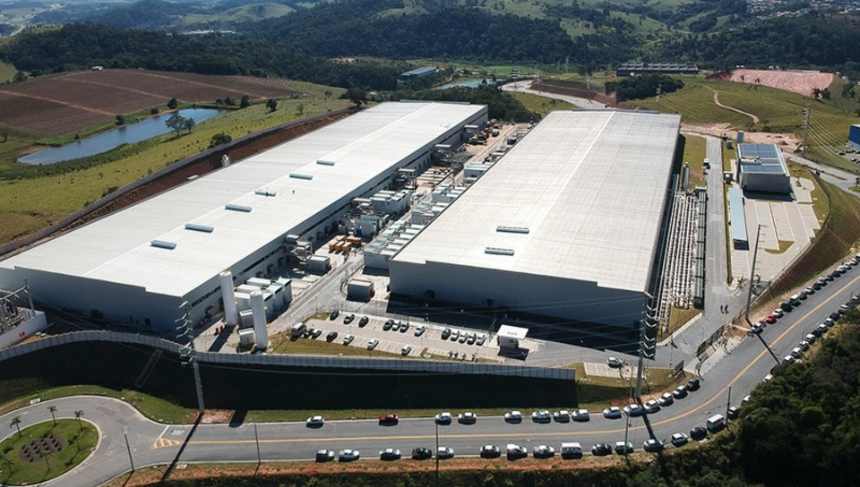
“The world is looking for energy and locations to make these large investments, in the order of billions of dollars; when the government first announced Redata in May, it generated very high expectations,” says the head of ABDC. “Since then, the market has been at a standstill, waiting for the law to be approved.”
According to him, this behavior makes sense given the large investments that data center projects, especially AI projects, require. Tossi notes that a single 100-megawatt IT data center project needs approximately US$7 billion in investment, and the current demand for basic network access for data centers is already approaching 16 gigawatts (GW), indicating enormous untapped potential.
“Why would I make the decision to invest billions of dollars now, if that investment can be reduced by 20% to 30% with the benefits foreseen by Redata?” he asks. “So, perhaps not having those benefits would be better than having generated an unfulfilled expectation.”
Eduardo Menossi, founding partner of EBM – a group specializing in engineering solutions for data centers – acknowledges the bottleneck caused by the delay in the approval of Redata. According to him, although the enactment of the Redata Provisional Measure generated expectations that froze part of the pipeline while awaiting incentives, other critical initiatives advanced during these almost five months of delay.
“Large clients, such as Ascenty , have projects that don’t depend on Redata, indicating resilience,” he points out. “In other words, the program acts as an accelerator and optimizer of projects, not as a prerequisite.”
Menossi, however, highlights the program's potential, since Brazil combines the advantages of cheap energy and strategic connectivity. "Data centers here consume less than 2% of national generation, indicating room for growth; in the United States, that figure is 10%, and they are resorting to nuclear energy to meet demand," he says.
Other strategic advantages he cited include the fact that Brazil has the second-highest connectivity in the world, linking Europe, Africa, and the USA, attracting investments, including from China.
The EBM executive advocates for targeted reinforcements to the Brazilian electricity grid to meet demand – given that there is a surplus of energy – and the thesis of "exporting energy via data," anchored in Export Processing Zones (EPZs), free trade areas with foreign countries, established in Brazil to encourage export-focused industries, offering tax benefits in hubs such as Pecém, in Ceará.
“São Paulo serves the consumer market for data centers; those in the Northeast operate on a logic of latency and international connectivity,” he says. “They are complementary, not competitors, with distinct infrastructure and demand.”
The EBM Group has already built 32 data centers in Brazil, Mexico, Chile, Colombia, and Peru, with plans to expand to Argentina next year. In 2025 alone, it generated approximately R$ 300 million in revenue, a 50% increase over 2024. With the sector's accelerated growth, the expectation is that revenue could reach R$ 800 million by 2030.
Currently, EBM has 680 megawatts (MW) of IT capacity operating in Brazil in hyperscale data centers. The company's scope, which operates in partnership with investment funds, covers all stages of the project, from civil construction and delivery of the basic infrastructure to the integration of power systems, air conditioning, cabling, automation, monitoring, and operational maintenance.
"In the state of São Paulo alone, we currently have four projects underway for distinct Big Tech companies, each around 100 MW," says Menossi.
“I am certain that, with the unlocking of Redata, these four projects will end up happening simultaneously,” he adds, pointing to the potential that the program offers – and which now depends on the agility of the National Congress to consolidate.