

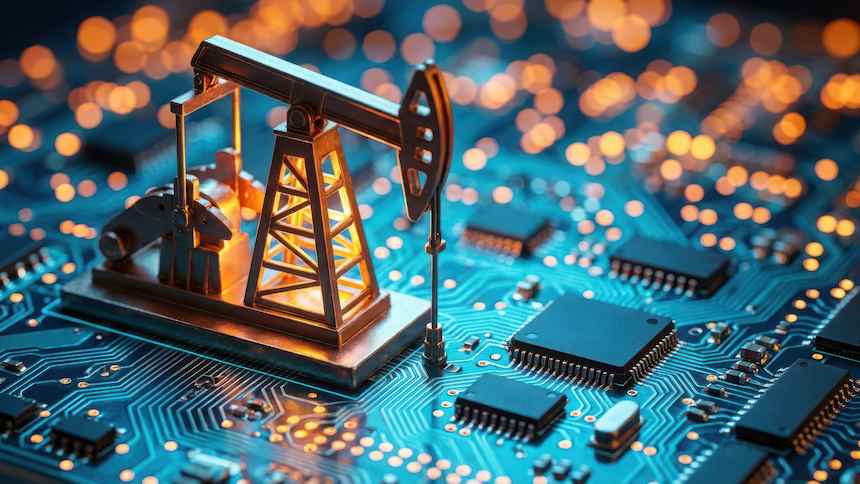
The war in Iran is threatening to have an unimaginable effect in the last three years: paralyzing the boom in artificial intelligence ( AI ) investments, which from American big tech companies alone reaches US$1.5 trillion. The reason is the blockade of the Strait of Hormuz in the Persian Gulf, which is disrupting much more than the transport of about 20% of the world's oil and natural gas consumption.
With the war between the United States and Israel against Iran entering its fourth week, Taiwan and South Korea – the global center of semiconductor production – have sounded the alarm, warning of the impact on the entire production process involving these high-tech products.
This is because the chip supply chain spans 70 countries and relies on the import of energy and chemicals from the Middle East, which uses the Strait of Hormuz as the starting point for the flow of parts, raw materials, and products related to the chain.
The chip production process takes up to 100 days and involves more than 1,000 distinct manufacturing steps. Chip design takes place in the US or the UK. Silicon wafers are produced in Japan or Germany.
The actual manufacturing of the most advanced chips that power AI workloads is done almost entirely in Taiwan (92%) and South Korea (8%). Assembly and testing take place in Malaysia, Vietnam, and the Philippines. The finished chip is then shipped to a data center in the US.
There are over 50 points along this chain where a single country controls more than 65% of the global market share. Each one has become more expensive and more uncertain.
The South Korean industry remains at the heart of the global semiconductor supply chain. Samsung Electronics and SK Hynix continue to be dominant forces in the production of memory chips. These components are fundamental to the operation of artificial intelligence systems, cloud data centers, smartphones, and vehicles.
At the other end of the chain, Taiwan's TSMC maintains its strategic position: the company is responsible for about 90% of the advanced semiconductors manufactured in the world and produces virtually all of the latest generation AI chips developed by Nvidia, currently the most valuable company on the planet.
Both South Korea and Taiwan rely heavily on energy from imported fossil fuels, much of which is transported across the Strait of Hormuz. In Taiwan's case, more than a third of the liquefied natural gas (LNG) consumed in the country comes from the Middle East.
The region is also crucial in supplying chemical inputs for the Asian chip industry. About a third of the world's helium, essential for cooling silicon wafers and obtained as a byproduct of natural gas processing, is produced in Qatar — from where South Korea and Taiwan import most of their supply, especially high-purity helium, which is difficult to replace.
Another sensitive point is sulfur, used in cleaning and etching processes for semiconductors. Half of the sulfur transported globally by sea also passes through this strategic strait. Even before the recent tensions, the market was already facing shortages due to growing demand from the technology and electric vehicle industries.
For now, energy and commodity stockpiles will provide protection throughout the supply chain. South Korean chipmakers reportedly have helium supplies for about six months. Taiwan has secured more than half of its LNG needs for May.
Is Trump bluffing?
US President Donald Trump's announcement on Monday morning, March 23, that US forces would postpone attacks on Iranian power plants and energy infrastructure for five days, after reporting "productive" talks with the Iranian regime, caused US stock indices to rise and Brent crude oil futures to fall below $100 a barrel.
But the Iranian Foreign Ministry's denials throughout the day that the Persian country was in negotiations with the US – although it admitted that countries in the region were trying to initiate diplomatic dialogue – redoubled concerns about the impact of the conflict on the global economy.
According to analysts, if the closure of the Strait of Hormuz persists for several more weeks, chip prices will rise sharply as manufacturers ration and compete for an increasingly limited supply.
In the United States, rising energy costs would make current and future data centers less viable. American companies plan to invest $650 billion in AI infrastructure this year, with 75% of the energy for local use coming from natural gas.
The problem is that many American LNG exporters are rushing to sell their supplies to Europe and Asia, where, due to shortages, they can charge higher prices. This will increase energy prices in the US – electricity accounts for approximately half of a data center's operating expenses.
What's really at stake are the valuations of high-tech companies. If they suffer a devaluation, the debts incurred with AI assets as collateral will be at risk.
The $1.5 trillion investment in AI infrastructure, committed by major technology companies – Meta, Apple, Amazon, Google, and Microsoft – is based on the premise of a functional global supply chain, which the conflict with Iran abruptly disrupted.
Logistics companies estimate that hostilities will end by mid-April, allowing maritime transport to resume through the Strait of Hormuz. Otherwise, they warn, the world will see its first disruption to post-Covid-19 supply chains.