

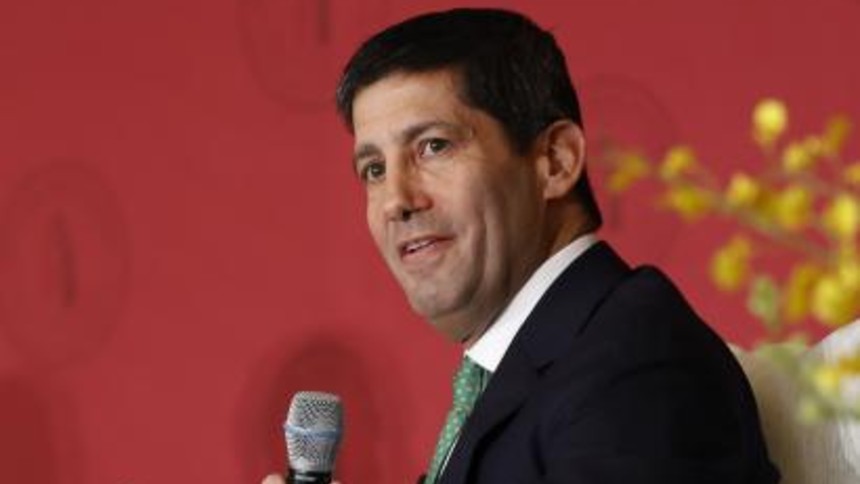
After years of criticizing Jerome Powell , Donald Trump finally has the chance to replace the chairman of the Federal Reserve (Fed, the central bank of the United States). And he chose a former director who was critical of the current administration and who has spent the last few months lobbying for his nomination.
The American president announced this Friday, January 30th, that he has chosen Kevin Warsh to head the monetary authority, replacing Powell, whose term ends in mid-May. His nomination still needs to be approved by the Senate, where Trump holds a majority of votes.
Warsh, 55, served as a Fed director between 2006 and 2011, playing a crucial role behind the scenes in Washington's 2008 Wall Street bailout, according to The Wall Street Journal (WSJ) . Throughout his career, he built a reputation for being tough on inflation and critical of central bank liquidity injection measures.
After more than a decade vying for the nomination to chair the Fed, Warsh beat out names like Kevin Hassett, director of the White House National Economic Council; Christopher Waller, acting director of the Fed; and Rick Rieder, an executive at BlackRock.
To that end, he spent the last few months working to build his name within the Trump administration and criticizing Powell and the Fed, much to the president's delight. In his view, the institution was straying from the right path.
Despite his hawkish history, observers point out that he has been showing more alignment with Trump, who is pushing for the Fed to cut interest rates further. In December, in an indication that he was inclined to appoint Warsh as Fed chairman, Trump said that Warsh "believes we should have lower interest rates," according to the WSJ .
This alignment comes at a time when the Fed's independence is being tested, given Trump's insistence that the monetary authority accelerate interest rate cuts. The president has already made clear what he expects from the next Fed chairman: "Anyone who disagrees with me will never be chairman of the Fed!", Trump wrote in a social media post on December 23.
Trump is at war with the Fed and Powell, despite having appointed him to head the monetary authority in his first term in 2018. In addition to public criticism, calling Powell an " idiot" and "stubborn," Trump has taken the matter to court.
Earlier this month, the Department of Justice announced that it had opened a criminal investigation against Jerome Powell to examine his testimony before the Senate in June regarding the renovation of the central bank headquarters in Washington.
The government accuses the Fed of providing incorrect information to Congress regarding the increased cost estimate for the project, which rose from $1.9 billion to $2.5 billion. The monetary authority claims that the difference stems from actual costs of materials, equipment, labor, and unforeseen problems.
Prior to that, in August, Trump announced the dismissal of Lisa Cook, a director at the Fed, on charges of mortgage fraud, in an attempt to appoint someone aligned with him. The following month, the courts reversed the decision.
The opening of the inquiry led Powell to take a stand against the White House , something rare in the Fed's nearly 113-year history. In a video, he said the investigation is part of Trump's campaign to push for decisions favorable to his policies.
The independence of the Fed is a pillar of the American economy. Created by Congress, the safeguards prevent a president from directly interfering in decisions about interest rates — which have a profound impact on inflation, employment, and the trajectory of the economy.
The seven members of the Board of Governors, for example, serve 14-year terms and cannot be dismissed at will. The institution was designed to avoid partisan alignments. The Fed chairman coordinates, but does not control, the other members of the Board – each of the seven members has an equal vote in decisions. Even with Warsh's appointment, the majority of the Board seats remain occupied by governors appointed by previous administrations.
For analysts, the episode marks an unprecedented escalation in the relationship between politics and monetary policy in the United States. If Trump manages to shape the leadership of the Fed, the impact could go beyond interest rates: it opens the door to decisions guided by political interests, with lasting effects on credibility, inflation, and global stability.
It remains to be seen how Warsh will navigate this situation and ensure the Fed's credibility.