


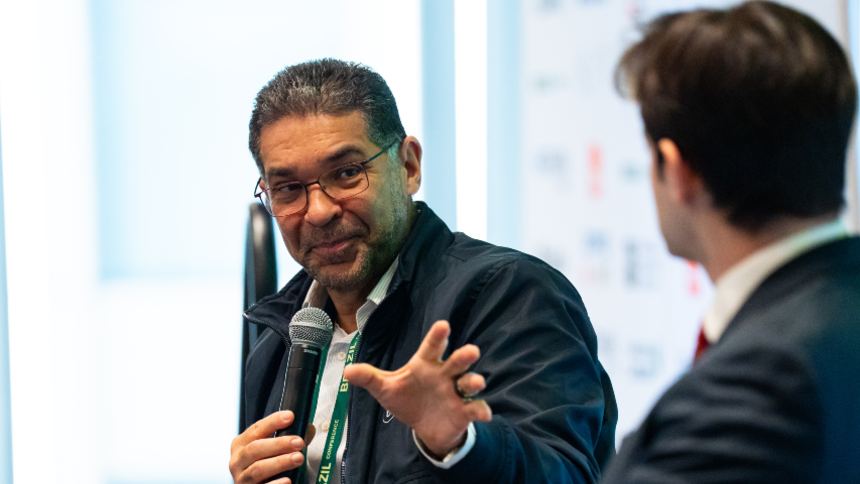
Boston (USA) - As is tradition in all editions of the event, the Brazil Conference 2026, held in Boston and Cambridge, has been the stage for a series of tips given by speakers to the audience, made up, in its vast majority, of Brazilian students from leading American universities.
This was also the tone adopted by Mansueto Almeida , chief economist at BTG Pactual , at the opening of the program this Sunday, March 29th, at Harvard University. With one difference: the recipient of his advice.
During his lecture, the former Secretary of the National Treasury was asked what advice he would give to the next Minister of Finance, a position for which his name has been mentioned with increasing frequency, in the first hundred days of the new government that will take over the country after the 2026 elections .
“First, whoever is elected president of Brazil, we will have to help,” Almeida stated. “Secondly, and I know this is very unpopular and unpleasant, I would change the policy regarding minimum wage adjustments.”
He then noted that Brazil will conclude President Luiz Inácio Lula da Silva's four-year term with a minimum wage increase of around 14% to 15%, within a current context of full employment in the country.
“The very dynamics of the labor market are driving wages upwards. In this scenario, perhaps it would be possible to have a much smaller adjustment policy,” he said. “Whether it will be 0.5%, 1% or less is a political debate. But we can't keep doing 2.5%, 3% every year, because the impact on public finances is too great.”
Secondly, Mansueto "suggested" to whoever takes over the portfolio next year that they review the criteria of some social programs, starting by questioning whether that particular public policy is reaching those who actually need it, or if there are distortions in this area.
“Brazil needs social policies. That’s not the point of the discussion. The question is, what should the target audience be and how much should be spent,” he stated, citing the example of Bolsa Família, which, from 2003 to 2019, reached 14 million families at an annual cost that never exceeded R$ 40 billion.
“Today, it reaches 20 million families at an annual cost of R$ 160 billion,” he highlighted. “Wouldn’t it be better to cover an audience of 16 to 18 million families at an annual cost of R$ 140 billion? And, given that there has been such great growth, would we really need a real increase in the minimum wage?”
Within this package, a third piece of advice involved investing in and advancing an agenda to reduce special tax regimes. And, on this point, Almeida cited several examples that, in his view, are not justified in the Brazilian context.
“No country with a universal public health system allows families to fully deduct 100% of their healthcare expenses from their taxable income,” he emphasized. “In Brazil, it is allowed, which makes absolutely no sense.”
In another comparison, he emphasized that, unlike other markets, in Brazil, policies to stimulate small businesses are based on a very elastic concept of this type of company, which also creates distortions at that end.
"So, there's a lot that needs to change on the revenue side, but it's necessary to control the growth of spending," he said. He added that what the market expects, whoever the government is, is not that Brazil will make an adjustment and stabilize public debt in one or two years.
“No government is going to cut R$ 50 billion, R$ 100 billion, or R$ 200 billion in spending from one year to the next,” he stated. “What the market wants is at least to be sure that in 4 or 5 years, it can see that the debt stops growing and eventually enters a downward trajectory.”