

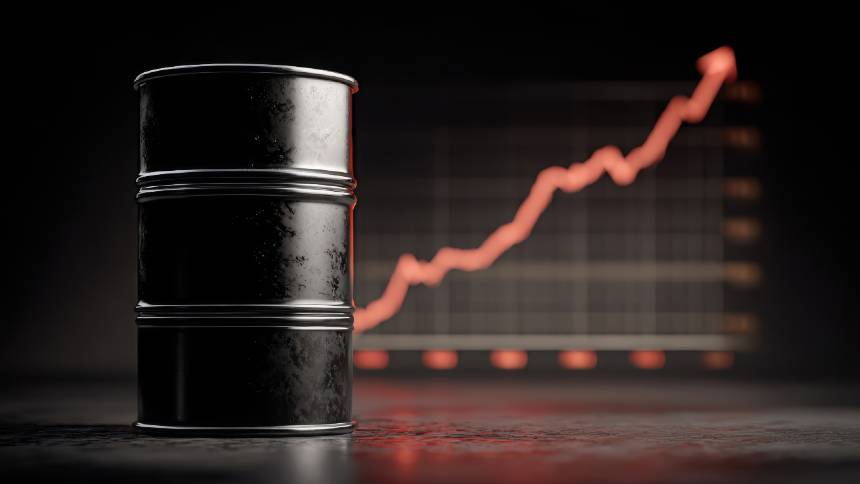
Just over a week after the joint attack by the United States and Israel on Iran , the price of oil surpassed the US$100 per barrel mark on Sunday, March 8, for the first time in four years.
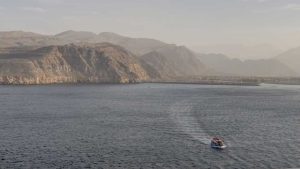
The price increase comes amid ongoing tension caused by the closure of the Strait of Hormuz, through which between 20% and 30% of the world's oil production passes.
Unable to ship crude oil to global markets, producers in Iraq, the world's fifth-largest supplier, began running out of storage space, causing the country to reduce its production by more than two-thirds. In Kuwait, the tanks have also filled up.
Aramco , the world's largest oil company, also appears to be reducing its production. According to sources, the company has begun cutting production at two of its oil fields, which were not specified. Last week, the company had already shut down its largest oil refinery in Saudi Arabia .
If the situation persists, there could be a halt in oil production, which would be the worst possible scenario for the market. This risk has already caused declines in global stock markets due to the risk of inflation and economic stagnation.
On the morning of Monday, March 9th, European stock markets were down about 2%, while the Nikkei closed the trading session with a drop of more than 5%. New York futures were also registering losses of 1%.
Because of these impacts, the G7 finance ministers will discuss a possible joint release of oil from their reserves, which would be coordinated by the International Energy Agency, as an emergency measure.
According to the Financial Times , three G7 countries, including the US, have already expressed support for the idea. A source from the British newspaper stated that some Americans believe that a joint release in the range of 300 million to 400 million barrels, equivalent to 25% to 30% of the 1.2 billion barrel reserves, would be appropriate.
At the meeting, leaders should consider the inflationary pressure caused by rising oil prices, which, according to experts, could cause lasting damage to global economic growth.
China , India, South Korea , Japan , Germany , Italy, and Spain are among the largest importers of crude oil, which puts them in a vulnerable position with rising commodity prices.
Since the creation of the IEA in 1974, there have been only five collective oil releases by members of the organization. The last two occurred in 2022, following Russia's invasion of Ukraine .
In Brazil, the impacts are also being felt. With rising prices, Petrobras is under pressure to adjust fuel prices, as they are being sold below the average price in the international market.
Based on the results of the fourth quarter of 2025, in which increased production ensured positive performance, the state-owned company believes it is prepared to face any scenario and sees no reason to change the course of its pricing policy, at least for the time being.