

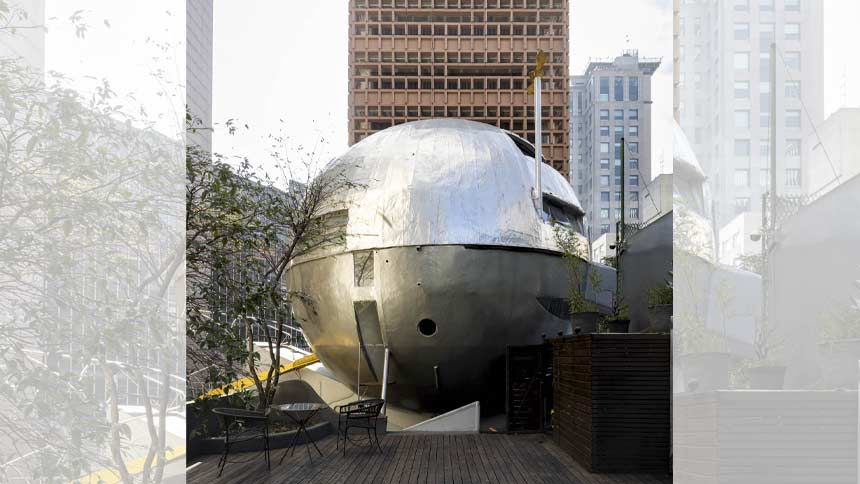
Among buildings with straight lines and predictable facades, a metallic sphere rests on a structure between Rua Amauri and Avenida Faria Lima , in the bustling Itaim Bibi neighborhood. Designed by architect Eduardo Longo in the 1970s, Casa Bola remains a reminder that architecture is a place of invention and projects for the future.
It is in this unlikely space that the fifth edition of Aberto takes place, a project by art advisor Filipe Assis that transforms unique residences into temporary exhibition spaces, taking art out of the white cubes of museums and galleries .
“This will be the biggest Open House ever,” Assis tells Neofeed . In addition to the Casa Bola — which can also be understood as a work within the exhibition — the show will occupy three floors, each 180 m², of a gallery designed by Longo and integrated into the same architectural complex.
“We want to showcase some of his other projects, in addition to Casa Bola, presenting drawings, photographs, and models,” Assis points out. These works comprise a section dedicated to Longo's production, organized by curator Fernando Serapião.
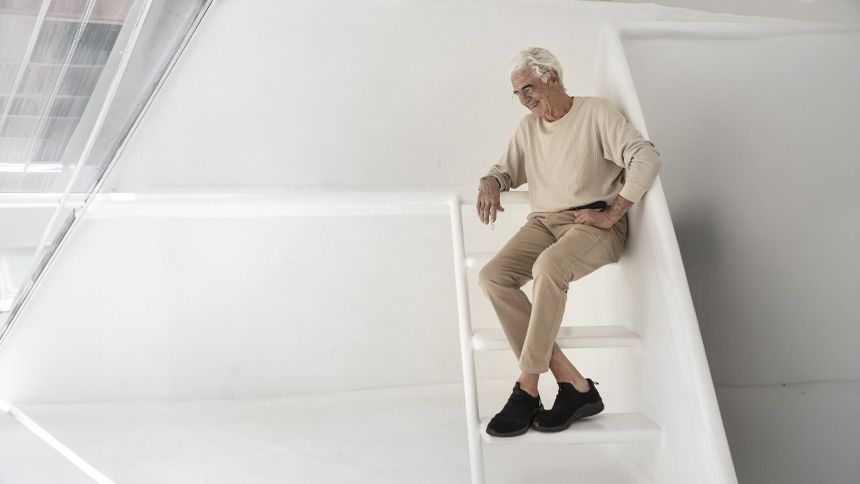
“I was half dead,” says Longo, 83, bluntly, in conversation with the reporter. “I was stuck on the Casa Bola project for a long time, all very folkloric, but discredited.” Now, seeing the house occupied and discussed again, he observes: “In fact, Bola has never been as successful as it is today.”
The exhibition is built upon Longo's projects. "We are prioritizing a very intense dialogue with Casa Bola — whether through humor, materiality, or forms," explains Assis.
With approximately 90% of the works commissioned specifically for the exhibition, the fifth edition brings together around 60 works by 50 artists, including Sandra Cinto, Luiz Zerbini, Letícia Ramos, Iole de Freitas, Marepê, and Carlito Carvalhosa.
The exhibition also addresses a theme the architect has reflected on for decades: public space. Fifteen sculptures will occupy the median strip of Faria Lima Avenue, in the section between Gabriel Monteiro da Silva and Adolfo Tabacow streets.
“We are expanding the exhibition to the urban space to show the art to those who are not necessarily looking for it or who are not always familiar with the subject, but who may come into contact with the works along the way,” says Assis.
A journey into the subconscious.
It was the early 1970s. Eduardo Longo's office was thriving, designing iconic houses for wealthy families. But a "journey" into his subconscious led him to rethink what he had been producing.
“I took a trip into my subconscious through the use of a product called Cannabis sativa, which I used to reflect on all of this,” the architect recalls jokingly, without hiding the fact.
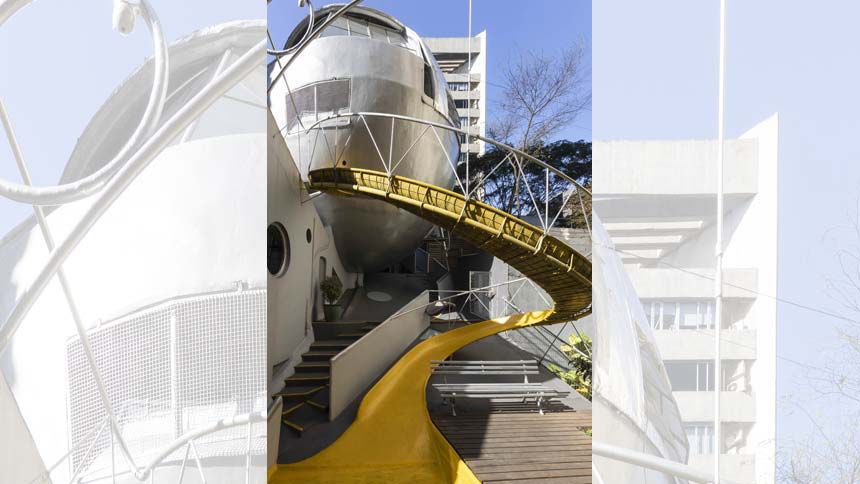
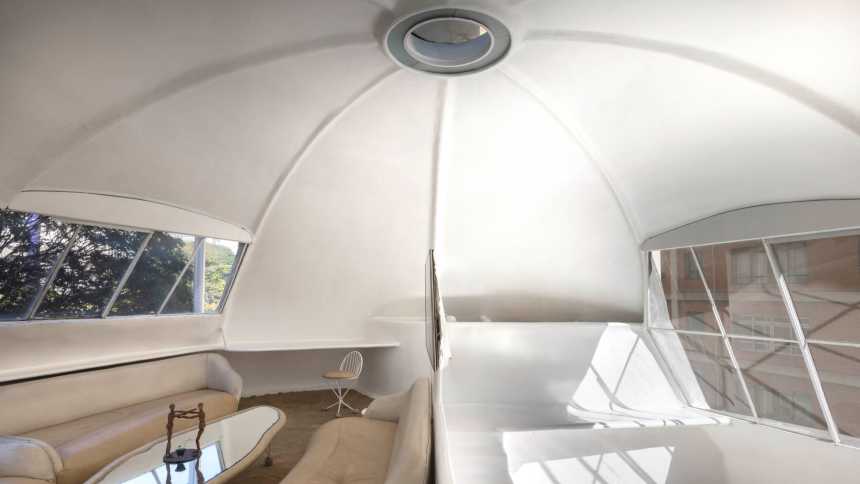
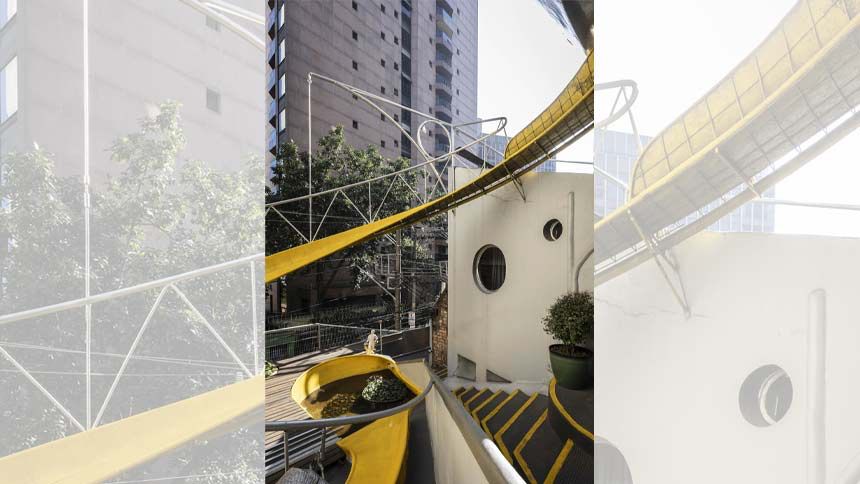
Known for his sculptural architecture, marked by formal boldness and the intensive use of materials such as wood, mortar, and iron, Longo then began to wonder what he could do using less material.
The issue arose from a project he had designed for a plot of land whose dimensions ended up being reduced, making it smaller than the one for which he had conceived the building.
“No volume is lighter or more economical than a sphere,” he states. “Inhabiting such a form, however, was a challenge—something truly unusual.” So unusual, in fact, that the architect decided to undertake the experiment himself.
Going against his family's wishes — especially his wife and father, whom he jokingly refers to as "the story's greatest enemies" — Longo closed his office to dedicate himself entirely to the idea.
It was a very funny house.
The first version of the house was conceived as a temporary structure covered with tarpaulin. But a friend who worked in boat building introduced him to a material capable of supporting thin, curved walls: reinforced mortar, used in the construction of ship hulls.
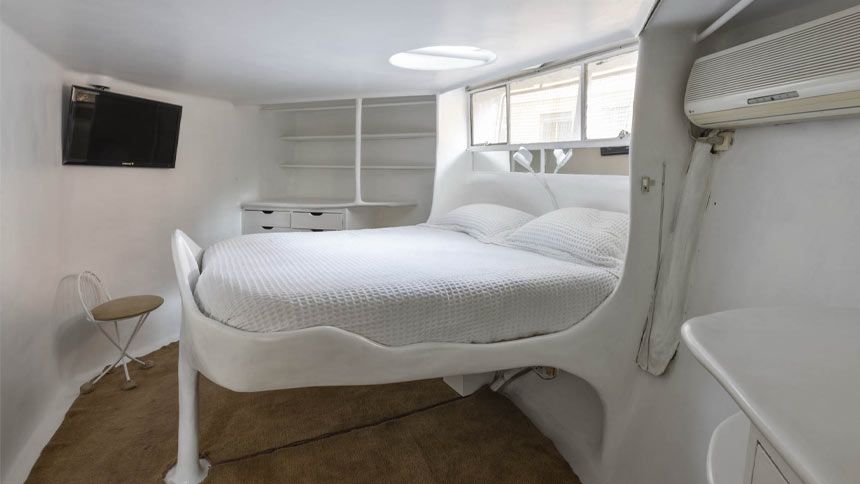
Measuring eight meters in diameter, the sphere houses three bedrooms, a kitchen, a living room, bathrooms, and a laundry room. And, as one would expect in a house where all surfaces are curved, Longo also designed the furniture – including the refrigerator.
“When I had the idea for the ball, it was almost mystical,” he recalls. “I was certain that this would be the housing module of the future.” He envisioned, further down the line, setting up an industry that would manufacture and deliver ball-shaped houses around the world.
In the end, however, he only built a second unit: that of his own father, who succumbed to the project and asked the architect to develop a version of the house for him in the Butantã neighborhood.
Longo tried to sell modular housing, which would allow the construction of buildings from spherical modules. “Here, many people told me: 'This must be very good for Japan, because they lack space.' I went to Japan to present the idea and they said: 'Ah, this must be very good for Brazil, because you have plenty of space,'” he recalls.
“The project has failed to this day,” he laments, noting that he wasn’t the only one to think about round houses. Around the same time, between 1980 and 1984, the Bolwoningen, a complex of spherical houses designed by the Dutch artist and sculptor Dries Kreijkamp, was built in the Netherlands.
Although the project failed from a commercial standpoint, Casa Bola marked a turning point in his career. “The principle of zero waste became deeply ingrained in me. I went from being a sculptural architect to becoming a rationalist architect,” he emphasizes.
The architect began to refuse projects that required starting from scratch and dedicated himself to the renovation of existing buildings. Under his own house, he carried out radical urban planning experiments: he opened a passageway with a shopping arcade that connected Amauri and Peruíbe streets. An unlikely shortcut that remained open, day and night, for 15 years.
“Nowadays, I think much less about projects related to Casa Bola and much more about urban planning, about how to free up the land for passageways and promote the mixing of public and private spaces,” he says. After the Aberto event, Longo plans to keep the gallery open to host temporary exhibitions, reopen the passageway between the streets, and allow visits to Casa Bola.