


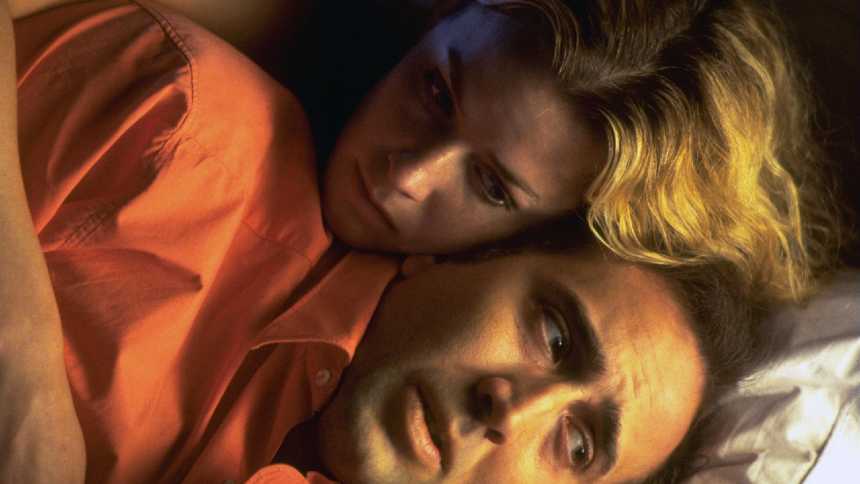
Berlin — Mike Figgis attributes part of the triumph of Leaving Las Vegas (1995), one of the most emblematic films of the 1990s independent film boom , to "financial limitations." The film, which celebrates its 30th anniversary with a screening of a restored copy at this 76th Berlinale, proved that a low-budget production could be a critical and commercial success and, as a bonus, win an Oscar.
“The lack of money proved to be a blessing here, by restricting my choices,” English director Mike Figgis told NeoFeed at the Grand Hyatt hotel, the heart of the German film festival which ends tomorrow, Sunday the 22nd. Responsible for Nicolas Cage's only Oscar for best actor, Leaving Las Vegas is one of the attractions of Berlinale Classics, a section dedicated to the preservation and history of cinema.
“I didn’t have the budget to put the camera on tracks or even to have a crane on set. And I couldn’t spend much on lighting either. All our equipment fit in a van,” Figgis recalled, laughing. “Even our filming schedule, which was tight, had to be followed to the letter, since we couldn’t extend our stay at the rented locations.”
But all of this contributed to the construction of a drama as realistic as it is intimate about the encounter of two lost souls in Las Vegas. He (Cage) is an alcoholic screenwriter who arrives in the "City of Sin" to "drink himself to death." And she (Elisabeth Shue) is a prostitute tired of being humiliated by her pimp. The romance, however, is doomed to fail—especially since both are emotionally fragile, which is what brought them closer together.
Since Figgis only had US$4 million to tell the story, the filmmaker opted to use a handheld camera and shoot on 16mm film. This format is more economical than 35mm, in which the images are sharper and more detailed. Because the frame is smaller in 16mm, the photochemical emulsion becomes more visible, with a grainier texture, which gives the film a nostalgic quality.
These “budgetary choices” by the director ended up creating a more intense experience for the actors, making extensive use of enclosed spaces and close-ups, and a more voyeuristic one for the viewer. It's as if the audience is spying on the couple's most intimate and often desperate moments.
And the result was a raw and honest portrayal of human self-destruction, a contrast to what was being done in mainstream cinema at the time. “My vision expressed, in a way, an anger at the prevailing sameness. Hollywood used to soften films about addiction with the redemption of the characters, something I wouldn't allow here,” said Figgis.
That's how the filmmaker surprised the entire industry, especially when his film grossed nearly US$50 million at the box office and even earned four Oscar nominations. Besides the statuette won by Cage, Figgis was nominated in the categories of best director and adapted screenplay (based on the eponymous book by John O'Brien), and Elisabeth Shue competed for the best actress trophy.
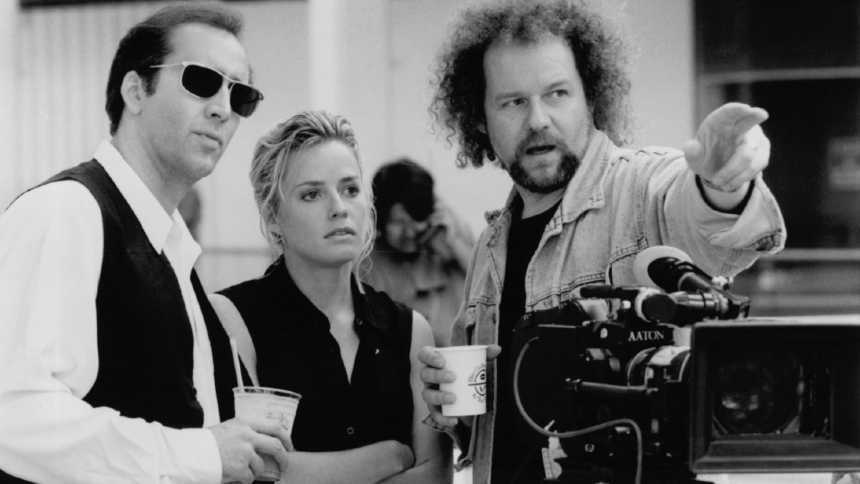

To ensure that today's viewer has the same experience as the initial release of Leaving Las Vegas , the director oversaw the restoration. While a release date for Brazil is still pending, the new copy was digitally restored, scanned in 4K, from the original 16mm negative, at Silver Salt Restoration in the United Kingdom.
“I wanted to make sure that the darker images in the film, which create the atmosphere of isolation, in contrast to the glittering lights of Las Vegas, were kept that way. All the shadows were choices I made,” said the filmmaker, averse to the trend of leaving the colors more vibrant in restorations.
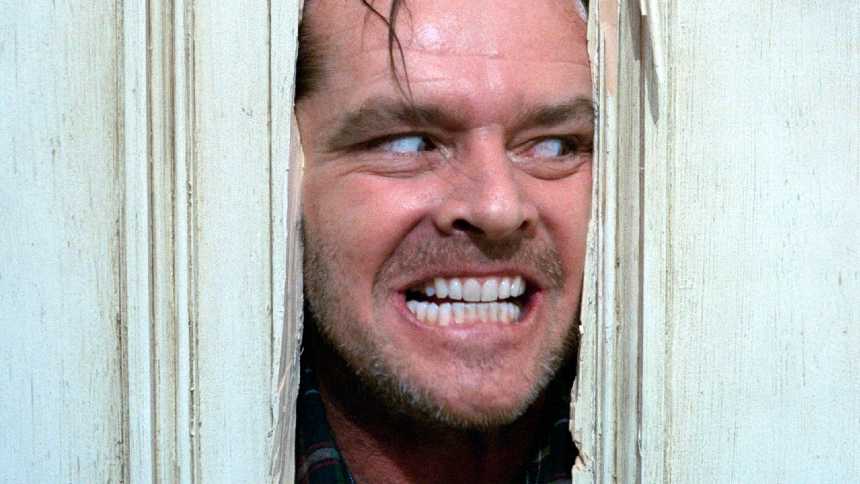
“The fact that color control in digital restoration is incredible is no reason to overdo it, leaving the film bright,” he added, referring mainly to restorations of Stanley Kubrick films such as Eyes Wide Shut (1999) and The Shining (1980). In both cases, critics also complained that the process destroyed the darker atmosphere established by Kubrick.
The digital restoration of classic films is primarily carried out to preserve works considered part of cinematic heritage—hence why the world's most important film festivals, such as Cannes, Venice, and Berlin, dedicate a section to these titles.
The process includes repairing and improving conditions, whether by removing dirt, scratches and stains or correcting color, contrast and brightness in faded films.
Upon its restoration, Leaving Las Vegas joins a club of masterpieces that have also been digitally "rescued." Among them are Citizen Kane (1941), Casablanca (1942), Vertigo (1958), Lawrence of Arabia (1962), One Flew Over the Cuckoo's Nest (1975), and Apocalypse Now (1979).
“When I look back, I recognize that my younger self did very well,” joked Figgis, now 77 years old. Of all the choices he made, one of the ones he is most proud of was bringing Nicolas Cage to headline the cast, although many tried to change his mind.
“They said Cage was too goofy for such a dramatic role,” commented the director, who was responsible for redefining Cage as an actor. It was after the alcoholic that he managed to build a reputation as a serious actor.