

Barcelona - An architect ahead of his time, the Spaniard Antoni Gaudí wanted to lessen the distance between heaven and earth. And, in 1883, he designed the Sagrada Família Basilica, a symbol of architecture and faith in the heart of Barcelona . But he didn't see his work completed. He died before that.
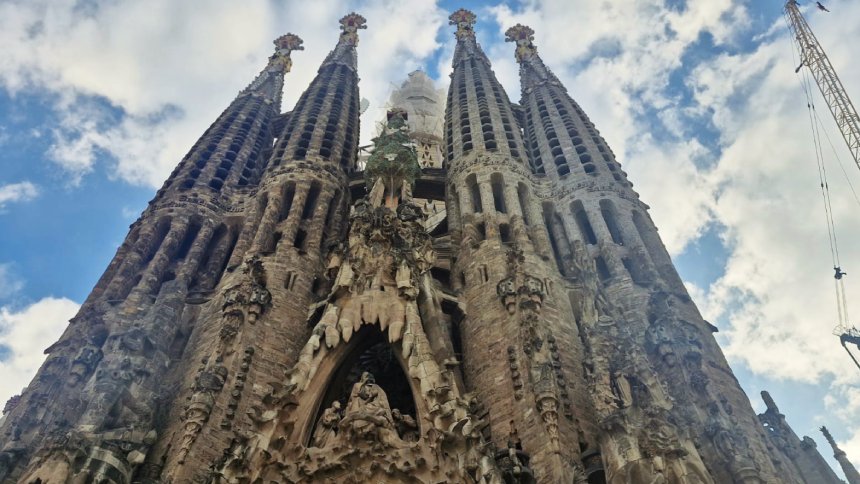
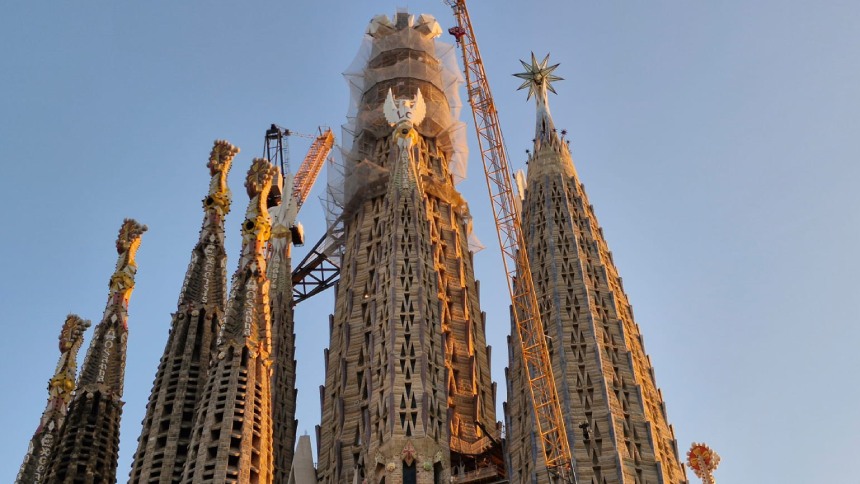
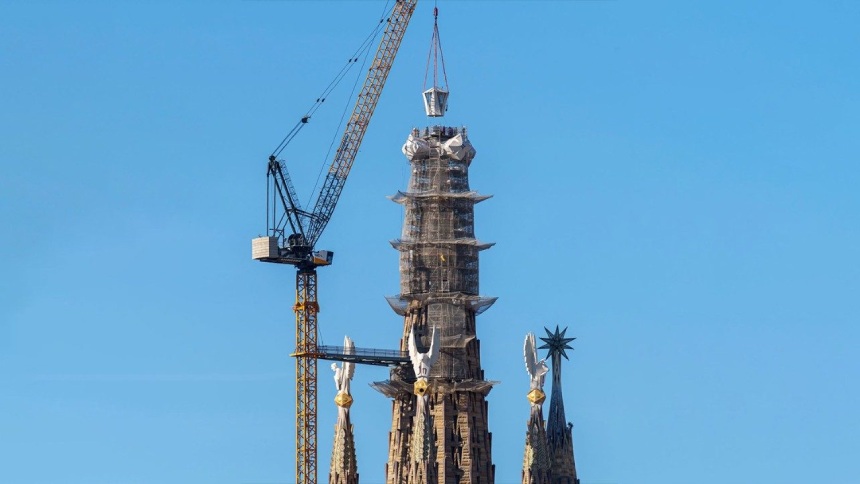
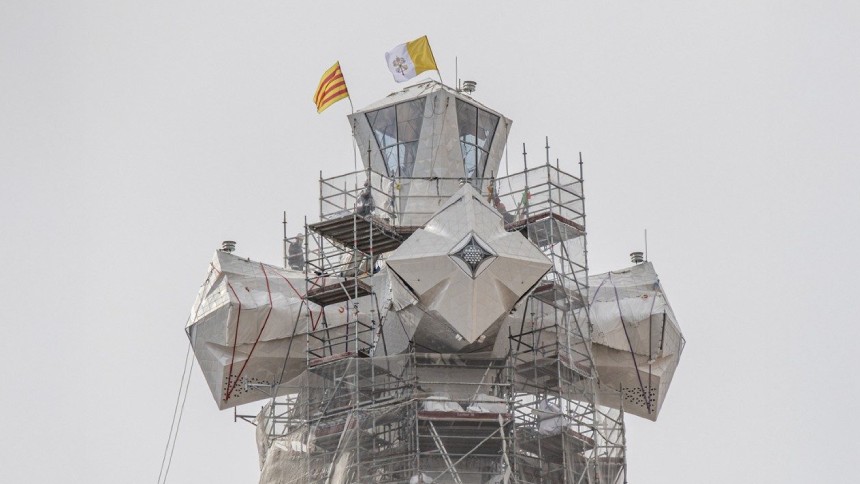
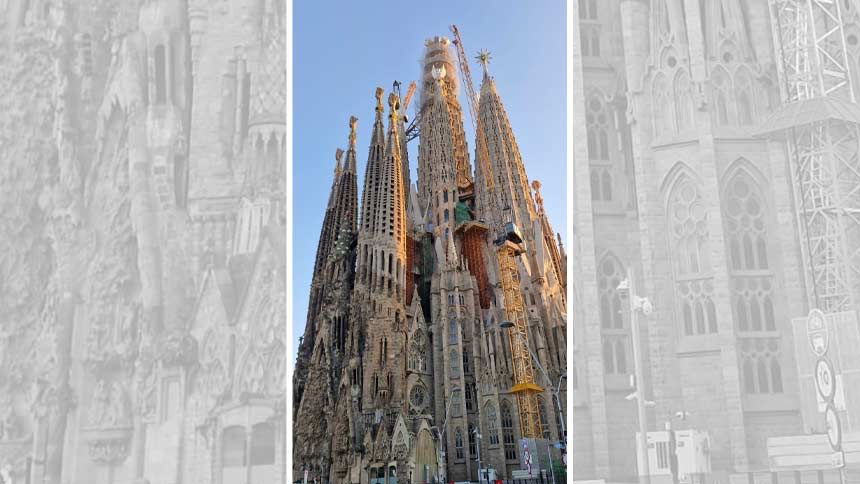
And now, in 2026, 143 years later – and exactly a century after his death in 1926 – his project will come to an end. On February 20th, the upper arm of the cross was installed atop the Tower of Jesus Christ, the tallest element of the church.
The three-dimensional piece, measuring 17 meters, is composed of glass and ceramic, completing the set of six central towers of the Sagrada Família. The cross, built in Germany, arrived in modules and was assembled on a platform before being hoisted. It was designed to shine at night, like a kind of beacon over the Catalan city.
Now, the scaffolding, which is still there, will be gradually removed until the day of the official handover. On June 10th, the 100th anniversary of Gaudí's death, Pope Leo XIV will give a blessing and celebrate a mass in the church.
With the completion of the last piece of the Jesus Tower, the Sagrada Familia reached a height of 172.5 meters, making it the tallest Catholic church in the world, surpassing Ulm Cathedral in Germany, which is 161.5 meters tall.
Gaudí wanted to express the grandeur of his work, and for it to be seen and contemplated, even by those who were far away. But he had a limit. A kind of respect and a sign of humility.
In his design, the architect did not want his work to surpass the height of Montjuic mountain, which is 177 meters high. In his view, a human construction should not exceed the height of God's work.
For four decades, Gaudí closely followed the progress of his architectural creation. But it was precisely when he was moving towards his most impactful work that he died.
On June 7, 1926, at the age of 73, Gaudí was struck by a tram while crossing the Gran Via de les Corts Catalanes, one of Barcelona's most important avenues. He died three days later and was buried in the crypt of the Sagrada Família itself.
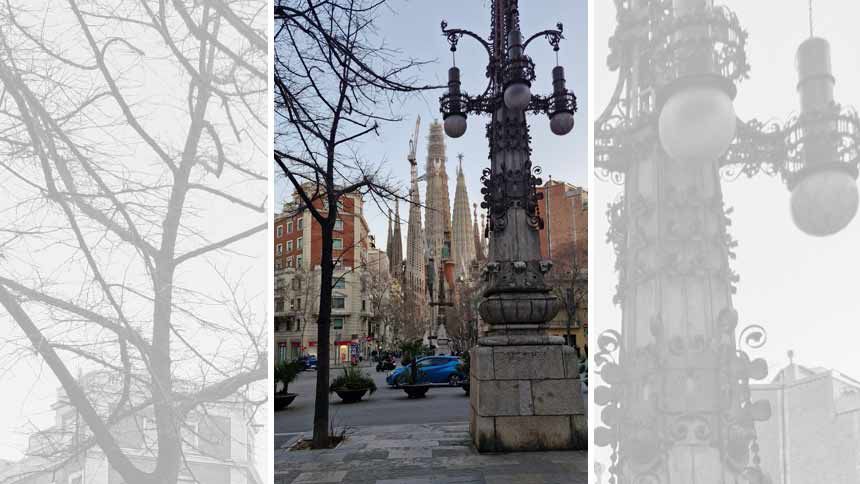
NeoFeed visited Barcelona in March, weeks after the tower's installation, and the sheer volume of tourists passing through the area surrounding the construction site is impressive. Despite its grandeur, the Sagrada Família is surrounded by other buildings in a square in the Eixample district, which in Catalan means "expansion."
It's hard to escape the initial impact when you arrive near the basilica, whether by car or the easier way, which is by metro. In fact, the station, which bears the name of the work, is located right in front of the church. For many people, it's the most beautiful metro exit in the world.
The line is immense just to get to the ticket booth. It's common to see a crowd of people with their necks craned upwards. There, selfies are aimed at the sky. It's not an easy task to get into the frame and still manage to show the top of the church. Capturing it with your own eyes is better.
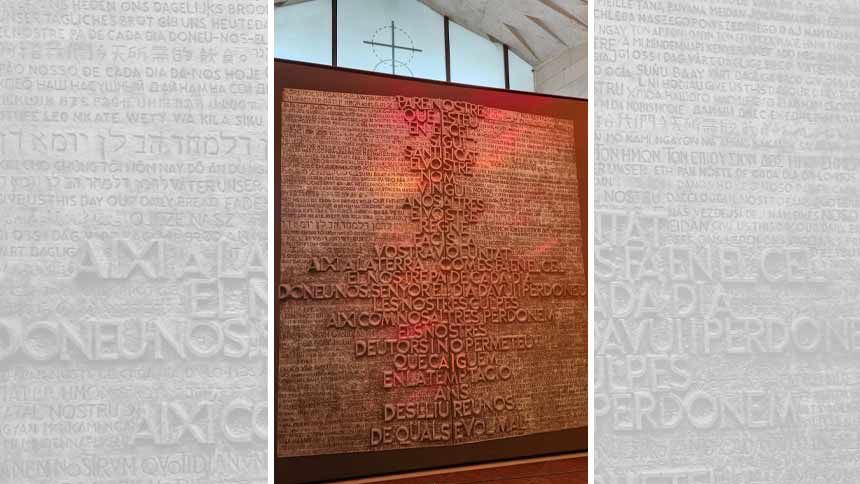
"Our Father" in 50 languages
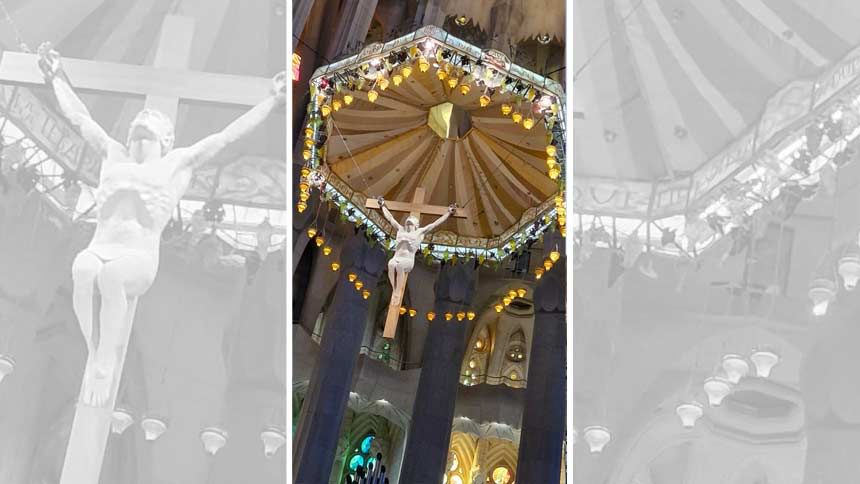
A UNESCO World Heritage site, the Sagrada Família is a different kind of church, with a museum-like atmosphere. But it is a church. And inside are all the components of the "house of God." On the altar, a suspended crucifix represents precisely the sacrifice of Christ.
Inside the church, you can hear several languages, and many people wear headphones to follow the explanations of tour guides on guided tours. But there is a respectful silence. The interior is supported by columns that resemble tree trunks, to create a forest-like atmosphere.
At the far end of the nave, there is an immense panel, on the so-called Glory Façade , with bronze doors that bear the Lord's Prayer in 50 languages. The Brazilian version is there, with the phrase "give us this day our daily bread".
In addition to his faith and spirituality being present in his work, Gaudí had enormous respect for nature, which, for him, was a kind of gift from God to humanity. There are details in his work that represent this connection, such as a turtle projected onto one of the church's foundations.
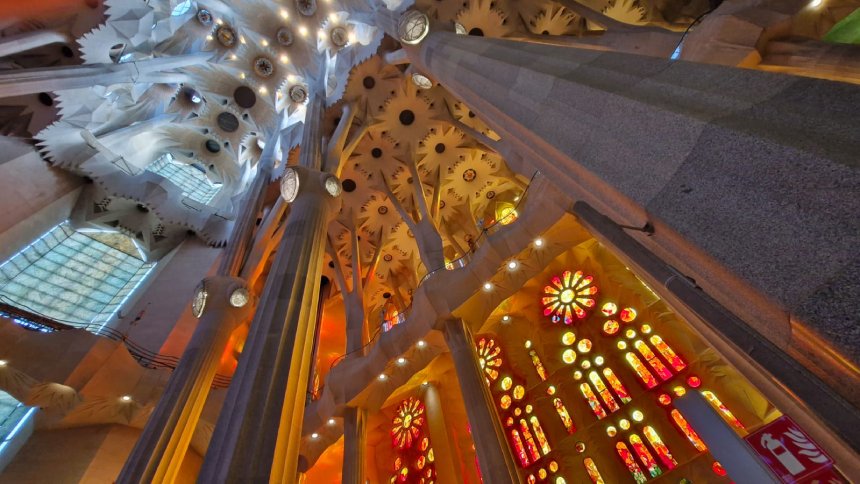
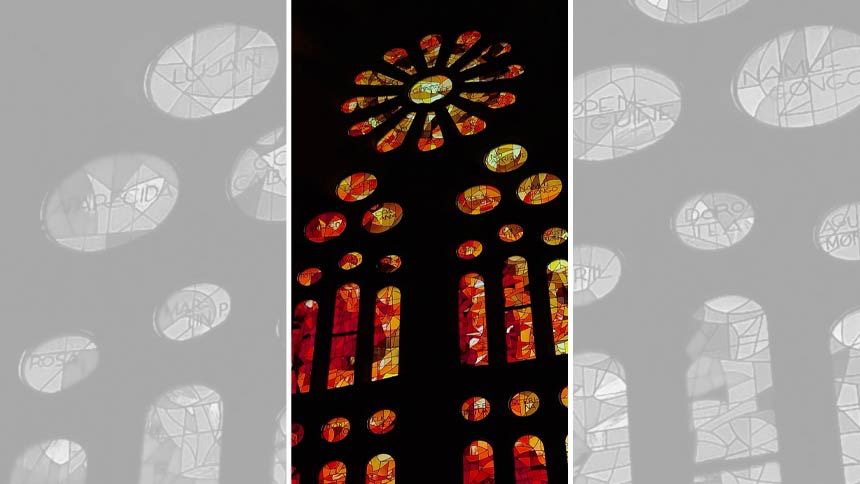
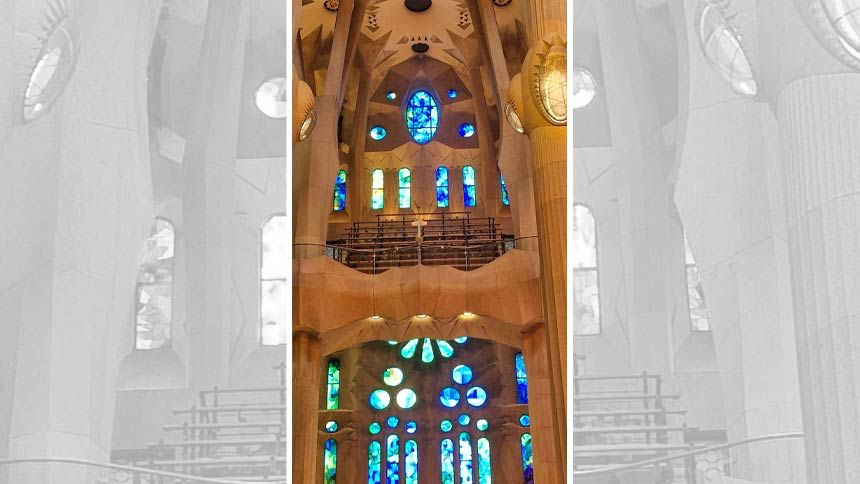
The church's interior lighting itself embodies this concept. For Gaudí, "sunlight was the best painter." And he applied this idea. In the Sagrada Família, the architect designed enormous stained-glass windows, named after saints, to receive these rays—Our Lady of Aparecida is among them.
Blue and green tones predominate on the east side, facing east, on the Nativity Façade , symbolizing birth, while on the west side, facing west, on the Passion Façade , shades of yellow, orange, and red are present.
The mix of colors creates a stunning atmosphere inside the church. This makes sunset the most popular time for tourists. The photos turn out amazing.
The project was executed by Joan Vila-Grau, who used a leaded stained glass technique, which joins different pieces of glass with a metal structure.
The number of visitors to this iconic landmark is staggering. According to a report released by the foundation responsible for the basilica, 4.8 million tourists visited the church last year.
The volume is equivalent to almost half of the total number of foreign tourists who visited Brazil in 2025, which reached 9.3 million. The number of those who passed through the basilica is higher than those who visited, for example, Peru (4.2 million) or Uruguay (3.6 million).
Compared to a Brazilian tourist and religious icon, the Sagrada Família received more than three times the number of visitors in 2025 as those who climbed Corcovado to see the Christ the Redeemer monument up close. There were 1.5 million tourists at the top of the hill in Tijuca National Park, overlooking Guanabara Bay.
Tickets to enter the Sagrada Família start at €26 for basic entry with an audio guide. A guided tour costs €30. With access to the towers, it costs €36. Last year, €134.5 million was raised.
The "architect of God"
For Patricia Sarquis Herden, president of the Council of Architecture and Urbanism of Brazil (CAU/BR), the completion of the Sagrada Família represents Gaudí's "vision of living" and brings visibility to his work, especially for younger professionals.
“He designed with his heart. And all his work has a sacred quality to it. This transcends generations. Gaudí influenced and continues to influence architects worldwide, including in Brazil,” says the architect, in an interview with NeoFeed .
Graciete Costa, coordinator of the heritage thematic chamber of CAU/BR, states that Brazil has modeled itself on Gaudí's architecture. "This tower is the crowning achievement of all of Gaudí's work. He influenced Brazilian architecture in the modern style. Many names drew inspiration from him, such as Oscar Niemeyer himself," she affirms.
Also in June, Barcelona will host the world meeting of architects, with the presence of Brazilian professionals, as a kind of tribute to Gaudí.
A major figure in Catalan modernism and one of the leading references in world architecture, Gaudí is responsible for other remarkable and important works for tourism and architecture in Barcelona. Among them are Casa Batlló and Park Güell, also important landmarks of the city, which bear the same hallmark of the architect.
Known as "the architect of God," precisely because of his relationship with spirituality, which is extremely present in his works, Gaudí is on his way to becoming a saint. On April 14, 2025, he was declared venerable by Pope Francis, recognized for his "heroic virtues."
To become a blessed person, one now needs proof of a miracle. And to become a saint, two are required. In architecture, Gaudí's "miracle" has already been widely proven.