

If the graffiti artist Banksy is indeed the Englishman Robin Gunningham, it's not just a name that's coming to light. It's the dismantling of one of the pillars of the world's most famous street artist 's work: anonymity. Few have used the mystery surrounding their own identity with such vehemence as he has.
Over the past week, critics, gallery owners, academics, and artists have debated the impact of the Reuters revelation on the artist's works and legacy. Without the mystery, does the myth endure?
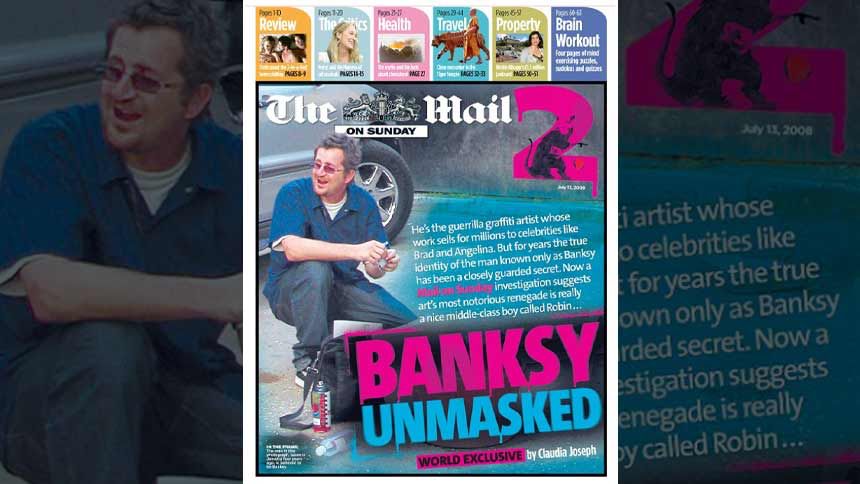
It's too early to say. Especially since, through his lawyers, Banksy has denied being who they say he is. Moreover, this isn't the first time Gunningham has been linked to the graffiti artist. In 2008, The Mail newspaper had already raised this suspicion.
Since then, the artist has reportedly changed his name to David Jones, a much more common name in the United Kingdom. This would make it easier to stay out of the spotlight. And it worked.
“I have no interest in revealing myself,” he said in 2006. “I think there are already enough presumptuous idiots trying to shove their ugly faces in front of you.”
NeoFeed gained access to a message exchange between a Brazilian artist and a British graffiti artist, whose identity has even been suggested as belonging to Banksy.
"It doesn't seem like much new, just more digging. I don't think the public or Banksy's fans are interested," the Briton wrote. "He won't comment publicly and will continue playing cat and mouse :)"
Banksy "was born" in the early 1990s in the alternative scene of Bristol, a city in southwest England, where Gunningham is from. With humor and sarcasm, poetry and acerbity, his works denounce injustices, inequalities, and violence.
Mocking the establishment , the subversive artist ended up in galleries, museums, and auction houses, where his works fetch extremely high prices. And it must be considered that anonymity tends to act as a value multiplier.
"His skill, combined with his secretive identity and the discretion surrounding his practice, helped propel his reputation and interest from the art world," reads a 2019 article in The Harvard Gazette .
Anonymity is also a form of protection. In the United Kingdom , for example, painting, scratching, or marking any wall or fence without permission is a crime, punishable by a fine and police report.
British graffiti artists, by name and surname, frequently complain about the "special treatment" Banksy receives from the authorities. But how do you punish someone whose identity is unknown?
Remaining anonymous is also a political decision for the artist and a way to increase the "dramatic impact" of their work.
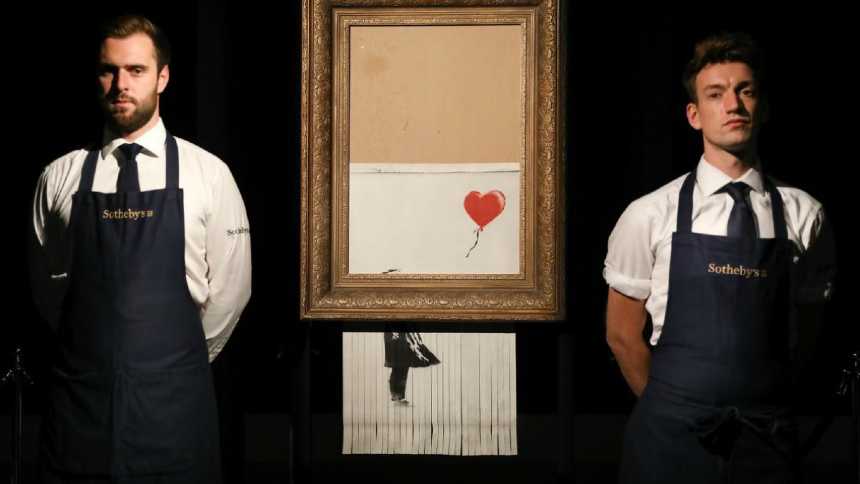
One of Banksy's most iconic performances took place in 2018. The replica of the work Girl with Balloon was auctioned for £1.04 million at Sotheby's .
The moment the hammer sounded, the work was shredded by a crusher installed behind the piece. It wasn't completely destroyed only because the contraption jammed.
Meanwhile, Banksy commented on the incident on social media. It became clear that the graffiti artist has a support network that preserves his anonymity.
Three years later, in 2021, the same work, now in pieces and renamed "Love is in the Trash ," was resold for £18.6 million. And in 2024, at an auction in Los Angeles, a reproduction sold for £80,000, demonstrating a meteoric rise in value in just a few years.
In total, Banksy's works have raised nearly US$250 million on the secondary market since 2015, according to data from the British consultancy ArtTactic.
In theory, according to Reuters , the artist receives only a fraction of the sales value. However, sources from the agency claim that Banksy organizes private sales for collectors that can provide him with millions of dollars directly.
According to the news agency's calculations, seven companies have been directly linked to Banksy over the years, in addition to at least two other companies connected to the artist through his lawyers.
The core business is the Pest Control Office, a company incorporated into the parent company, Picturesonwalls Limited, in 2008. Its function is to authenticate artworks and manage their commercial operations. Its parent company, Picturesonwalls, previously owned a gallery in London.
The artist's assets have appreciated enormously. The first financial statement from the Pest Control Office, released in 2009, showed an amount of £243,000. In 2015, this value grew to £2.7 million. The 2024 report reveals net assets of approximately £5.7 million — with £4.4 million in cash.
"You'll never find him."
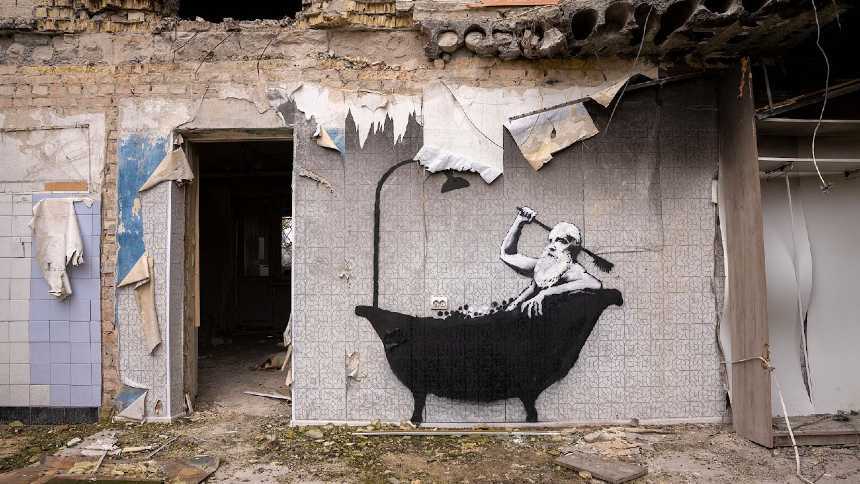
Reuters reporters' interest arose after it was revealed that Banksy had been in a village outside Kyiv, Ukraine , in 2022. There, he left a memento: a drawing of a bearded man in a bathtub, rubbing his back amidst the rubble of a building hit by Russian bombs.
Seeing that scene, it was difficult to imagine how the artist and two partners managed to access the location, called Horenka. The village was located less than eight kilometers from Bucha, where at least 300 people had been killed months earlier.
It was this "feat" that started the whole investigation. In it, the name Robert Del Naja was even considered a strong possibility. The lead singer of the band Massive Attack is one of the pioneers in the world of graffiti and also makes his dissatisfaction with the system clear whenever he can.
Moreover, whether by coincidence or not, his band seemed to be present in every scene where new Banksy graffiti appeared.
Thierry Guetta, another street artist, was also included on this list of possible suspects. However, besides not being British, his presence in the documentary Exit Through the Gift Shop, about Banksy and nominated for an Oscar in 2010, ruled him out of the running.
The conclusion that Robin Gunningham was Banksy was reached after reporters gained access to a criminal case from the 2000s, in which the artist was arrested in New York amidst one of his works. On that occasion, he signed the release document with his "real name."
In the end, this seems like a never-ending hunt. “There is no Robin Gunningham,” stated Steve Lazarides, Banksy's former agent, when questioned about the artist's identity by Reuters . “That name you have, I killed years ago. In real life,” he assured, “you will never find him.”