



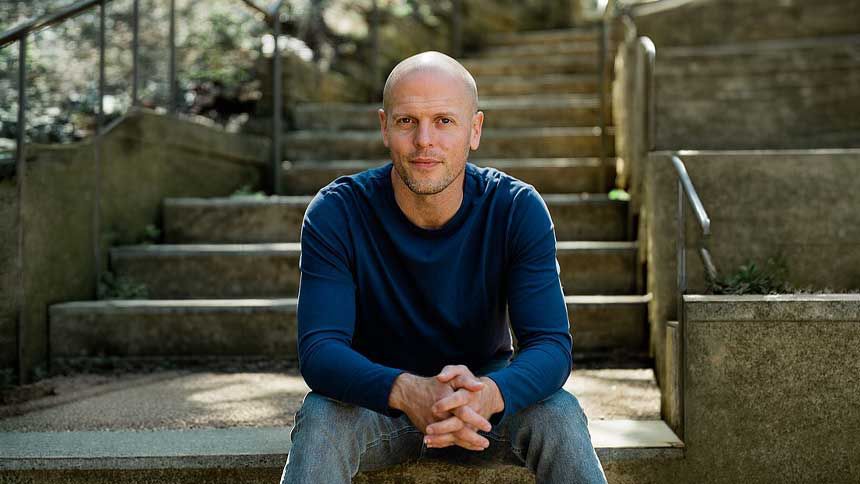
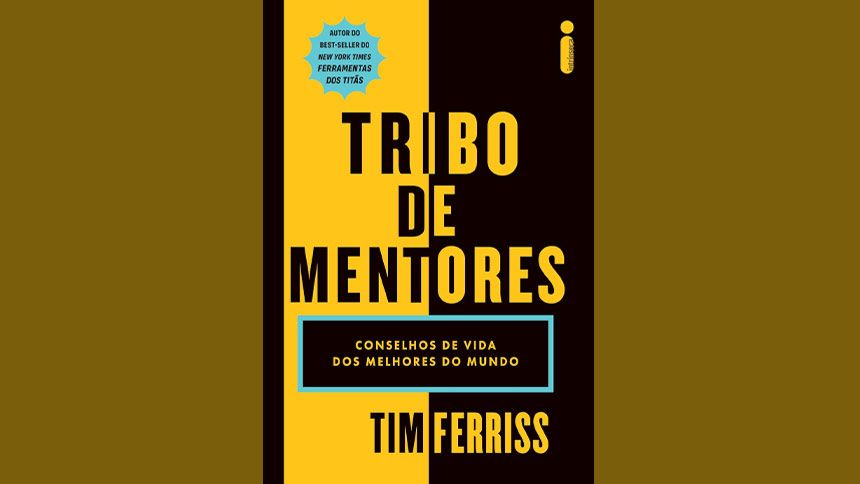
Whether in our personal or professional lives, we all go through difficult times—some more than others, no one escapes unscathed. But, regardless of the challenges, someone has already faced similar impasses and can teach us how to overcome adversity. That's what angel investor, podcaster , and best-selling author Tim Ferriss proposes in his book *Tribe of Mentors—Life Advice from the World's Best* , recently released in Brazil.
He invited 100 personalities—prominent names in their fields—to talk about failure, success, purpose, life change, and wellness practices. The result is an entertaining and inspiring manual, full of compelling stories from those who have faced thorny obstacles.
The interviews follow a ping-pong format, that is, question and answer, with each one preceded by a brief profile of the guest. They bring together practical suggestions capable of offering new perspectives and pointing out possible paths for those who wish to achieve better results, overcome obstacles, or make a change in their own trajectory.
Ferriss knows the subject like few others. At 48, he's a phenomenon when it comes to advising on personal development and high performance.
His first book, The 4-Hour Workweek, released in 2007, remained on the bestseller lists of The New York Times and The Wall Street Journal for years. He is also the author of The 4-Hour Body and Tools of Titans , which, although they did not repeat the impact of the first, were very successful.
The Tim Ferriss Show podcast has amassed over 1 billion downloads since 2014. He also proved to be an ace angel investor, having invested in companies like Facebook (now Meta), Uber , Alibaba , Shopify , Duolingo , and Evernote when they were still in their early stages.
Now, in Tribe of Mentors, he gives voice to figures such as investor Ray Dalio , former tennis player Maria Sharapova, filmmaker David Lynch (1946-2025), presenter and actor Jimmy Fallon, former professional poker player Annie Duke, TED curator Chris Anderson, and Facebook co-founder Dustin Moskovitz , among others.
Regarded as the guru of Wall Street , Dalio objectively revisits the principles that made Bridgewater Associates the world's largest hedge fund: work environments where radical transparency and honest feedback prevail. Regardless of who it might offend, facing the facts as they are (and not as we would like them to be) allows for faster error correction and accelerated learning.
In the interview with Ferris, the investor indicates the three books he most recommends: Tao Te Ching , one of the oldest texts of Chinese philosophy attributed to Lao Tzu; Atlas Shrugged , a 1957 novel that blends fiction and philosophy written by the Russian-American Ayn Rand; and Sapiens: A Brief History of Humankind , by the Israeli Yuval Noah Harari , a leading authority on the analysis of how ideas, technology, and power shape contemporary societies.
Actor Terry Crews, in turn, tells Ferris how a poorly executed shot in a crucial high school basketball game—for which he was harshly criticized—became a lesson. The failure on the court taught him to take risks and responsibilities. It's always better to speak for yourself than to leave your life in the hands of others, argues the star of the comedy White Chicks and the sitcom Everybody Hates Chris .
According to Indian-American angel investor and philosopher Naval Ravikant, more important than playing well is choosing which game is worth playing. And training the mind to be silent, he indicates, dramatically improves the ability to make decisions.
Movie actor and former California governor Arnold Schwarzenegger recommends setting a big goal and working persistently towards it: "Without a clear vision, effort doesn't get you far." For writer Arianna Huffington, sustainable success depends on sleep, health, and balance—not just intense work. Jimmy Fallon believes that enthusiasm and humor make work more enjoyable and stimulate creativity.
Some testimonials stand out precisely because they are unusual or counterintuitive. Futurist and writer Kevin Kelly presents an "anti-goal list" of priorities: instead of focusing only on what you want to achieve, "also list what you never want to happen in your life; this helps you make clearer decisions."
Venture capitalist and entrepreneur Chris Sacca argues that success often depends more on turning down opportunities than on accepting them. And writer Maria Popova suggests creating a "library of ideas": noting down striking phrases and concepts from readings to create connections between different areas of knowledge.
Comedian and film director Ben Stiller states that, in the creative field, testing ideas quickly and discarding bad ones accelerates the path to something truly good. Training for discomfort, on the other hand, is Amelia Boone's advice. The obstacle course runner recommends doing difficult things to increase mental resilience.
The idea for the book emerged in 2017. Upon turning 40, Ferriss recalled past difficulties and reflected on her journey. Faced with these experiences, she began to question her goals, priorities, and purpose in life, seeking to understand if her desires were truly her own or merely influenced by societal expectations.
Amidst personal doubts, the author attempted to answer them with questions written in his diary. But he felt he needed more. He realized he could simplify problems by asking experienced people for advice based on 11 questions. Thus, he created the "tribe of mentors."
But what is his suggestion? Ferris recommends asking better questions. Many decisions, he says, improve simply by reframing the question. An example? "What would it be like if it were easy?"