

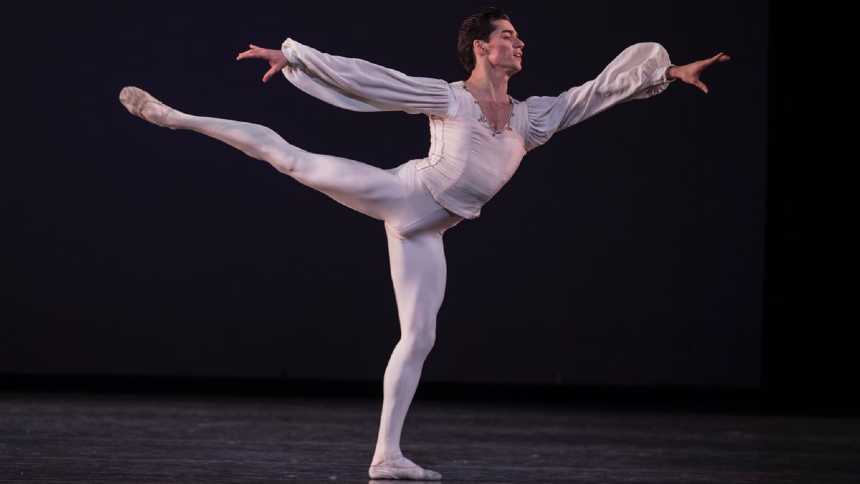
New York - Last week, the dancer from Santa Catarina, Jovani Furlan, 32, made a video for his Instagram account, in which he walked through the chaotic Times Square in Manhattan, holding a traditional hot dog from a street cart.
"Nobody here knows that I'm the Nutcracker Prince from the New York City Ballet and that I'm here eating a hot dog the night before the show," he joked.
Originally from Joinville, Furlan is one of the soloists in the historic company that, based at Lincoln Center, annually presents the city's largest Christmas ballet spectacle. Each year, the corps de ballet takes to the stage between 50 and 70 times over 22 weeks of performances. In total, there are 93 dancers, including 19 principal dancers and 19 soloists.
They are trained at the School of American Ballet (SAB), a school maintained by the dance company, following the method of the legendary choreographer George Balanchine (1904-1983), known for having "Americanized" classical French and Russian techniques.
Furlan, however, was a major exception: in 12 years, the Brazilian was the first dancer to be trained by SAB, coming from the Miami City Ballet, a smaller-scale company, where he danced between 2011 and 2019, until he was invited by the New Yorkers.
During his childhood, he had no contact with ballet. But at the age of 10, he was encouraged by his grandmother to participate in the selection process for the Bolshoi Theatre school, held at his school. And he was chosen.
Created in the 1990s in Joinville, with the support of then-governor Luiz Henrique da Silveira, the Bolshoi school is the only one outside of Moscow.
The Russians select children from public schools, starting at age 8, based on their body type for the Vaganova technique: it's not necessary to know how to dance, but to have precise proportions, with long necks and arms, a curve in the instep, and knees that rotate outwards.
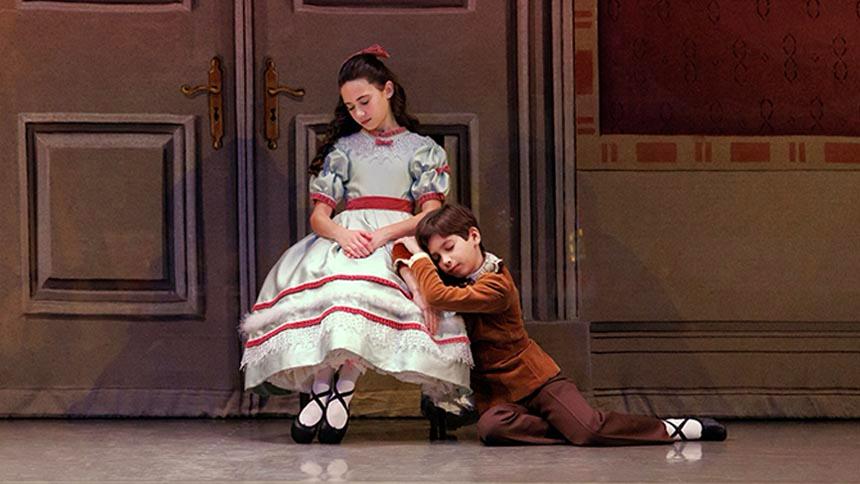
In The Nutcracker , Furlan shares the stage with another Brazilian: Oliver Lobo Ellena, 10 years old, born in New York, is one of the children in the performance. Last year, he even played the character Fritz, the main boy in the Christmas tale.
His mother, photographer Paula Lobo, tells NeoFeed that ballet came into Oliver's life almost by chance, during the pandemic. At the time, he was five years old and watched the Disney+ documentary On Pointe at home, which follows children from the School of American Ballet. At the end of an episode, he was clear: "I want to dance like them."
After months of isolation, Oliver participated in a small arts program that included music and movement. He fell in love with it and didn't want to stop. Paula, who lives in Brooklyn, even changed Oliver's school: he left an institution with strict rules and little room for expression and enrolled in another, with a more flexible model, offering dance, music, singing, and even violin classes.
One of the teachers noticed the boy's talent and suggested he try formal dance classes. He went to a pre-ballet class in the West Village and, again, a teacher said he danced above average for his age. At age eight, he auditioned for the SAB and was accepted.
“Dance became the center of the routine. Then came the rehearsals, the performances which, in addition to dance, demand stage presence and dramatic talent,” says Paula. “Despite the reputation for rigidity associated with the world of ballet, SAB has attentive teachers, a collaborative environment, and a strong sense of group among the children, who spend hours together rehearsing and playing in the corridors of Lincoln Center,” she says.
Despite being a private institution, SAB offers scholarships. Classes are separated by gender, partly because girls tend to start ballet earlier and progress more quickly. Not all children continue: each year, some are not invited back. The training is geared towards dancers who are able to pursue a professional career.
Besides ballet, Oliver sings and acts. Today, he studies at a public school in Manhattan that, in addition to following the city's school curriculum, brings together students with an artistic bent. "I'm impressed by such young children, with so much talent, discipline, and dedication. Furthermore, they enjoy the privilege of living in an environment that enhances their technique and broadens their horizons," says Paula.

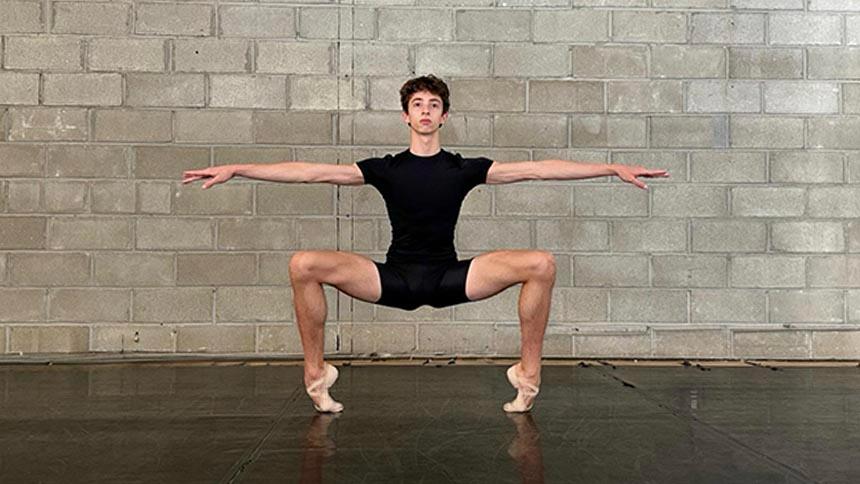
Oliver may be following a similar path to that of 17-year-old Bruno Khilkin Secches, also born in New York and the son of another Brazilian, Juliana Secches. Two years ago, the teenager won a full scholarship to the American Ballet Theatre school, one of the leading companies in the United States.
This school also prepares students for professional careers, with daily classes of more than five hours, six days a week. "Those who are there have already decided that dance is not a hobby . It's a career," says Juliana, emphasizing that the dancers receive comprehensive assessments, including physiotherapy, mental health, and nutrition.
His interest in dance began when he was just two years old, when Juliana took her son to see the ballet The Nutcracker . She planned to leave the theater during intermission if the little one couldn't sit for so many hours.
“But he was absolutely mesmerized from beginning to end and told me he wanted to dance the same way,” Juliana recalls in a conversation with NeoFeed .
For years, Bruno took creative movement and tap dancing classes. But he made it clear that his calling was ballet. At the age of six, he auditioned for SAB, was accepted, and that's where his career began, with child roles in productions such as Sleeping Beauty , Swan Lake , and The Nutcracker itself.
During the pandemic, Bruno was 12 years old. His family moved from Manhattan to a rural town in Vermont, without internet or any dance facilities. "He improvised a pole using the back of a chair and took classes via Zoom on my cell phone," says Juliana.
“One day, the power went out. But he asked me for a flashlight so he wouldn’t miss class. That’s when I understood his commitment to this career,” she adds.
Back in New York, Bruno immersed himself in intensive summer classes, offered in various parts of the world, for which young people travel alone for six weeks. Two years ago, Bruno won a full scholarship to the Jacqueline Kennedy Onassis School of the American Ballet Theatre (ABT), also in Manhattan, linked to one of the leading companies in the United States, which prepares students for professional careers. The Brazilian Marcelo Gomes, for example, has attended ABT.
They have daily classes of more than five hours, six days a week. "Those who are there have already decided that dance is not a hobby. It's a career," says Juliana, emphasizing that the dancers receive comprehensive assessments, including physiotherapy, mental health, and nutrition.
Furthermore, Bruno is in his final year of high school, but he doesn't intend to go to college immediately. He has chosen to dedicate himself to an artistic career.
However, despite all the achievements and dedication, Juliana says that prejudice still exists. She constantly hears questions like: "When is he going to do something real or get a job?"
“Some people don’t believe that ballet is a profession or a high-performance sport,” comments Juliana, a yoga teacher in Manhattan. “A dancer is a professional athlete, with even greater demands than in other sports: they need to appear light and dance smiling while their body aches,” she concludes.