

In the world of ultra-luxury fashion, there is no skin more precious and exclusive than crocodile. It is in this territory that brands like Hermès create some of the most coveted (rare and expensive) handbags on the planet.
A Birkin bag made from Crocodylus niloticus or Crocodylus porosus , for example, can cost from US$45,000 to US$150,000. And these values climb even higher depending on the details—from the color to the symmetry of the scales, from the finishes to the hardware. Well, when it seemed there were no more steps to climb, a new, almost provocative frontier emerges: a bag made of Tyrannosaurus rex "leather".
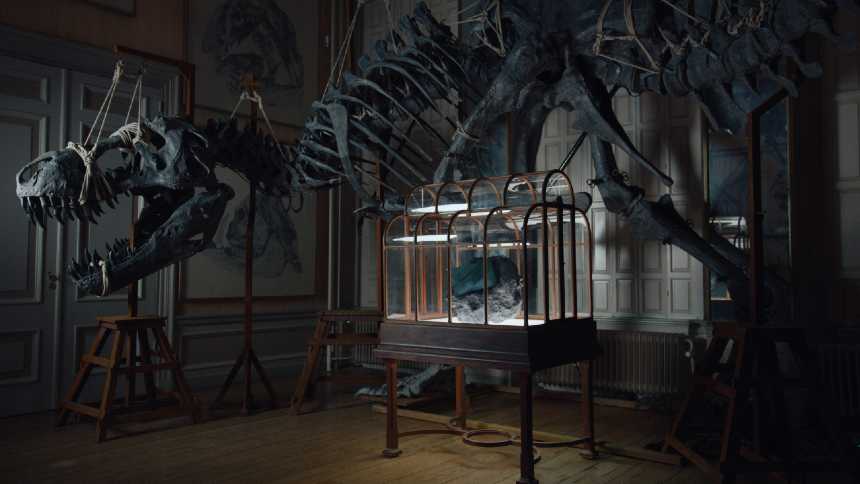
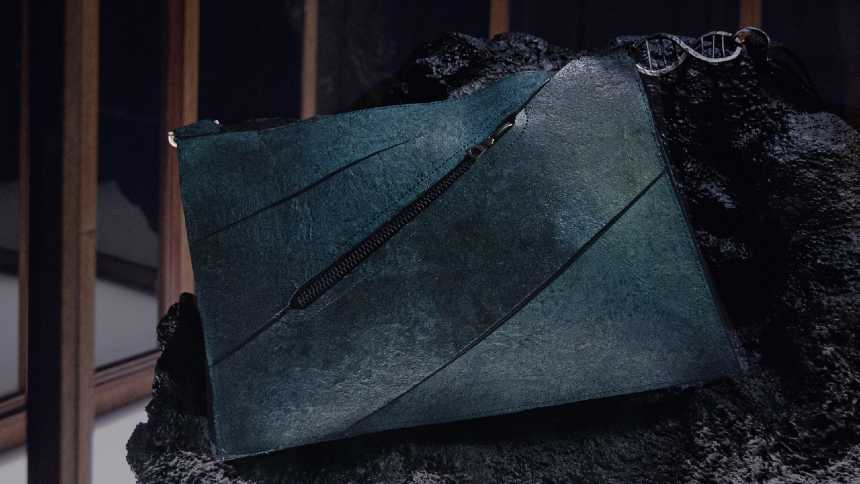
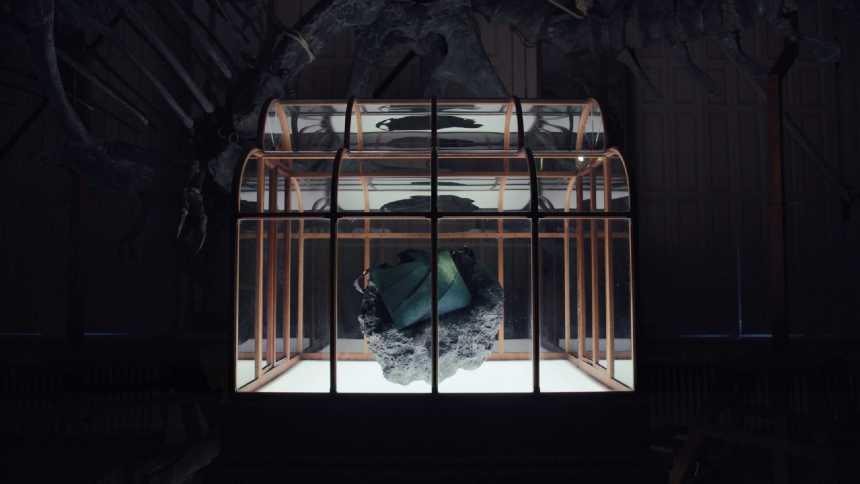
Thanks to advances in tissue engineering and biotechnology, a fabric inspired by a raw material extinct for about 68 million years has been recreated in the laboratory. On display at the Art Zoo museum in Amsterdam, the piece will be auctioned in mid-May. The starting bid? US$500,000 — yes, R$2.5 million!
In practice, it's not about "reviving" a dinosaur like in Steven Spielberg 's 1993 film, Jurassic Park .
Scientists started with fragments of collagen found in the fossil of a T. rex discovered in Montana, in the United States, in the early 2000s. These traces do not form a complete genetic code, but serve as initial chemical clues.
From there, the samples were analyzed in the laboratory and compared with proteins from living animals, such as birds — chickens, ostriches, and turkeys are the closest relatives of T. rex.
Based on these comparisons, bioinformatics and artificial intelligence algorithms reconstructed a version of the ancestral protein, filling in gaps with statistical models and inferences based on evolutionary relationships.
The result is therefore not a “discovered” sequence, derived directly from intact biological material, but an “estimated” sequence, obtained by computational reconstruction from incomplete evidence.
Next, the genetic information synthesized in the laboratory was inserted into living cells — a kind of small biological factory.
Grown in bioreactors, in a highly controlled environment, they began to produce collagen. The proteins then spontaneously organized themselves into fibers, forming a three-dimensional network similar to the structure of natural leather.
In other words, the dinosaur known as the "king of tyrant lizards" is more of a conceptual inspiration than an actual biological source.
In a clutch style, the new bag is the result of a partnership between four companies. The Dutch company The Organoid Company was responsible for reconstructing and simulating the biological sequences associated with the ancient proteins, creating the molecular foundation necessary for the development of the material.
The British company Lab-Grown Leather cultivated leather in its bioreactors, transforming the fibers into a physical structure with real properties of strength, texture, and flexibility.
The finished leather was then delivered to the German techwear company Enfin Levé, where its founder, Polish designer Michal Hadas, designed and manufactured the garment. The entire narrative was coordinated by the global creative agency VML , a subsidiary of the British group WPP plc, one of the world's largest communications holding companies.
Cruelty-free
Besides its aura of rarity, another strong appeal of T. rex leather is its sustainability. Cruelty-free , the material eliminates the use of animals in its manufacture and uses a smaller amount of natural resources compared to bovine leather.
To give you an idea, a small bag requires between 5,000 and 20,000 liters of water, considering everything from raising the animals to producing the material.
It's also important to consider the products used to transform the hide into leather. Tannery waste contains large amounts of pollutants. "The tanning process stabilizes collagen or other protein fibers in the hides, preventing their degradation—otherwise, the leather would rot in your closet," reads a report from PETA, an animal welfare NGO.
As a result of technological and cultural evolution throughout the 20th and early 21st centuries, the first alternatives to traditional leather appeared between the 1920s and 1960s. Driven by the chemical industry, synthetic compounds such as PVC and polyurethane were developed—primarily aimed at reducing costs and enabling large-scale production.
From the 1990s onwards, however, with the rise of movements for nature protection and ethical consumption, the search for new materials also became ideological.
In the wake of growing environmental concerns and advances in biotechnology , innovative biomaterials based on plants, fungi , and organic waste have emerged, marking the birth of a rapidly expanding industry—that of vegan leather.
One of the major innovation hubs in the contemporary textile industry, the sector was valued at US$80.39 billion in 2024. By 2035, it is expected to generate US$219.2 billion — growing at an impressive compound annual growth rate of 9.55%, according to Vantage Market Research.
Currently, there is "leather" made from pineapple , bamboo, corn, apple, barley ... In 2023, the English designer Stella McCartney and the Veuve Clicquot fashion house, from the luxury conglomerate LVMH , presented a collection of bags and sandals made from grape remnants used in champagne production.
But can a banana peel clutch really rival the symbolic appeal of a piece associated with the imagery of a T. rex? In the world of luxury, where narrative and scarcity often matter as much as the material itself, the answer seems more cultural—and less technical.
It will be difficult to surpass the first Birkin , which became the ultimate symbol of luxury, a kind of legend in the world of high fashion. In July 2025, the original prototype of the bag created by Hermès for the English actress and singer Jane Birkin in the 1980s was auctioned in Paris for US$10 million.
No amount of Jurassic charm can surpass the unique, unrepeatable marks left by Jane on that prosaic cowhide.