

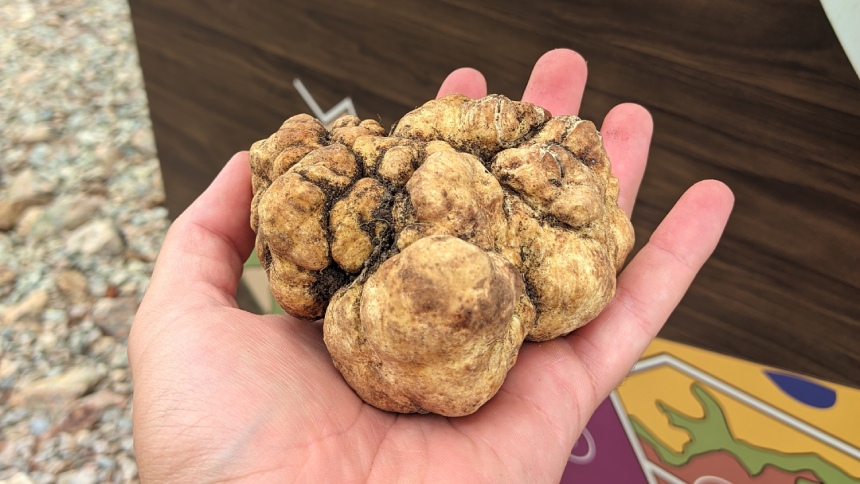
In January, Encruzilhada do Sul made the news. In this town in Rio Grande do Sul, 172 kilometers from Porto Alegre, the largest truffle ever found in Brazil was discovered—a huge fungus weighing 200 grams, the size of an adult's palm, which was quickly sold to the São Paulo restaurant Tuju, which has two Michelin stars, for R$ 2,000. That is, R$ 10,000 per kilo.
The edible jewel was unearthed from the property of Pecanera Brasil, a pecan nut producer. The farm belongs to the family of Jodimar Zaffari, director of the Zaffari Group, which includes 37 supermarkets and 10 shopping centers. Since 2015, 20,000 trees have been planted across 150 hectares.
It hasn't been difficult to find buyers for the nuts — the first batches were exported to Asia and the Middle East . But the truffles that sprouted alongside the roots, Zaffari confesses to Neofeed , were a pleasant surprise. “It's time to stop being a hobby . We've already bought two Lagotto Romagnolo dogs, trained to hunt truffles.”
The businessman says he chose Encruzilhada do Sul because of the sunshine, perfect for fruit growing, and the temperature range, which yields more aromatic fruit.
These ideal climatic conditions, coupled with the relatively flat terrain that doesn't hinder mechanization, are central to the discourse of many agribusiness entrepreneurs who, like the Zaffari family, arrived en masse in the last decade. And with an added advantage—abundant and cheap land.
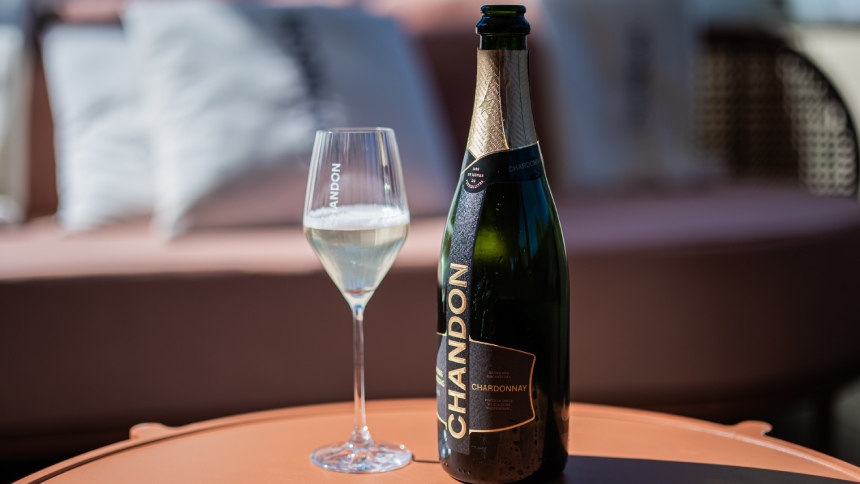
The first company to invest in the region known as Serra do Sudeste was Chandon . Winemaker Philippe Mével recounts that, in 1999, the company needed to expand its sparkling wine production, but there was a shortage of available land in the Serra Gaúcha region. After much searching throughout the state, he found Encruzilhada do Sul – the Chardonnay grapes that give rise to the Névoa das Encantadas sparkling wine come from there.
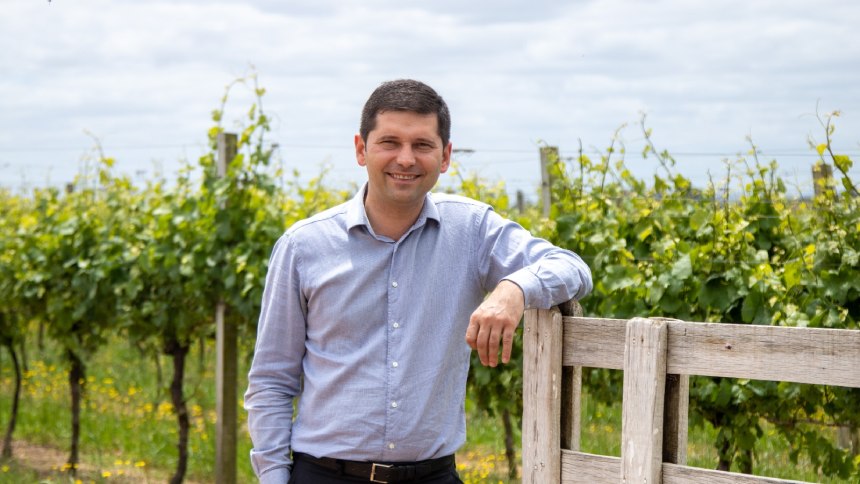
In the vacuum left, brothers Gustavo, Francisco, and Diego Bertolini, founders of the Manus winery, arrived in the city. “It was a region of pastures, everything very precarious. The value of the land was very low, and when Chandon invested, we went along,” Gustavo tells Neofeed .
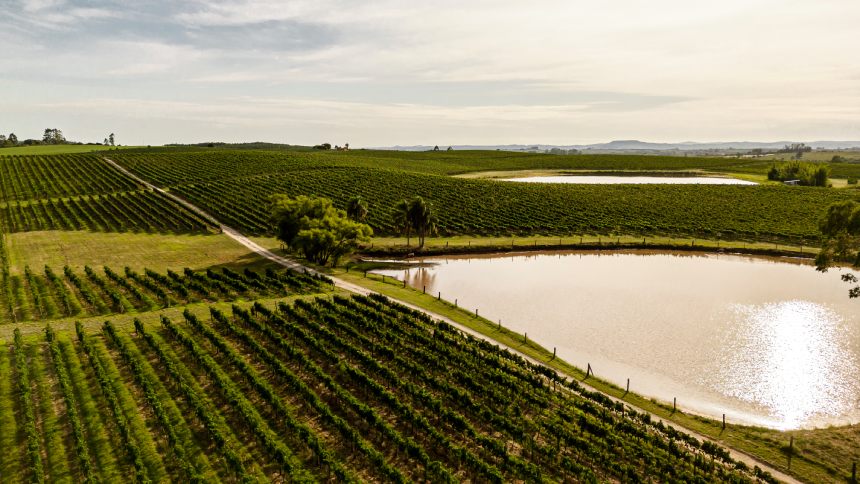
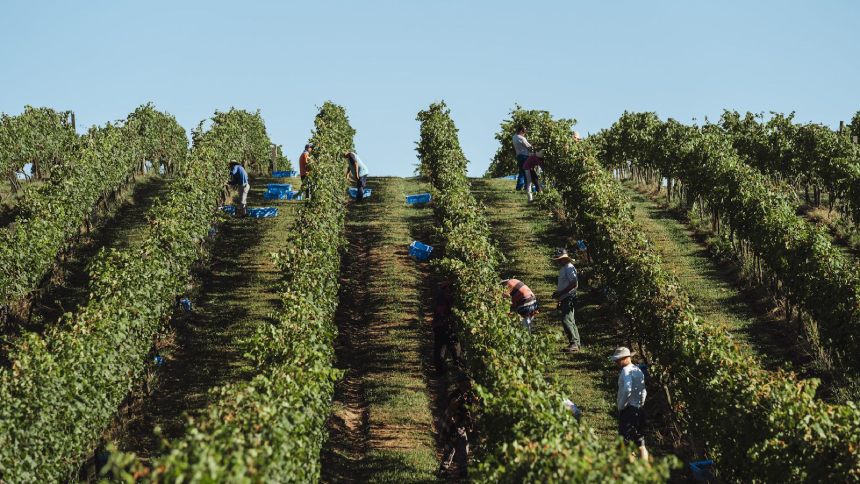
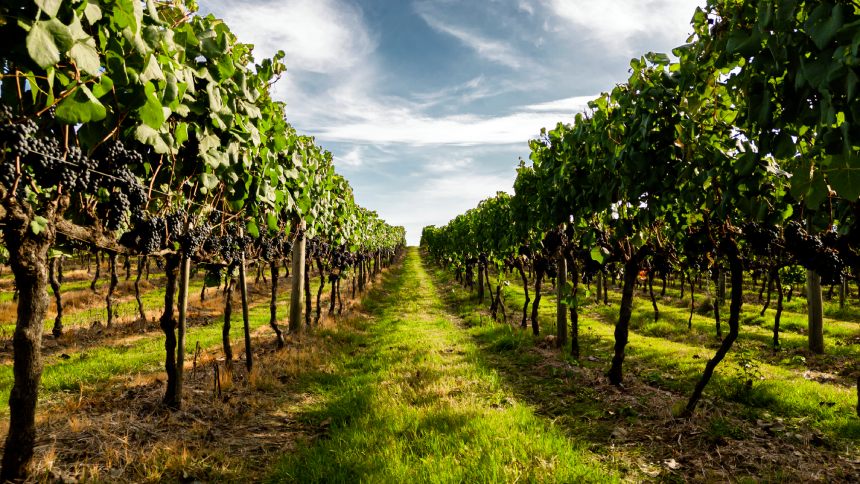
Twenty-six years later, Encruzilhada do Sul boasts 560 hectares of vineyards and 1,400 hectares of olive groves. After Chandon and Bertolini, came renowned winemakers such as Valduga and Lídio Carraro, and other boutique wineries.
Unlike the Serra Gaúcha region, whose terroir has become established in sparkling wines, the Serra do Sudeste region also stands out in high-end still wines.
The Pedras da Quinta Rare Blend, priced at R$ 459, is a blend of four Tannat vinifications from three vintages, aged in four different barrels. In 2024, it won a gold medal at the Brazil Wine Challenge. “We focus on exclusivity. For some wines, only 300 bottles are produced, which is equivalent to one barrel,” says Diogo Durigon, partner at Pedras da Quinta, in a conversation with NeoFeed .
Among the olive growers, Sabiá stands out, producing one of the most awarded olive oils in the country, which inaugurated a R$ 25 million olive oil mill there. The grand structure, surrounded by 113 hectares of olive trees, is fully operational and will begin receiving visitors in April, as soon as the harvest is over.
Meanwhile, owners Bia Pereira and Bob Vieira da Costa are dedicated to the 5.5 hectares of vineyards at Cave Sabiá — the brand's sparkling wine is now hitting the market in February.
One important factor makes producers grin from ear to ear: despite the unpredictable weather, rainfall in the Serra do Sudeste region remains consistent throughout the year, without periods of drought or excessively waterlogged soil.
The ups and downs of the thermometers, then, bring joy to the vineyards and olive groves. Summer highs can reach close to 40ºC, but the nights are always cool, around 15ºC.
According to Gustavo Bertolini, another treasure lies hidden underground. "In partnership with Embrapa Uva e Vinho, we discovered 16 soils, each very different from the other," the winegrower recalls to NeoFeed .
The discovery became a creative wellspring for the Bertolini brothers, who bottle 10,000 to 15,000 bottles annually. “We are vinifying the grapes from each plot, cross-referencing the soil type, the vintage, and the harvest date, in a pioneering effort using native yeasts. We have already isolated 50.”
Tourism related to wines, olive oils, and truffles, however, is not evolving at the same pace.
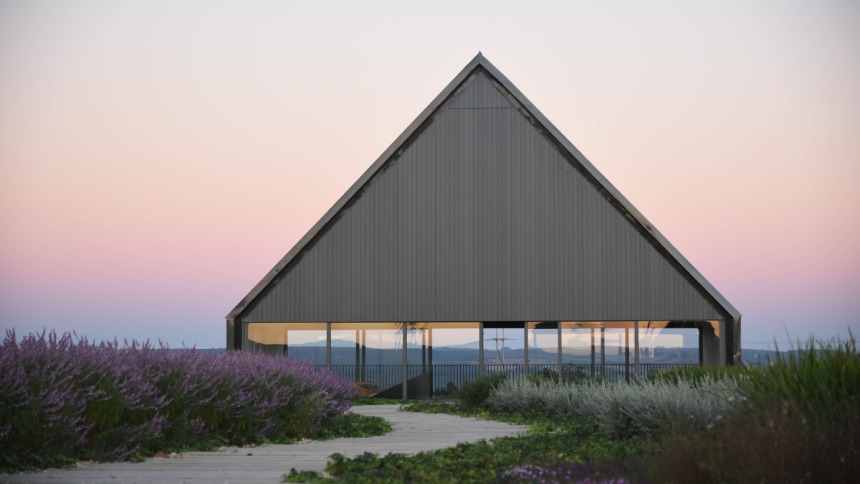
Manus is building a winery, scheduled to open in 2027 – the project by architect Marta Perin will feature four luxury suites overlooking the vineyards. The owners of Sabiá also intend to build a hotel, but the project is currently only in the planning stages, with no defined timeline.
Without hotels or guesthouses meeting the standards required by this type of visitor, the city has only come onto the radar of locals from Rio Grande do Sul, for now. "About 70% of our visitors are residents of surrounding towns," says Eduardo Valduga, winemaker and heir to Casa Valduga, the only winery with a shop located next to the vineyards.
Every year, Valduga opens the farm gates in February for the harvest festival, which celebrates the harvest. This year's festival took place on the 7th and, for the first time, included the participation of other producers.
“I didn’t charge the other wineries anything, so that we can create a concept of unity. We need to do in Encruzilhada do Sul what we did in Serra Gaúcha. The municipality needs to embrace these crops as tourism activities, allocate funds, partner with the state government to improve infrastructure and attract investors,” Eduardo Valduga told NeoFeed .
Founded this year, the new Association of Producers of the Terroir of Encruzilhada do Sul (Aprotees) is tackling another front: obtaining recognition of the Designation of Origin. “Embrapa suggested we try for a Geographical Indication registration, which is broader and would cover the entire Serra do Sudeste region, but we decided to go directly for the DO Encruzilhada do Sul, which has more strength in terms of perceived value,” Gustavo Bertolini told NeoFeed .
Benito Paschoal, the city's mayor since 2021, admits that new agricultural crops are transforming the municipality – in the first quarter of the year, when the grape and olive harvests coincide, the municipality reaches full employment.
He shows himself willing to collaborate. "We help investors with infrastructure: land leveling, expedited permits, and even the loan of municipal machinery, free of charge for up to four hours of use," he tells NeoFeed .
According to the mayor, a business-class hotel is under construction in the city, and plans for new inns are underway. "For now, the wineries are only planting here, but I bet they'll soon start making wine as well, because we still have the workforce that the Serra Gaúcha region no longer has."