


Fashion and technology have always been synonymous with innovation. Throughout history, however, they have generally followed distinct paths—fashion as symbolic expression, and technology as functionality. In recent years, however, the boundary between the two universes has begun to blur, and what was once futuristic projection has become everyday reality.
Thanks to technological advancements, chip size and energy consumption have decreased, allowing for more compact and elegant designs. As a result, smart clothing and accessories are rapidly integrating into contemporary lifestyles. Welcome to the fashionware era.
Undeniable proof of this movement is the prominence given to so-called wearables in the latest McKinsey report on fashion industry trends for the coming year—a weight never before seen in previous surveys.
In The State of Fashion 2026 , wearable devices appear as the fastest-growing accessory category. Although still in smaller volume compared to other products in the same segment, ultra-technological bracelets, watches, rings, and glasses have seen an annual increase of 8.3% since 2022. And, from now until 2028, they are projected to grow at a rate of 9% per year.
Globally, smart accessories are expected to generate US$42 billion by 2025, equivalent to 230 million units sold. It is anticipated that, within three years, they will account for 58% of total sales.
According to McKinsey's analysis, 2026 will be the breakthrough year for the wearables market. And leading this small revolution are glasses with multimodal artificial intelligence. "Despite several false starts over the past decade," the report reads, "smart glasses are finally gaining momentum."
Analysts predict that sales will quadruple by 2026, supported by lower average prices. Today, they cost between US$300 and US$400 — about a third of the original price of the pioneering Google Glass in 2014.
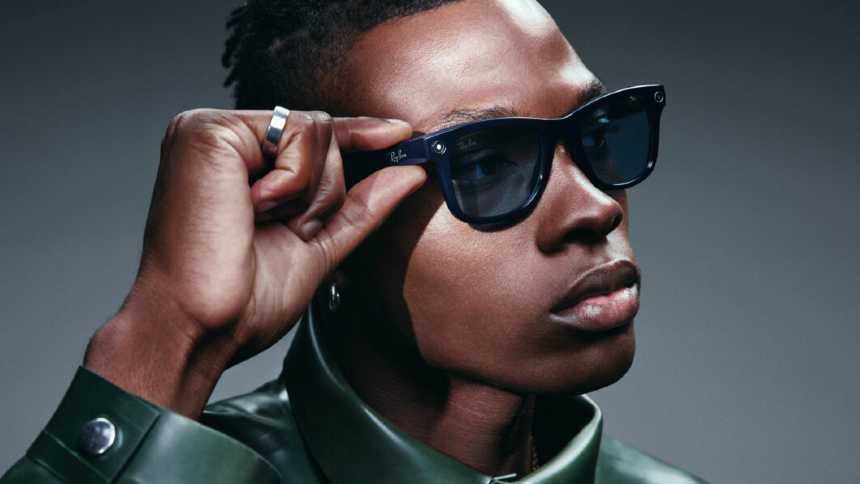
The success of the partnership established in 2021 between the Italian-French giant EssilorLuxottica and Meta serves as a paradigm for the new phase. With audio, image capture, and AI integrated into the frame, the second generation of Ray-Ban Meta has sold 2 million pairs since its launch two years ago—a quantity that surprised both companies.
In the third quarter of last year, according to EssilorLuxottica, Ray-Ban Meta sunglasses were the best-selling product in 60% of the brand's stores in Europe, Asia, and Africa.
The pieces are proving so successful that the companies have already announced a long-term extension of the collaboration. By the end of 2026, EssilorLuxottica intends to quintuple its production capacity to 10 million units annually. And, more recently, Mark Zuckerberg 's company acquired a minority stake in EssilorLuxottica for US$3.5 billion.
Introduced in September, the new model, named Ray-Ban Display, is also causing a stir. Equipped with a fast-charging battery and eight hours of uninterrupted use, a screen on the lens, image capture, real-time translation, "conversation focus" mode, and a wristband for gesture control, the glasses cost around US$800 — and weigh a maximum of 70 grams.
"And this is just the beginning," boasts Rocco Basilico, head of wearables at EssilorLuxottica.
Everyone is looking for a smart pair of glasses to call their own. Google, for example, is working with the luxury brand Kering and the American brand Warby Parker and promises to launch its first product in 2026. Apple hopes to do the same the following year.
Among Chinese companies, Alibaba and Xiaomi already have their products on the market.

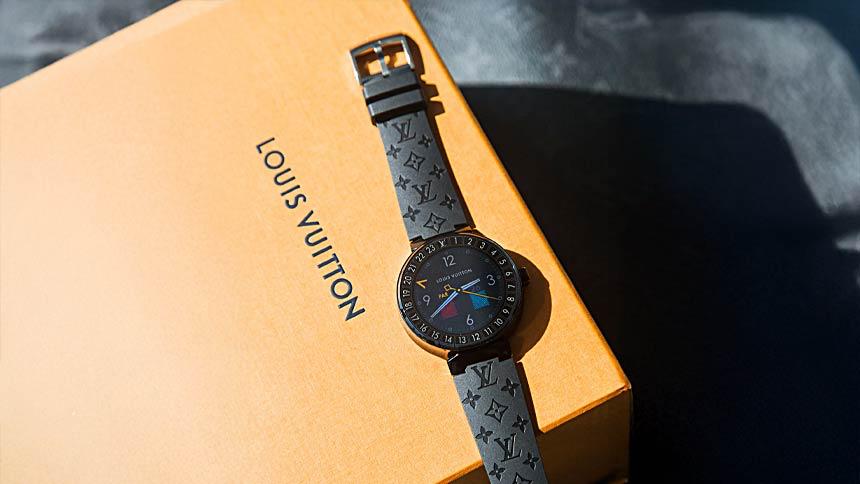
Despite the promise, fashionwear versions don't even dominate 10% of the overall eyewear market. This contrasts with smartwatches, which account for 35% to 40% of global watch sales volume—up from around 15% in 2016.
The growth also attracted the interest of the luxury sector. Traditional brands — Tag Heuer , Tissot , Louis Vuitton — began to compete for space in this market, combining refined design with advanced functionalities.
Smart rings are also gaining ground. Or rather, the Finnish company Oura is establishing itself as the leading brand in the segment, holding 80% of the sector in 2023. Founded in 2013, the startup promises to measure various health parameters — breathing during sleep, glucose, heart rate, and blood oxygenation, among others.
Since then, the company has raised approximately US$1.5 billion in investments. Of the roughly 5.5 million rings sold in the last twelve years, more than half were sold between 2024 and 2025 alone.
The biggest disappointment in wearables is wristbands. In 2016, they dominated 40% of the wearables market. Today, they barely reach 10%.
The decline is explained by a combination of factors, but above all by the limitations of functionality when compared to smartwatches, which now offer larger screens, better smartphone integration, and more comprehensive health features.
There's also the question of design. In the fashion world, style is fundamental. The State of Fashion 2026 is categorical: although technology is crucial for the adoption of wearables , style still reigns supreme.
Among buyers of smart glasses, for example, a third choose the product primarily for its design—a slightly higher proportion than among watch users.
At the intersection of chips and catwalks, the boundary separating functionality and aesthetic expression dissolves—and with it, the very notion of accessory.
If analysts' projections are confirmed, smartwatches, glasses, and rings will be less gadgets for tech enthusiasts and more symbols of their owners' aspirations. What's at stake is the reconfiguration of fashion in the data age.