


Milan — Lucas Pinheiro Braathen is different. The 25-year-old athlete, from Generation Z, made history by winning the first gold medal for a South American country at the Milano Cortina 2026 Winter Olympics . In Brazil, of course, it doesn't snow.
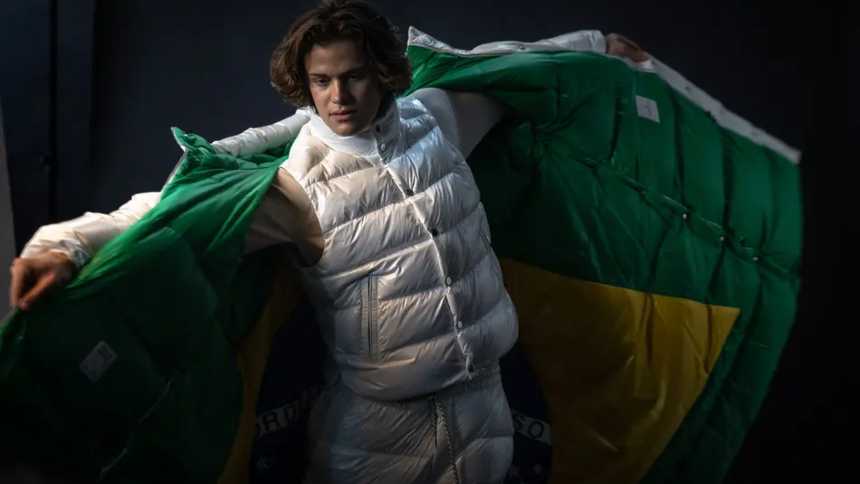
But Pinheiro Braathen is also distinguished off the ski slopes. He is a model and a constant presence at renowned fashion weeks, such as Milan Fashion Week. Sponsored by the Italian brand Moncler, the athlete is a fashionista and designer — responsible for designing the uniforms for the Brazilian Alpine Ski Team.
Lucas also dedicates himself to accessory design. He has his own line of Oakley ski goggles. In addition to these companies, he is associated with Visa , Corona, Atomic (an Austrian ski manufacturer), and BMW.
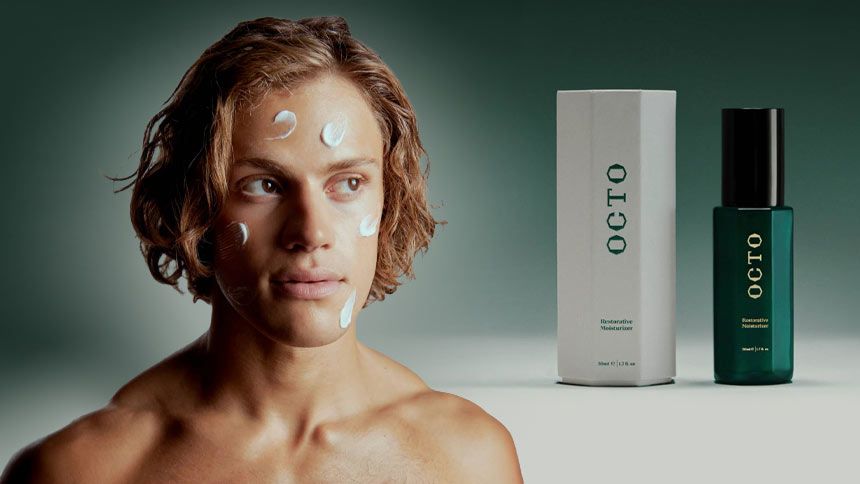
But the greatest value lies in the Octo skincare brand, created by him. After the worldwide exposure with the medal win in Milano Cortina, it is speculated that it has surpassed R$ 1 billion in market value.
"For me, numbers, whether sporting results or the commercial value of my brand, are a consequence. In the end, it all reflects how connected I am to my purpose and my dreams," says Pinheiro Braathen, in an interview with NeoFeed during an event hosted by one of his sponsors, Visa , at Casa Brasil.
Eating cheese bread, very friendly and wearing a Brazil uniform, Braathen arrived at Casa Brasil, in Milan, a meeting point for fans, on Friday, February 20, around 4 pm (local time), slightly late because the Italian driver needed to take a break to rest.
The athlete spoke with journalists in English and Portuguese, let some guests hold his medal, took selfies, and said he can't wait to get to Brazil next week to see his family, his girlfriend Isadora Cruz, a Globo actress, and eat picanha. As soon as "this madness" is over, Braathen wants to travel to Chile and Japan and confessed that he wears Havaianas "all year round".
“The creator economy has transformed individuals into brands with positioning, their own audience, and a real capacity to generate business. When an athlete like Lucas achieves cultural relevance, and not just sporting relevance, he drastically increases his value. He stops delivering only visibility and starts offering narrative, emotional connection, and influence over behavior,” says Rafaela Queiroz, co-president of the Leo agency, to NeoFeed .



Born in Oslo, the capital of Norway, he competed wearing the red, white, and blue colors in the early years of his career—even representing his country at the Beijing Olympics in 2022. However, a disagreement with the local federation led Braathen to announce his early retirement.
At 23 years old, he stated that the decision was motivated by disagreements with the Norwegian federation, especially regarding sponsor exposure, dress code, and participation in events.
After a vacation in Ilhabela, on the coast of São Paulo, he decided to "trade" the Braathen, inherited from his father, his great encourager to practice skiing, for the Pinheiro from his maternal family.
His connection to Brazil is not something distant or random. He lived in São Paulo after his parents' divorce. Besides cousins in the São Paulo capital, his grandparents live in Campinas. During that time, he played soccer and dreamed of being a star player. But at the age of nine, he returned to his country of birth and followed his father's advice to ski. At 24, he began to wear and represent the green and yellow of Brazil.
Below are the main excerpts from the interview with NeoFeed :
After you won the Olympic gold medal, the "Lucas Pinheiro Braathen" brand may be worth more than a billion reais. What is your assessment of this large number?
Quick and to the point? I have no idea. Because, for me, numbers, whether sporting results or the commercial value of my brand, are a consequence. In the end, it all reflects how connected I am to my purpose and my dreams. I'm not ashamed to say that. I think I have a value that goes beyond the track. What really has the power to inspire is the conversation I build, the topics I bring up, even for those who don't care about sports.
After becoming an Olympic medalist, you said that people can be different depending on where they live, but that they need to believe in their own power. Does this come from you or was it taught to you by someone?
It comes from living my life. From the diversity of my family. My mother is from São Paulo and my father is from a farm in rural Norway. They are completely different worlds. I grew up between countries. I always felt this lack of a fixed home. And that shaped me a lot. Having two perspectives broadened my horizons and fueled my curiosity. Since I never felt completely at home anywhere, I was always the one who entered a room and needed to make my presence felt. This develops an ability to trust in who you are, even if you are different. And that, for me, is fundamental to pursuing dreams.
"I never felt completely at home anywhere; I was always the one who walked into a room and needed to make my presence felt. This develops an ability to trust in who you are, even when you're different."
When you move to a new country, your home becomes yourself. Is that it?
Exactly. You grow until you realize that your true home is within you. As an athlete, this is very significant. The sporting result is just a reflection of how I am inside, how connected I am to my purpose, something deeper than medals or statistics. That's why I think it's important not to let the opinions of others lead your life. You need to follow your intuition, your heart. It is in this state that you truly achieve your dreams.
Where do you live today?
I have an apartment in Innsbruck, Austria, which is my base. I also have an apartment in Milan, which I've had for about a year and a half, and a base in Brazil. But, in practice, I spend a lot of time in hotels, competing.
Why did you create Octo, a beauty brand?
I say it's about health. Because health is beauty. The creative part originates in Milan. The ingredients come from the Amazon. Since I've always lived on the move, traveling, finding balance has never been simple. And health is the foundation of everything, of my happiness and my profession. Many brands say you need several products. But that doesn't work when you live with your suitcase packed. So the idea was to create simplicity with richness, a single product with eight ingredients.
How was the product developed?
We studied the microbiome of populations in the Amazon and compared it to our own urban microbiome. From this, we found specific ingredients and developed the cream. The name Octo comes from the eight ingredients and also from the infinity symbol, a continuous connection with the earth and with health.
Was your decision to leave the Norwegian team and compete for Brazil related to business?
It was much more about identity and purpose than commercial aspects. I needed to be aligned with who I am, with my story. When you're connected to that, decisions make sense both inside and outside of sports.
Is it true that you created a foundation?
Yes, the Luci Foundation. It's one of the most important projects of my life. It was created to help children who don't have the financial resources to practice sports. Today, with this medal, I feel in a position to expand this impact in Brazil. I'm very proud that this can generate value for Brazilian society. I want to bring the foundation to Brazil and help the country grow with more access and inclusion.