


What, ultimately, transforms an ordinary executive into someone worthy of admiration? For some, a career full of experience, MBAs, and mastery of methods and management seems sufficient. For others, however, it is necessary to go far (very far) beyond the comfort zone. It is in this gap, between ambition and discomfort, that Ironman emerges as a territory to take self-challenge to extreme levels.
Not surprisingly, of the 10,500 participants in the six races held throughout 2025 in Brazil, 40% were executives. While swimming 3.8 kilometers (km) in the sea, cycling another 180 km and, after all that, still running 42.2 km, they strengthened essential skills in the business world.
“The competitiveness in Ironman is similar to that of the corporate world,” says Carlos Galvão, CEO of the Ironman modality in Brazil and former stock market trader, to NeoFeed .
“It takes a lot of commitment, discipline and resilience, something that is expected of a true leader. Completing the race, therefore, is a true seal of approval of ability,” adds the person responsible for “importing” the competition in the 2000s.
The connection between the two worlds is so close that, according to Galvão, in the United States, having participated in the longest and most challenging distance of traditional triathlon can even count towards the selection of a new C-level executive—even a CEO: "In a competition between two candidates, whoever has the Ironman symbol on their resume has an advantage."
To become an Ironman (or Ironwoman), you need an average of four hours of training per day. And balancing that training routine with your daily work life isn't easy. Ironman is mostly composed of amateur athletes (only 1% are professionals).
In 2025, across all its stages, the competition generated R$ 50 million. For next year, the goal is to reach R$ 60 million in revenue and 12,000 participants, with the inclusion of another race on the calendar, to be held in Curitiba.
Of that amount, 45% comes from registrations; 25% from sponsors and 20% from public partnerships. The other 10% comes from official stores, set up during the events. "Our purpose is to make a difference in people's lives through a healthy and inclusive platform," says Galvão.
“Inclusive” here is almost an understatement: the Ironman is for the few; for those who have the focus, preparation, resilience, and stamina to swim, cycle, and run a total of 226 kilometers, as shown below by four executives interviewed by NeoFeed .
As they say, whether in competition or in the corporate world, everything changes when you cross the finish line—preferably as a winner.
Meritocratic performance
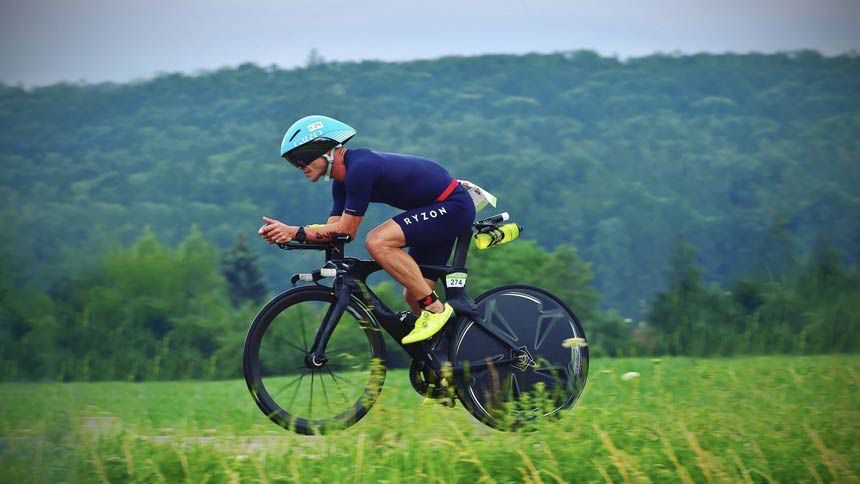
Pedro Cerize , 55, is a leading figure in the Brazilian financial market. Throughout his career, he founded his own asset management firm, Skopos Investimentos, in the early 2000s, and served on the board of directors of giants such as Porto Seguro, Vale Fertilizantes, and Copel.
His Ironman journey began in 2015, after years as a marathon runner. In his very first race, he won his age category—even though he had only learned to swim specifically for the competition, in just four months. In those ten years, he participated in 22 competitions.
“I always enter challenges to win. I don’t just enter to compete or to finish, I need to win,” says Cerize.
“Just like in the financial market, timed sports measure performance. Whoever dedicates themselves more does the work better, gets better results, it’s simple. For me, it’s a very meritocratic thing: you have to give it your all, you can’t just do half-heartedly,” he adds.
Ironman saved his life. In 2024, he noticed he was losing competitiveness in races. Something was wrong, but doctors found nothing abnormal. But Cerize insisted on the theory of decreased performance. More sophisticated tests found the reason why he wasn't swimming, cycling, and running as usual: a coronary artery blockage that, without surgery, could have been fatal.
Today, for him, the Ironman is a "life simulator"—the problems that arise at each stage need to be overcome with focus and agility in order to keep moving forward.
"For better or worse, you need to finish, and you simply can't plan everything. This builds a lot of resilience for life," she explains.
A new way of dealing with time.
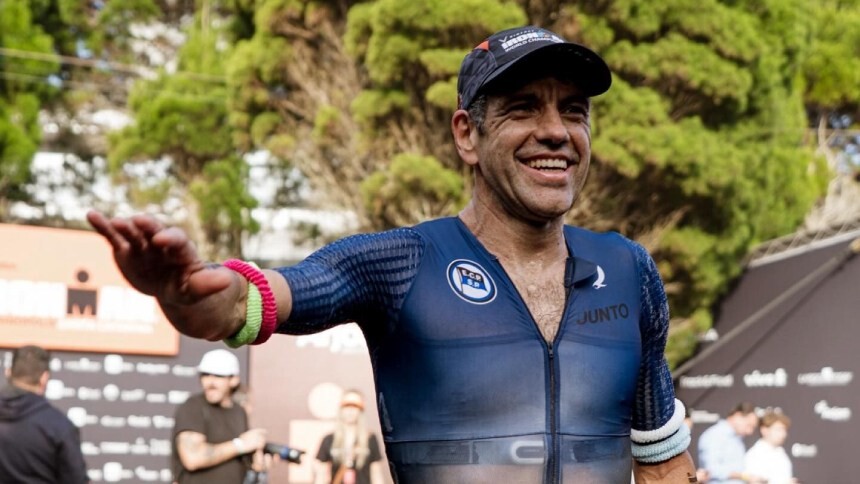
At 50 years old, Roberto Fonseca knows this routine well. For almost two decades he worked at Itaú, the last four years as a superintendent, a position he left four months ago. At the financial institution, he participated in the development of Itaú Corretora and helped create the Íon investment platform, among other bank tools.
Eight years ago, amidst the excitement of these new developments, he decided to participate in his first Ironman—or rather, half-Ironman, a race known as the 70.3, with half the distance of the original. Fonseca had been training for triathlons since college, but he needed to increase the pace. And that's what he did.
“To manage my training schedules, I needed to become much more productive: time needed to be treated differently,” he recalls. “I no longer had ten hours to work, because I wanted to spend part of that time training. Completing my work routine in less time was a challenge.” But he managed it.
In 2021, the executive competed in his first full race. He finished second in his age category and earned a spot in the world championship, held annually in Hawaii, the birthplace of the competition. There in the United States, he finished fourth. In the following two years, Fonseca became the world runner-up.
“With the Ironman, I came to the conclusion that I can do anything,” he says. “The race brings self-confidence and the certainty that, if you dedicate yourself, it’s possible to achieve whatever you want, whether at work, in your personal life…”
The opposite is also true. Much of what Fonseca learned throughout his professional career was essential to his performance in the Ironman. Learning to ignore the noise of the market, for example, was fundamental to his performance in the competition: total focus on what he could actually control.
Never give up.
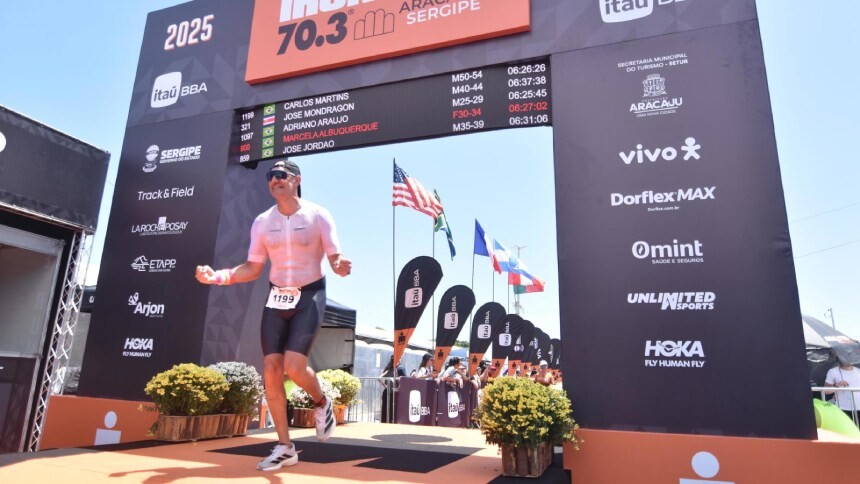
Carlos Martins , a 52-year-old Portuguese national and president of Roche Diagnostics Brazil, is a newcomer to Ironman. His first race was this year, the 70.3 Aracaju, held on November 30th.
"Running a large company is a huge amount of pressure, so you need something else besides the corporate challenge, which, for me, is sports," says the executive.
Despite having extensive experience with cycling, his biggest challenge was his lack of experience with swimming – which almost kept him out of the final stage of the circuit, held in the capital of Sergipe.
The sea was an impressive 28 degrees Celsius. Because of the heat, competitors were prohibited from using wetsuits, which facilitate propulsion in the water. Many dropped out.
“I seriously considered giving up, but so many people were rooting for me… friends, colleagues at the company… I needed to finish,” says Martins. “It was almost like running a company in Brazil: every day a challenge comes up that makes you think about giving up, but even so you keep going, overcoming all the obstacles.”
Discipline always
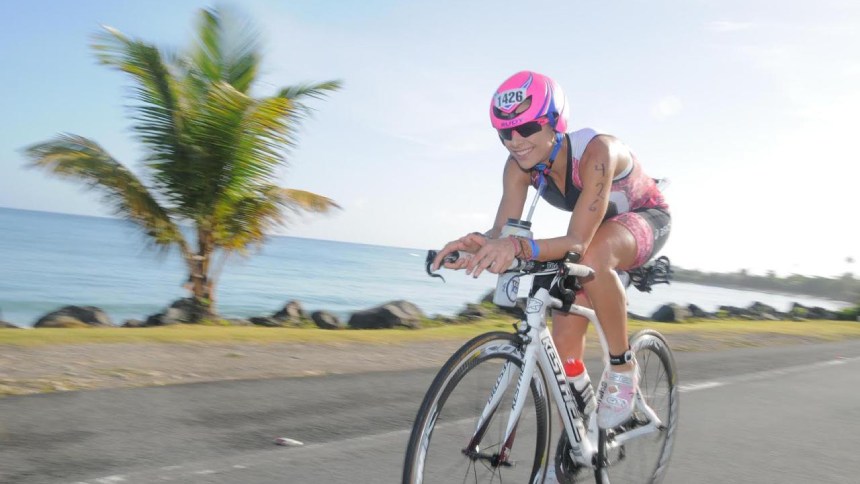
Despite the growing female presence in Ironman, women are still a minority — 20% on average. And this is largely because they still have less time available for training than men, says the competition's CEO.
Ana Oliva Bologna, 44, chair of the board of the Astra group, is a veteran competitor. A lifelong athlete, she decided to dedicate herself to Ironman in 2010 after falling in love with triathlon.
In her first competition, she already qualified for the world championship, with major sponsorships on her uniform, such as Oakley and Asics. The following year, she broke the record among amateur women, but a fracture in her heel took her out of the title race. She was left with the pride of being the first Brazilian woman to go so far.
In total, the businesswoman completed five Ironman races. In 2012, a bicycle accident and a broken rib before embarking for Hawaii caused her to abandon the competitions altogether.
“Then my grandfather, the founder of Astra, fell ill. And these situations completely changed my plans. I took on important responsibilities in the succession process and needed to switch gears. I still participated in some races after that, but that's when my retirement from high-performance cycling began,” says Ana.
For the executive, a great lesson was learning to win and to lose, being aware that neither victory nor defeat lasts forever.
“The same thing happens in the corporate environment. What really makes a difference is taking the first step and maintaining discipline along the way,” she says. “That’s what sustains the journey to any goal, whether it’s a sporting objective or a strategic result within the company.”