

San Pedro de Atacama — It's a new moon night in Uyuni, Bolivia. The cold Andean wind cuts through the cloudless sky. By car, we enter the world's largest salt flat, escaping the dim lighting of the Sueños y Leyendas theme park, which opened less than a year ago next to the Salt Palace, the world's first luxury hotel built with blocks of the mineral that abounds there.
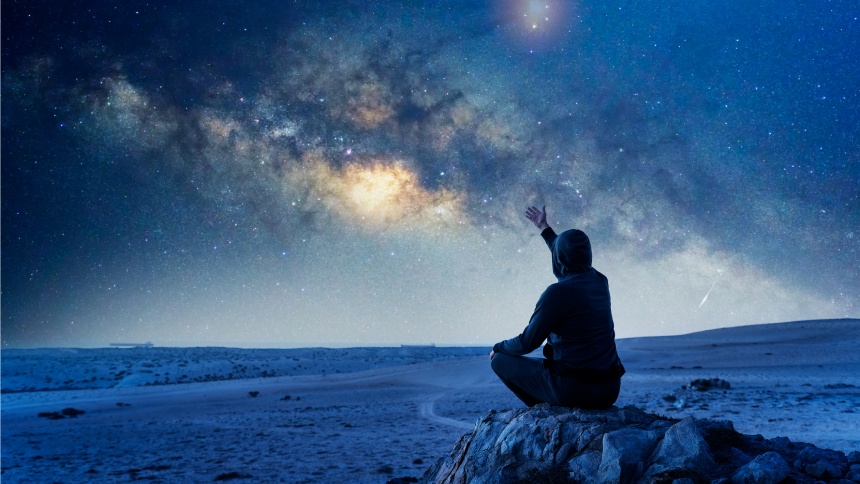
Within minutes, absolute darkness falls, and there they are, from one end of the Earth's dome to the other, with different colors, intensities, and sizes, almost touching the ground. Thousands and thousands of stars.
For those accustomed to seeing only small bright dots amidst the increasing light pollution of cities, experiencing the immensity of the universe with the naked eye can be an unforgettable experience. Just like witnessing a solar eclipse, the aurora borealis, or taking a dive into the Milky Way with the help of powerful telescopes. It is experiences like these that have been driving the tourism sector worldwide, with what is known as astrotourism.
“The release of the film Interstellar in 2014 and the images posted on social media, especially during the pandemic, greatly impacted public interest in the mysteries and beauties of the universe,” points out David Pérez Ibañez, commercial manager of the Space observatory in San Pedro de Atacama , Chile, to NeoFeed , noting that in recent years he has seen demand grow “between 20% and 30%”.
According to the Experiential Travel Trends 2026 study by ALL Accor in partnership with Globetrender, almost 60% of the 4,300 travelers surveyed in Brazil, the United Kingdom, the United States, France, Germany, India, Australia, and China feel disconnected from nature, and 69% plan trips to experience specific seasonal and natural phenomena.
A survey by Booking.com at the end of 2024 indicates that two-thirds of Brazilian tourists are considering visiting destinations with darker skies to observe the stars in the coming years.
“Astrotourism aligns with the search for connection and slow travel , which have been identified as trends in tourism for some years now. But, with the exception of the Northern Lights, which are a motivator in themselves, the other activities still need to be associated with a combination of attractions at the destinations to be marketable,” says Gabriela Figueiredo, CEO and partner of the luxury travel production company Matueté, in an interview with NeoFeed .
Nothing is guaranteed.
At the end of 2025, the company launched a project to create customized itineraries for those interested in observing the total eclipses predicted for the month of August in locations such as Iceland, Greenland, Spain (2026), Egypt and Morocco (2027), where the phenomenon is estimated to have better visibility for a longer period (which, in reality, is a matter of minutes).
“But nothing is guaranteed; after all, we are dealing with nature. This needs to be clear to those who buy the package,” warns guide Alejandro Chacon, from Hidalgo Tours, accustomed to dealing with the amazement and also the disappointment of tourists in the Bolivian altiplano. “Winter, the dry season, is always better for seeing the sky. But weather conditions can change very quickly,” he explains.
Guests at the Palácio de Sal hotel can also enjoy observations with the aid of a telescope and the accompaniment of an astronomer. Both experiences are included in the accommodation package, which has prices starting at R$ 2,300 (US$ 452) in the low season.
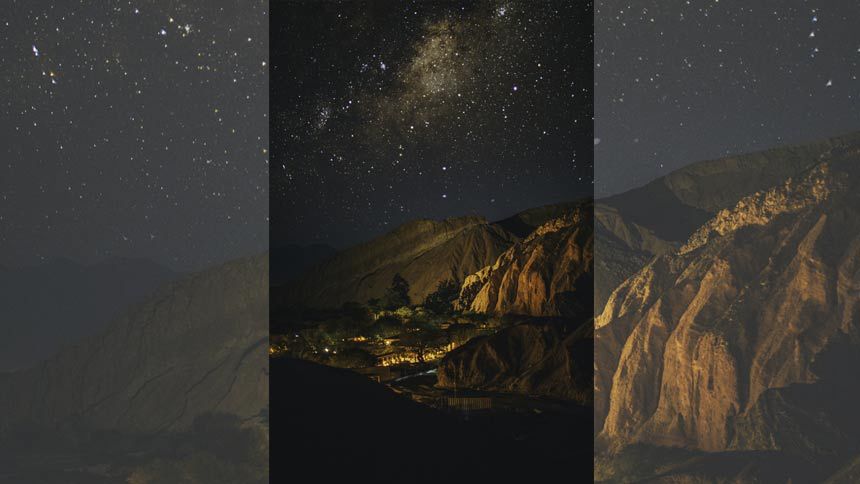
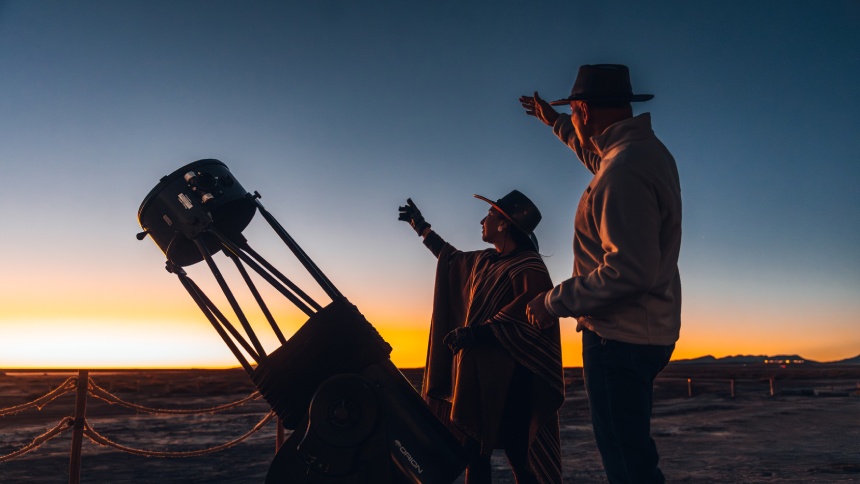
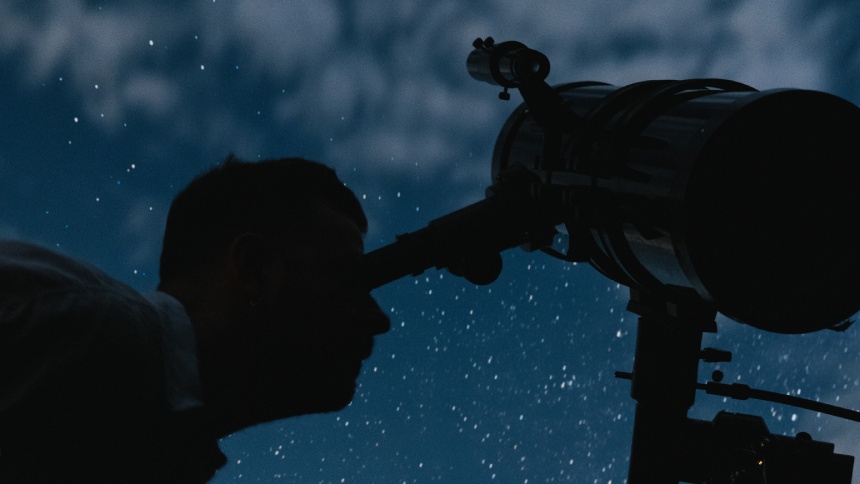
In the Atacama Desert, where the unique combination of high altitude (above 2,500 meters) and low humidity and light pollution levels ensures more than 300 clear nights a year, the movement around this issue continues.
While luxury hotels like the Nayara Alto Atacama are already being built with on-site observatories, local tour operators are starting to invest in their own facilities to offer a more complete experience to tourists of all types.
This is what Horizonte Turismo recently did, which, after three years of moving its three telescopes daily to strategic points in the desert, inaugurated, in December, a permanent structure of 5,000 square meters, for up to 18 people in each of the three nighttime time slots.
Lasting approximately two hours, the experience was designed to cater to the interests of diverse audiences.
“Brazilians arrive focused on capturing the sky in photos and even do three-hour photo shoots with specialized professionals. Europeans, on the other hand, want to explore the more scientific and technical side of astronomy. They are different dynamics,” says Ricardo Novoa, group and events coordinator at Nayara Alto Atacama.
To observe the Earth
In Brazil, the number of people interested in the subject has also grown. The Desengano State Park, in Rio de Janeiro, was the first in Latin America to be included, in 2021, in the select list of the DarkSky association, known for mapping and helping to protect the darkest places on the planet.
Since then, the conservation unit has seen a growth in tourism of over 300%, reaching 11,000 visitors per year. Hotels located in regions known for their excellent nighttime visibility have also been working to offer this experience to their guests.
Take the case of the Hotel das Cataratas, part of the Belmond chain, located within the Iguaçu National Park in Paraná. Created in partnership with astronomy expert Janer Vilaça, a tour to one of the viewpoints overlooking the waterfalls costs R$ 900 (private tour or R$ 250 per person for groups of six or more). More than just scientific data, it presents the relationship between the Guarani indigenous culture and the sky.
Located near the Arctic Circle, countries such as Finland, Norway, Iceland, Greenland, Canada, and the US state of Alaska remain popular destinations for those seeking the magic of the Northern Lights, which are most visible between April and September.
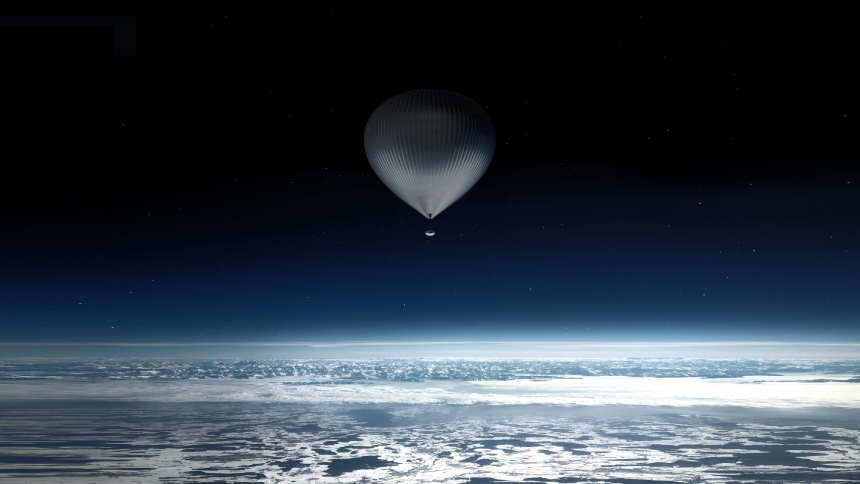
If your desire, courage, and budget allow, Teresa Perez Tours now has a trip to the stratosphere for sale aboard the low-carbon balloon from the French company Zephalto.
At an altitude of approximately 25 kilometers, the journey allows one to contemplate not only space, but, above all, the curvature of the Earth and its atmosphere, taking the observation of the stars to another level, where the planet we inhabit becomes the main focus. The adventure, on the border between astrotourism and space tourism, starts at €170,000 per person.