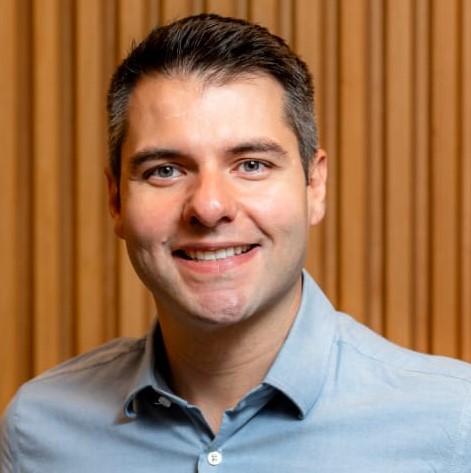



Fifteen years of anything is a milestone that invites reflection. But when you dedicate that time to investing in companies that aim to solve real problems in the lives of real people, it's even more special.
Throughout this period, I saw thousands of companies emerge and closely followed dozens of them, participated in boards, supported entrepreneurs, and witnessed several companies fail. Of these stories, one in particular stands out to me: that of two ventures we made on the same topic – financial inclusion – with radically different outcomes.
I'll start with Dona Maria da Coxinha. She used to sell savory snacks at the entrance of a school in the interior of Ceará. When I met her on a field visit organized by Avante, one of the largest microcredit fintechs in the Northeast, she had just received her first loan: R$ 1,700, without collateral or a guarantor.
With the money, he bought a new deep fryer and increased his stock of ingredients. His revenue went up. Months later, he renewed his loan. And it went up again...
In the mid-2000s, talking about financial inclusion in Brazil meant something very concrete: bringing money and basic services to millions of people who had virtually no access to the formal financial system. Brazil had more than 10.5 million small businesses with a maximum of five employees, most of them informal. Among them, 94% did not use credit.
Our goal of expanding access to quality financial services led us to invest in Avante in mid-2014. It was a microcredit fintech company that sent agents with tablets to visit micro-entrepreneurs in Ceará, Maranhão, Pernambuco, and Paraíba, at a time when most loan processes were slow and done with pen and paper.
This same purpose led us to our second investment, at the end of 2018, in Celcoin. The company had been founded in 2016 with the idea of creating a digital account for the unbanked. It didn't work as planned – 90% of transactions came from 5% of the user base.
Fearing that this data might indicate fraud, the entrepreneurs went into the field and discovered that small business owners were using the app not for themselves, but to offer bill payment services to their customers.
In startup jargon, they “pivoted.” They transformed it into an app that allowed any small neighborhood shop to become a banking service point, offering bill payments, mobile phone top-ups, and cash withdrawals. It seems strange today, but at that time more than two-thirds of financial transactions in Brazil were settled in physical cash.
For both, we also invested in rigorously measuring the impact. At Avante, the evaluation published in the Journal of Policy Modeling , analyzing more than 240,000 records, identified that access to credit increased entrepreneurs' revenue and profits by almost 5%, with a greater effect for those who accessed it for longer periods. At Celcoin, the Insper Metricis study identified that, in cities with the platform, people spent 11 minutes and R$ 4 less per week paying their bills.
Avante served more than 56,000 borrowers between 2016 and 2019 – perhaps the fourth or fifth largest private microcredit program in the country. Celcoin, during the same period, already had thousands of agents spread across all regions of Brazil, serving millions of consumers. The impact of both was real, documented, and published.
The shock of March 2020
For the financial inclusion ecosystem in Brazil, the Covid-19 pandemic was both a destructive and transformative force. For Avante, it was devastating. The entrepreneurs it served – mostly informal traders, street vendors, or owners of small stalls – lost income overnight due to social distancing policies.
The portfolio's delinquency rate suffered profound shocks. The company, despite having grown impressively and serving tens of thousands of entrepreneurs, was still a startup burning through cash and seeking sustainability for its business model (a reality for the vast majority of startups).
Without a capital cushion to absorb the impact, the loan portfolio and the business as a whole were absorbed by a financial conglomerate. The founders and partners moved on to other activities, and the business "went wrong." The impact on the entrepreneurs was real. The vehicle that delivered it did not survive.
But the same pandemic that was the "death blow" for Avante was a radically transformative force for Celcoin. When the government needed to distribute Emergency Aid to millions of informal workers without bank accounts, Caixa Econômica Federal promoted the largest wave of financial inclusion in the country's history (and perhaps one of the largest financial inclusion movements in the world).
All the technological infrastructure that Celcoin had built for the agents of the Celcoin Network – the APIs in technology jargon – began to be offered to digital banks, retailers, and fintechs that needed basic financial services to reach this population in order to build their offerings on top of this infrastructure.
Celcoin's technology was crucial in enabling new entrepreneurs to compete on a level playing field with large banks, and today, Celcoin processes tens of billions of reais per month, connects hundreds of fintechs and digital banks, and is one of the largest financial infrastructure technology companies in Latin America.
The lessons of choices
Looking at these two stories side by side – same purpose, same external conflict, opposite outcomes – one lesson stands out after fifteen years on this agenda.
Investing with purpose pays off. Avante had an incredible impact on the entrepreneurs it served. It may not have been a good financial investment, but it left a legacy: robust evidence that microcredit works, bringing Brazil to international scientific journals.
And the same driving force of purpose that led us to Avante also led us to Celcoin – which is now one of the reasons why our second fund is at the top of global venture capital industry returns. Purpose is not the opposite of return. Often, it's what leads you to see opportunities that others don't.
Brazil has taken giant steps in the last decade. We've brought millions into the banking system. We created Pix. We have world-class fintechs. But we still haven't answered a question that haunts me every day: how to ensure that access to basic products and services reaches – and continues to reach – those who need it most. The stories of Avante and Celcoin show that purpose is the best compass for investing and offer clues on how to pursue an answer.
Gilberto Ribeiro de Oliveira Filho holds a master's degree in Economics from Insper and has been a partner and head of investments at Vox Capital, a pioneering impact investing firm in Brazil, for fifteen years.