


Those who follow corporate news may get the false impression that sustainability has lost momentum. After a period of omnipresence of the ESG acronym, the topic seems to have given way to the urgencies of artificial intelligence or macroeconomic fluctuations.
However, a closer look at the most recent data from the Brazilian capital market reveals a much deeper and more sophisticated phenomenon: the sustainability agenda is not dying; it is maturing and progressively integrating into companies' management mechanisms.
Data from the 4th edition of the "Portrait of Sustainability in the Capital Market" survey, conducted by Anbima in partnership with Datafolha, shows that 80% of financial institutions attribute high importance to the topic. What has changed, essentially, is the nature of this relevance.
If in 2021 we were experiencing the peak of enthusiasm, today the movement is one of consolidation. Sustainability has ceased to be the "star" and has become an operational reality, placed on the radar of institutions no longer as an external trend, but as a strategic element of value creation and survival.
This transition from aspirational to pragmatic is visible in the daily operations of organizations. For 85% of Brazilian institutions, sustainability is already part of their day-to-day activities. In this scenario, asset management firms act as an accurate barometer of the depth of this change.
Representing 74% of the responding institutions, these firms operate in an environment where financial pragmatism dictates the pace, and the data shows that they are moving ESG from the ethical field to the center of decision-making.
Currently, 78% of asset managers already consider the impact of environmental, social, and governance issues when making investment decisions. More than a philosophical choice, this integration is driven by risk management: for 51% of asset managers, this is the main reason for adopting sustainable criteria, a significant increase compared to the 45% recorded in 2021.
The market is realizing that sustainability is ultimately about the long-term viability of the business and mitigating risks that were previously ignored by traditional models.
The institutionalization of the topic within asset management firms is another clear sign that the agenda has become a critical management element. More than half of the firms (55%) already have formal internal documents and specific responsible investment policies, a remarkable leap compared to previous cycles.
Furthermore, the agenda is no longer restricted to isolated committees, but permeates the operational structure: 58% of asset managers offer ESG training and technical capacity building for their teams, and the percentage of firms with structures dedicated exclusively to the topic has more than doubled in four years, reaching 13%. Active engagement has also gained momentum, with 53% of asset managers interacting with their portfolio companies to deepen analysis or influence management.
To understand how this works in practice, one only needs to observe the allocation decisions reported by firms that already handle the topic with maturity. Four out of ten Brazilian asset managers state that they have excluded or stopped investing in specific assets in the last 12 months due to environmental, social, or governance weaknesses.
Another concrete application occurs in valuation : asset managers have been applying discounts to the estimated value of companies that do not present clear transition plans, treating inertia in sustainability as a financial deficiency that reduces the company's fair market value.
In short, sustainability is leaving the spotlight to take its rightful place: the "operating system" of the capital market. By becoming integrated into management mechanisms, it loses the fleeting luster of corporate fads but gains the solidity necessary to guide the use of resources in a complex future.
CVM Resolution 193, which requires the reporting of financial information related to sustainability starting in 2027, will only be the culmination of a process that is already underway within decision-making bodies. The news noise may have decreased, but strategic integration has never been stronger.
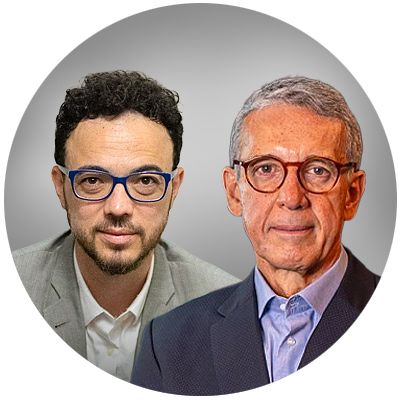
Marcos Trindade is a partner and CEO of FSB Holding, and Danilo Maeda is the general director of Beon.