

In the spring, usually in May, on the banks of the Han River, Seoul transforms into the stage for an unusual tournament: the winner is the one who perfectly masters the art of doing nothing. Absolutely nothing. No talking, no using your cell phone, and no dozing off. For 90 minutes, participants are challenged to keep their minds in a state of absolute emptiness. Or "out of the loop," as the name of the competition suggests. Welcome to the Space Out Competition.
Conceived by visual artist Woopsyang in 2014, the competition has attracted more and more competitors year after year. Between 2024 and 2025, the number of applicants grew by approximately 44%, reaching around 4,500 people for only 80 places. Announced by the municipal government as one of the most important events in the South Korean capital, the competition has inspired similar initiatives worldwide, including in Rotterdam, Tokyo , Beijing , Hong Kong , Taipei, and Melbourne, among other cities.
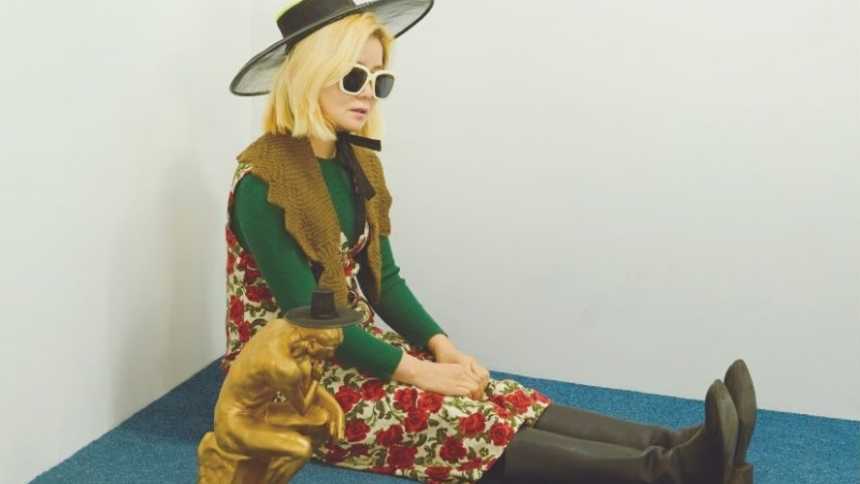
The competition has a performance -like quality, as its creator often defines it. An ode to leisure, a pause in the hustle and bustle of contemporary life. A breath of fresh air in times of hyper-connectivity and hyper-productivity . The idea arose after Woopsyang herself suffered from burnout while working at an advertising agency.
"Everyone around me was working very hard, and watching them made me uncomfortable. Maybe they wanted to have some downtime like me, but they couldn't stop because they were anxious, since everyone around them was also working very hard," she said in an interview with the platform Korea.net . "Then, suddenly, I thought: 'Wouldn't it be nice if we all got together and did nothing?'"
Physical and mental exhaustion resulting from a work environment driven by competition and self-sufficiency is among the major ills of our time. Research from the Boston Consulting Group reveals the scale of the problem: 48% of workers in eight countries currently find themselves grappling with symptoms of burnout.
For the study "Four Keys to Boosting Inclusion and Beating Burnout ," 11,000 people were surveyed in the United States, Canada , Germany , France , the United Kingdom , India , and Japan .
Recent surveys place Brazil among the nations with the highest incidence of work-related musculoskeletal disorders—around 35% of the workforce. Globally, companies lose US$438 billion annually due to low employee productivity.
Combined with other mental health disorders, such as depression and anxiety , the financial and social losses easily reach trillions of dollars.
Giving yourself permission to do nothing (without guilt!) is therefore not a waste of time or synonymous with low efficiency in the office. On the contrary. When we let ourselves be carried away by our thoughts, without external interference, a set of brain regions known as the " default mode network " — DMN — is activated.
The mind in DMN (Deep Mind Mood) fosters self-reflection, creativity, and memory, especially autobiographical memory. Small, conscious pauses are therefore extremely powerful: they reduce stress, help reorganize experiences, and improve focus. This mental state aligns with the thesis of the Italian sociologist Domenico De Masi.
In his book *The Creative Leisure *, he argues that free time is not unproductive inactivity, but a fertile space where work, study, and leisure blend together, allowing for innovation and well-being. In a world obsessed with continuous performance, he maintains, the ability to stop becomes strategic for both mental health and the generation of new ideas.

Despite all the scientific evidence, most of us are not convinced. A study from the University of Virginia in the United States perfectly illustrates our difficulty: many people prefer to receive mild electric shocks rather than be left with their own thoughts for just 15 minutes.
Therefore, the Space Out Competition is much more than just a fun championship. It serves as a kind of reminder (and even training) for the urgency of being "off the air" for a while.
Before the hour and a half of self-focus begins, each participant receives four cards. One is to request water, one to win a massage, another to request a fan, and the last one to abandon the challenge. Heart rate is checked every 15 minutes to measure the competitors' level of relaxation.
The winner is chosen by combining these metrics with so-called artistic points, obtained through audience voting.
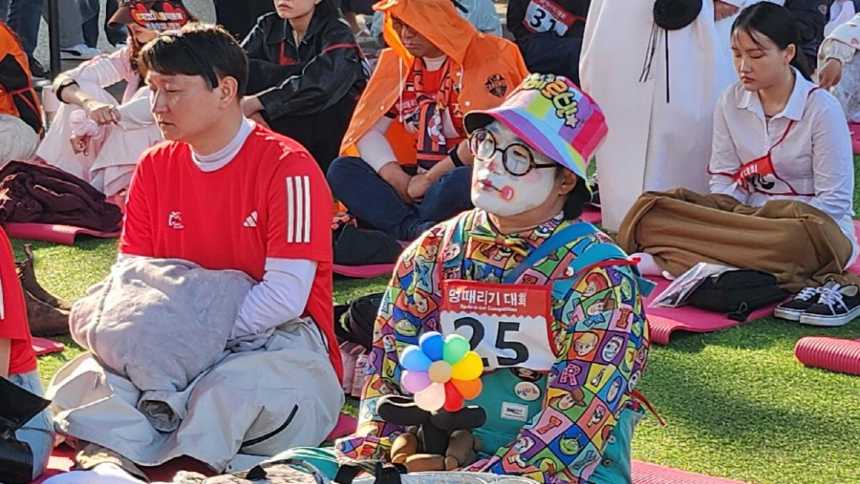
There's a bit of everything among the competitors. Young, old, and children; students, business people, artists, factory workers, drivers, doctors, and nurses. Some compete individually, others in groups. Many go to the competition dressed as Hello Kitty , clowns, Buddhist monks, overworked executives, Korean skincare products ... There are no limits to creativity in the name of leisure.
“The hardest part was letting go of the idea that I should be doing something,” Byung-jin Park told National Geographic magazine. “Simply sitting there, doing absolutely nothing, is surprisingly challenging (...) As time went on, I started to forget where I was. It felt like my body had disappeared.”
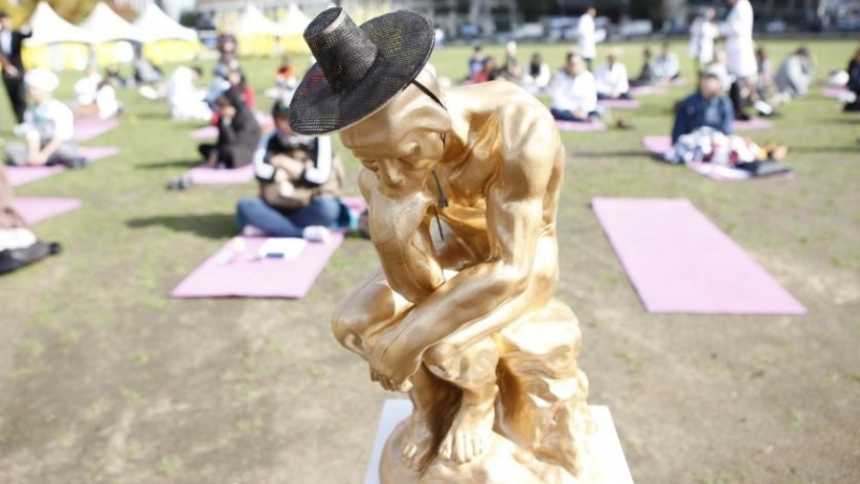
At 36 years old, the Seoul-based entrepreneur and indie punk musician won the 2025 Space Out Competition with his band Pogo Attack. More important than taking home the trophy inspired by Rodin's sculpture The Thinker was discovering that, yes, it is possible to disconnect from the outside world.
“Force yourself to relax for at least 10 minutes a week. Even five minutes can help. At first, you’ll notice your thoughts intensifying, worries arising, and unfinished tasks popping into your head,” says Park. “But everything calms down. You may find clarity or realize that some problems aren’t as big as they seem.”