

The United States attacked Venezuela on the night of Saturday, January 3rd, and captured President Nicolás Maduro, who will face charges of drug trafficking and terrorism, according to President Donald Trump.
Behind the bombings this morning, which hit the capital Caracas and three other regions, the United States claims to be fighting drug trafficking and accuses the president of Venezuela, in power since 2013, of being the leader of the Cartel de los Soles, described as a group linked to drug trafficking.
But experts believe there are other reasons for the invasion, which creates tension in the region and generates fear of a new refugee crisis: oil, strategic minerals such as large reserves of gold and rare earths, and even the interest in dominating a country where Russian and Chinese influences are significant.
In Saturday's attacks, PDVSA facilities remained undamaged, according to US government sources cited by international media.
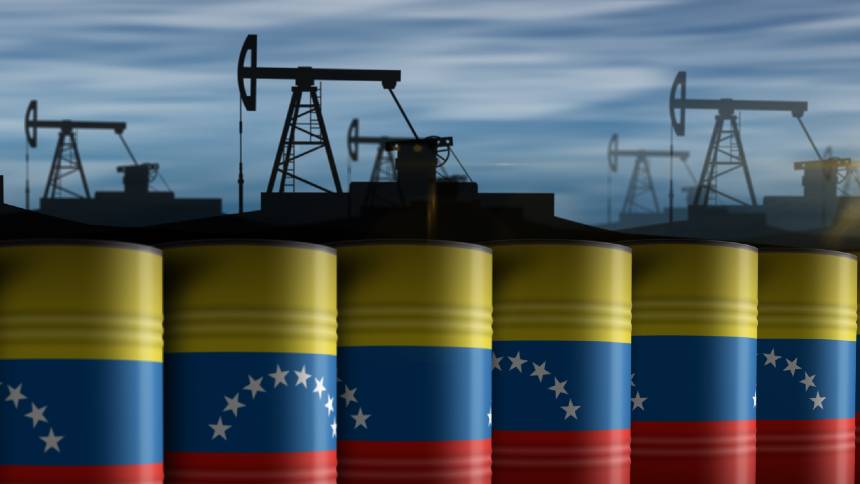
Venezuela possesses approximately 17% of the world's known oil reserves, equivalent to more than 300 billion barrels, a volume almost four times greater than that of the United States and exceeding that of Saudi Arabia, according to international energy sector organizations.
Despite this, oil has no longer been a source of wealth for the country under Maduro's dictatorship, although it remains Venezuela's main source of revenue.
PDVSA, Venezuela's state-owned oil refining and production company, has been gradually dismantled throughout the governments of Hugo Chávez and Maduro. Currently, Venezuela maintains a small production of about 1 million barrels per day, far below the more than 3 million barrels per day of PDVSA's golden age.
Under a US embargo since 2019, Venezuela was selling its oil to the illegal market at very low prices, especially to China. Before the US sanctions, oil accounted for 96% of national revenue, and three-quarters of oil revenue came from US customers.
Currently, despite the difficulties, oil remains the economic mainstay of Venezuela. According to Reuters, in 2024, PDVSA earned approximately US$17.5 billion from exports.
It is easy, then, to understand why, during Maduro's time in power alone, the country's economy shrank by 80%, about a quarter of the population emigrated, and those who remained struggle to survive, with more than 85% of Venezuelans living in poverty. In 2019, the country faced hyperinflation of 65,000% annually.
The decline of PDVSA accompanied this literal descent to rock bottom, but it began much earlier, in 2003. That year, in practice, sealed the company's fate. It was when Chávez carried out a purge at the state-owned oil company, firing a large part of the technical staff and diverting billions of dollars in investments in the modernization of the company to social programs and aid to countries sympathetic to his Bolivarian revolution, such as Cuba and Bolivia.
Strategic minerals
In addition to oil, Venezuela possesses significant reserves of strategic minerals, including rare earth elements, coltan, gold, and bauxite. Rare earth elements are essential for the manufacture of electronics, batteries, turbines, and green technologies such as electric cars and solar panels. Control of these resources is increasingly contested in the context of the global energy transition and the technological race between major powers.
Rare earth exploration in Venezuela is still limited, but it is attracting international interest due to growing demand and the concentration of global production in China. Western countries are seeking to diversify their sources to reduce their dependence on China, and Venezuela is emerging as a potential alternative, despite logistical, environmental, and political challenges.
Refugee crisis
There is also the fear that the United States' attack on Venezuela could create a new refugee crisis, with Venezuelans leaving the country for Brazil and Colombia.
The governor of Roraima, Antonio Denarium (PP), has already asked the Lula government to temporarily close the border with Venezuela while the situation in the neighboring country remains unstable. The state is the main entry point for Venezuelans fleeing their country.
According to the state government, currently, 300 to 500 Venezuelans enter through the Pacaraima border every day. At the peak, in 2019, there were as many as 1,500 per day.
It is estimated that approximately 190,000 Venezuelans currently live in Roraima, out of a population of 700,000. About 30% of the state's healthcare expenditure serves this Venezuelan population.
Colombia, also one of the main destinations for Venezuelan refugees, announced the deployment of "public forces" to the border to provide assistance "in case there is a large influx of refugees."