

The highly anticipated annual letter from Larry Fink, CEO and Chairman of the Board of BlackRock, the world's largest asset manager (with a portfolio of US$6.96 trillion), was released on January 14th. It had the effect of reviving optimism worldwide among those who advocate for sustainability in companies.
As expected, Fink returned to the subject—which had already been the theme of his message to the market in the previous three years—but this time, in a more direct and forceful way: sustainability, better known in the financial world as ESG (environmental, social and governance issues), must be at the heart of companies' strategies or there will be no possible prosperity.
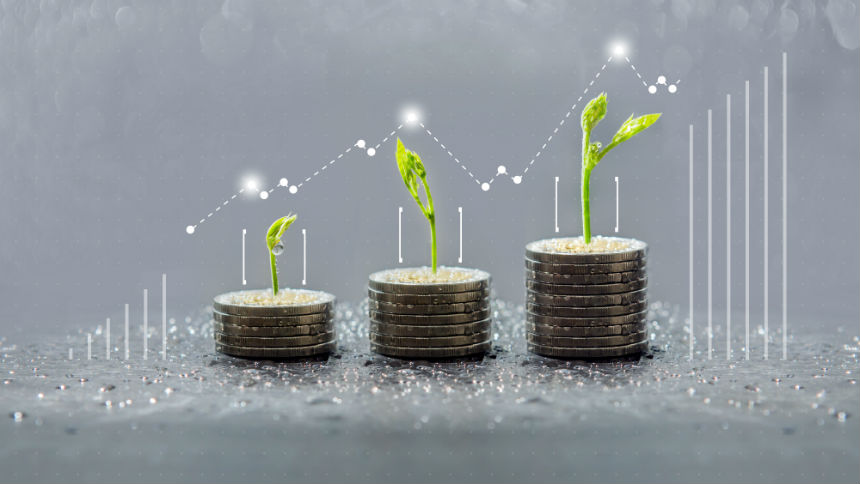
Sustainability is therefore no longer a matter of choice, but a prerequisite for business performance. It becomes synonymous with solidity. It gains the status of a key indicator of long-term profitability.
To set an example of what he stands for, and to show that he is not joking, Fink reported that BlackRock, by decision of its Risk and Quantitative Analysis Group (which assesses all the company's investment risks), will give ESG risk the same weight of importance as risks considered conventional, such as credit and liquidity risks.
In practice, this means that the company may choose not to invest in, or may divest from, profitable businesses that are negligent in preserving environmental assets, caring for stakeholders, and engaging in ethical and transparent governance.
Consistent with his speech, the CEO of BlackRock delivered two other important messages: by the end of the year, he will discontinue investments in groups whose revenues (25% of them) come from the production of thermal coal; and he intends to increase the allocation of resources to low-carbon companies or those that make impact investments, generating improvements in the quality of life for society.
Those of us who work in corporate sustainability are well aware of the scope of a decision of this magnitude. In reality, Fink's gesture, given who he is and the company he leads, is beginning to dismantle the last strongholds of those resisting sustainability in corporate management.
Throughout my professional life, I have witnessed numerous instances of utter disinterest, skepticism, and disbelief on the part of financial directors, investors, and institutional relations agents.
I remember two of them very particularly. And the flawed logic on which they were based. Once, I was approached by a CFO at the end of a presentation of a strategic sustainability plan for a leading company in its sector. Clearly bothered during my presentation, he approached me for what was almost a cathartic outburst.
“Everything you're saying sounds great. But I can't understand why we should invest in this plan, since we're a company with no environmental impact and low risk. Sustainability, to me, is just a cost, with no return. Less dividend for the shareholder.” And he ended the conversation ironically: “Save me the money... and then I can agree with you.”
Had he been the only skeptic in the company, the plan might have progressed better. But the CEO also had reservations about the concept. He liked to joke with some presidents of other companies, claiming that sustainability distracted them from "more strategic business issues."
Fink's message redeems us from that obtuse time and irreconcilable logic, which occurred no more than six years ago.
Fink's message redeems us from this obtuse time and irreconcilable logic, which occurred no more than six years ago.
On another occasion, a company I worked with summoned me to a Board of Directors meeting where the previous year's results would be presented, along with updates on their sustainability strategy.
During the discussion on economic performance, there was a great deal of interest. In the part dedicated to sustainability, there was even a break in quorum: one person left to go to the bathroom, another started answering messages on their cell phone, and a third began talking to the advisor next to them about a matter related to performance—all of them, it is worth noting, representing the investors.
Embarrassed by the explicit disinterest and a certain impatience of those present, the CEO skipped slides to quickly end the proceedings. Later, at lunch, he confessed to me, disheartened, that he didn't understand, given the obvious connections to business risks, the indifference, almost ill will, of investors towards the topic of sustainability.
I'm sure these same advisors must be reading Fink's letter line by line right now—less indifferent, a little more embarrassed, certainly wanting to make up for the time they lost stuck in the 20th century and absorbed in a logic that always treated sustainability as something separate from business.
You, the reader, may be thinking this with some justification. Fink is Fink, he's at the top of the asset management food chain. What guarantees that his peers, in Brazil and around the world, will follow his recommendations? Common sense, I answer. Not just the common sense to recognize that if the industry leader, a man who doesn't throw money away, has been advocating a new strategy for at least four years, it must have its importance and relevance.
But it's also the common sense to realize that the world has changed. Less than a decade ago, climate change represented a distant threat, despite the insistent warnings from scientists and sustainability experts. Now it harbingers of uncomfortable uncertainty.
Since we have failed to reduce greenhouse gas emissions—worse, we have increased them in recent years—we have already reached a point of climate emergency. The intensification of climatic phenomena, resulting from global warming, will impact human life and business as it casts a huge shadow of doubt over the availability of natural resources, soil fertility, the effects of aggressive heat and cold waves, winds and storms, rising sea levels, and the collapse of ecosystems.
These doubts, in practice, mean new risks that have not yet been properly accounted for in the business equation. It is these new risks, Fink emphasizes, that “are forcing investors to reassess basic assumptions about modern finance.” “And to reassess the value of assets.” “Investors are trying to understand both the physical risks associated with climate change, and also the ways in which regulations will impact prices, costs, and demand,” the letter says. It was about time.
I conclude this article by highlighting one of the most provocative passages from Fink's letter: “A pharmaceutical company that ruthlessly raises its prices, a mining company that reduces safety, a bank that does not respect its customers may increase short-term returns. But, as we have seen repeatedly, actions that harm society will ultimately harm the company and destroy shareholder value.” The message has been delivered once again.
* Ricardo Voltolini was one of the first corporate sustainability consultants in Brazil and a specialist in values-based leadership. He is the author of nine books, most notably "Conversations with Sustainable Leaders – What to learn from those who have made or are making the change to sustainability," published by Editora Senac São Paulo. He is a guest professor of Sustainability at Fundação Dom Cabral and ISAE/FGV (Curitiba).
Follow NeoFeed on social media. We're on Facebook ,LinkedIn , Twitter , and Instagram . Watch our videos on our YouTube channel and subscribe to our newsletter to receive daily news.