

In February 2021, Gilberto Tomazoni, global CEO of JBS, revealed the plan of the Brazilian group, the world's largest protein producer, to build a portfolio of brands, of which at least ten would achieve revenues of over US$1 billion within five years.
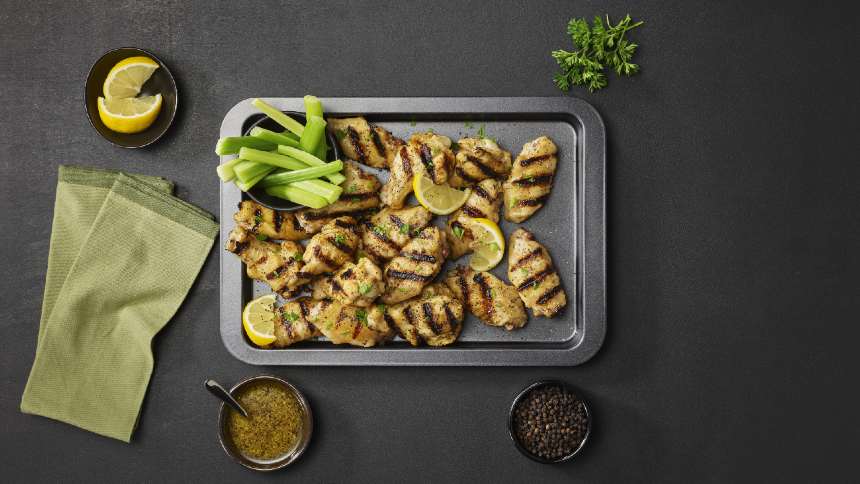
Exactly five years later, one of the pillars of this protein "house of brands" has just surpassed that goal. Just Bare, a brand of fully cooked frozen chicken, without antibiotics, additives or preservatives, and quick to prepare, closed 2025 with more than US$1 billion in sales, an annual increase of 45%.
The stage for the announcement of this result, which includes sales in the United States, was the Consumer Analyst Group of New York (CAGNY), an event that brings together leading executives and analysts from consumer goods companies, whose 2026 edition is being held this week in Orlando.
“It’s an important milestone, but we’re not limited to that number and we’re not satisfied with that billion,” says Sergio Nahuz, head of prepared foods at Pilgrim’s Pride, a JBS subsidiary, to NeoFeed . “We believe there’s a much bigger opportunity out there.”
Pilgrim's Pride, a JBS subsidiary that produces chicken meat and has a presence in the United States, Mexico, Puerto Rico, and Europe, is also the "home" of Just Bare within the group. And the numbers from this division give an idea of the achievement recorded by the brand.
From January to September 2025, Pilgrim's Pride recorded revenue of US$13.9 billion, representing annual growth of 3.5%. On the same comparative basis, JBS's total revenue was US$63.1 billion, compared to US$57.2 billion for the same period in 2024.
Founded in 2009, Just Bare became part of JBS's extensive product range at the end of 2016, when Pilgrim's Pride announced the acquisition of GNP Company, the brand's previous owner, in a deal worth US$350 million.
Nahuz highlights some steps taken since Just Bare joined this menu. In particular, three pillars that, according to the executive, help explain the brand's rise to reach this billion-dollar sales mark.
“First, we have a great product. The flavor is really good. It’s a restaurant-quality experience at home,” he says. “Second, we were the first brand to introduce the concept of light breading, while most products in the category have much more batter than meat.”
In addition to these issues, he highlights the fact that the brand has made improvements to its packaging to properly communicate the protein content of each item, among other data. This information, in turn, is extremely relevant to the consumer profile of these products.
“We didn’t make concessions, as is common in this category. We didn’t compromise on flavor, health, texture, convenience, or price. We have a premium price, but it’s an accessible premium,” he says. “We’re in the right place, in the right category, with the right proposition for the right consumer.”
As a result, the group highlights that Just Bare now holds the top position in sales growth in the fully cooked chicken category in the United States. And that it has increased its market share from 1% to 13% in a three-year period.
Nahuz also mentions external ingredients that are part of this recipe. And that, combined with some of the brand's product appeals – quick preparation, for example – help explain the recipe behind the first billion in sales in such a short time.
“In recent years, inflation outside the home has grown faster than inflation at home,” he says. “So, consumers tend to go to the frozen food aisle at the supermarket. But without sacrificing quality. They still want the restaurant experience at home.”
This package also includes issues such as the high prices of beef in the United States market, which has led to chicken meat gaining more and more space on consumers' menus.
“And we also have all this dynamic linked to GLP-1 and people being more concerned about their health,” he observes. “So, people are seeking more protein in their diets. And, in that context, chicken is a winning protein.”
Given this scenario, he points out: “When you look at fully cooked frozen chicken, it might seem like a niche market. But today, that’s a $6 billion category, growing at high single-digit rates. And that’s just in the United States.”
Just Bare's billion-dollar revenue figure only takes into account sales in the American market. But the brand has also had a presence in Mexico since 2024. And although he doesn't reveal details, the executive indicates that there are already plans to take the portfolio to other countries.
Expanding this portfolio – in 2025, the brand launched a line of baked goods – is also one of the next steps. Here, one of the plans is to enter new consumption occasions, such as breakfast, for example.
“We have many new things coming this year, especially with the great partnerships we are establishing to increase our brand awareness,” says Nahuz. “This is our main goal for 2026, along with increasing penetration into consumers' homes.”
This plan also involves production. Today, Just Bare produces 95% of its items internally, in Pilgrim's facilities in the United States. And it will expand this volume with a new factory for the division in Georgia, with an investment of US$400 million and scheduled to begin operations in 2027.
Nahuz emphasizes, however, that the brand will continue to evolve its structures and capabilities as needed, without rushing. And that the idea is to continue combining the benefits of a group the size of JBS with the drive of a newcomer.
“We want to be a consumer goods company, but we don’t want to behave like one. Because if we did that, we would become large, bureaucratic, and slow,” he says. “If we can operate with a startup mentality, with the support of JBS and Pilgrim’s, that’s the best possible option.”