


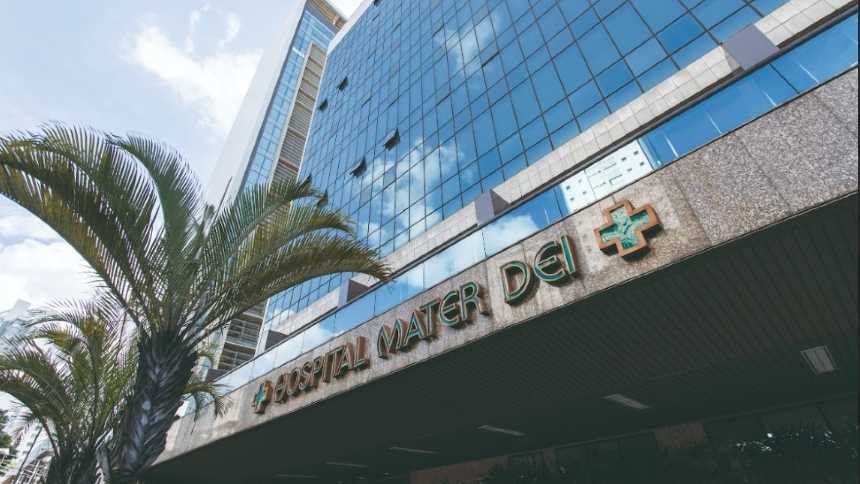
A recovery cycle that's here to stay. That, in short, is the common thread in a new report sent to clients by BTG Pactual about Mater Dei , in which the bank highlights the gradual and consistent improvement in the health group's indicators in 2025 and projects the continuation of this scenario.
Based on a combination of these findings and perspectives, the bank's analysts are raising their recommendation for the hospital network from neutral to buy, and the target price for the stock from R$6 to R$7, which implies a 45% upside over the current market price.
“We raised our recommendation for Mater Dei shares after better-than-expected quarterly results in the first nine months of 2025 and encouraging trends for the fourth quarter, which point to a solid frequency of hospital admissions,” highlights BTG.
Analysts cite data from the National Association of Private Hospitals (ANAHP) to support these year-end outlook. According to the association, the occupancy rate in the sector reached 78.7% in October, the highest rate for that month in the last decade.
"Our market analysis also suggests strong levels of activity in October and November, and assuming there are no significant negative surprises in December, Mater Dei should once again deliver solid results," the analysts write.
Against this backdrop, for the fourth quarter, BTG projects year-over-year revenue growth of 13% for Mater Dei, with EBITDA margins evolving to approximately 22%, compared to the 16% recorded in the same period of 2024.
The favorable outlook extends to 2026, with the bank raising its EBITDA and net profit growth projections by 12% and 17%, respectively. It also forecasts a 14% jump in revenue, driven by the group's strategy of increasing the complexity of services in its hospitals, coupled with greater margin expansion.
BTG also highlights that other Mater Dei initiatives have begun to mature. Among them are the recent expansion in Nova Lima (MG), the improvement in oncology services, and the reduction of corporate expenses after the sale of the Porto Dias unit in Belém (PA), announced in 2024, for R$ 410 million.
"Not coincidentally, margins reached 22.2% in the third quarter of 2025, the highest level since the sale, and we believe they should remain at or above that level, even in seasonally weaker quarters," the analysts note.
They point out that, after this divestment, Mater Dei significantly simplified its corporate structure and reduced execution risk. And that this measure redirected management's attention to its main markets – Belo Horizonte, Salvador, and Uberlândia – as well as operational efficiency.
On another front, the bank highlights that the company returned a significant amount of capital to shareholders throughout the year, including R$ 39 million in share buybacks, R$ 64 million in dividends paid in May, and an additional R$ 50 million announced last Friday.
“In total, this represents a robust cash return of 9.5% for 2025. Even after these disbursements, we estimate leverage at the end of the year at approximately 1.6x net debt/EBITDA, with further deleveraging of approximately 1.2x in 2026,” another excerpt from the report highlights.
Given this package, BTG notes that Mater Dei becomes its top pick in terms of small caps within its healthcare sector coverage. And it adds another factor to reinforce its optimistic view of the company.
Analysts point out that, despite significant gains in 2025, Mater Dei's stock has risen "only" 28% in the last twelve months, the same level recorded by the Ibovespa during that period.
“We believe this creates an attractive entry point for investors seeking a high-quality turnaround story, with growing cash generation and earnings visibility,” the bank concludes.
Mater Dei's shares were trading down 1.24% around 11:35 AM on Wednesday, December 17th, quoted at R$ 4.79. However, the shares are up 31.5% year-to-date. The group is valued at R$ 1.59 billion.