

Since its IPO in 2021, M&As have been Orizon 's main avenue for expanding its operational portfolio and consolidating its name in the waste management market. In terms of magnitude, however, none of these deals compare to its most recent move in this direction.
The company announced on the morning of Wednesday, December 17th, the acquisition of Vital Engenharia Ambiental, a waste management company belonging to the Queiroz Galvão group. The transaction, the result of negotiations that began about a year ago, was valued at R$ 3 billion.
The agreement will be based on a share swap. Under these terms, the Queiroz Galvão family joins the current controlling shareholders of the operation – the asset manager eB Capital and the reference shareholders Milton Pilão and Ismar Assaly, respectively CEO and chairman of Orizon, who will also remain in their positions.
Upon completion of the transaction, 41,197,230 common shares of Orizon will be issued. With this arrangement, all these shareholders will become part of the new controlling block of the company, holding a 60% stake in the capital. The remaining 40% will represent the company's free float .
“This transaction is transformational and is the biggest deal in our history,” says Pilão, in an interview with NeoFeed . “The waste market is the next major frontier for infrastructure investment in Brazil, and with this step, we become the largest waste company in Latin America.”
Some numbers illustrate the size of the company resulting from this agreement. Orizon is reaching a total of 30 ecoparks, in 15 states, by incorporating 12 assets from Vital. In other words, in just one transaction, the company brings a volume very close to the 13 operations it has added to this map since 2021.
In another statistic, the "new" company jumps from an annual volume of 8.7 million tons of "in-house" waste to 14 million tons. And it is born with a combined revenue of over R$ 3 billion, an EBITDA close to R$ 1 billion and a net profit exceeding R$ 350 million.
To give you an idea of the scale, in the first nine months of 2025, Orizon reported revenue of R$786 million, a 16.7% increase over the same period in 2024. EBITDA, on the other hand, advanced 8.9% to R$366.4 million, while net profit fell 33.7% to R$50.5 million.
Pilão draws attention to the effects of the incorporation of Vital on another indicator, which is usually a point of concern for investors in deals of this size: the leverage of the new operation. Orizon ended the third quarter with a leverage ratio of 2.20 times in this area.
“Vital has virtually zero debt, and when it is incorporated, it will reduce our leverage,” says Pilão. “Then, we will have the balance to continue investing heavily in biomethane and biogas plants, and in all our growth areas.”
Complementarity and debut in data collection
Under this guidance, Orizon has an extensive roadmap to further boost these indicators by scaling its thesis of making landfills profitable through the development of new businesses in these assets – from biogas and biomethane plants to recycling operations, fertilizers, and carbon credits.
In this package, one of the points highlighted is the geographical complementarity of the assets of the two operations. Pilão cites, for example, the reinforcement of landfills that Vital maintains in major capitals such as São Paulo and Belo Horizonte.
“Until then, we weren’t present in São Paulo, and in Minas Gerais, our participation was negligible,” he says. “Vital is expanding our national presence. And all these landfills are still ramping up . We will have the possibility of incorporating biomethane, recycling, and carbon credits into all of them.”
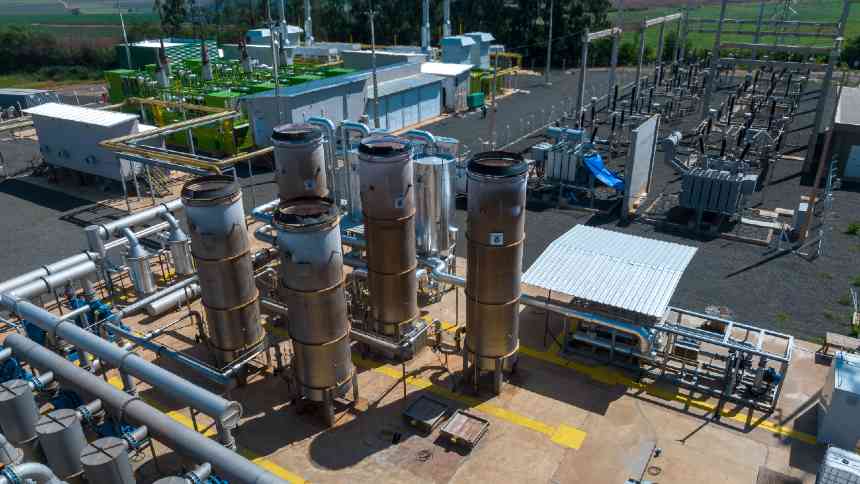
The example of biomethane clearly illustrates the advances inherent in this combination. With the addition of Vital's assets, Orizon's biomethane generation potential jumps from the current level of 1.3 million cubic meters per day to 2 million cubic meters per day.
"That's without even mentioning the basic aspects of a transaction of this size, which are the gains in operational efficiency, SG&A, and cost reduction," he says. "But the strategic gains are so great that they end up outweighing them."
From this perspective, the transaction opens the door for Orizon to make its debut at a point in the supply chain where it had not previously operated: waste collection. Today, Vital holds 8 integrated management concession contracts, which include everything from collection to final disposal. One of them is in the city of São Paulo.
“When you have a concession where the landfill is the cornerstone of several services, waste collection is the main one,” says Pilão. “So, in addition to multiplying our revenue with these new assets, we will be able to start implementing this same model in my other 18 ecoparks.”
He notes that this focus on an integrated management model was already a concern raised by several Orizon investors. And that this model has a horizon of at least two dozen projects under development to become concessions or public-private partnerships in the country.
Changes in the board and a focus on integration.
While focusing on this pipeline , Orizon projects that the transaction, which still depends on approval from bodies such as the Administrative Council for Economic Defense (Cade), will be approved without setbacks within three to six months.
The agreement also provides for a new arrangement in Orizon's board of directors, which will increase from eight to eleven members. Four of these seats will be reserved for the Queiroz Galvão family, another four for the current controlling shareholders, and the remaining three for independent directors.
With the green light given to the transaction, Pilão says the focus will be on integrating Vital. In this context, he doesn't rule out further M&As, but emphasizes that the trend is for this agenda to be less active and restricted to potentially smaller deals.
Orizon became active again in this arena in October of this year, with the purchase of a landfill in Presidente Prudente, after spending more than a year focused on organic growth and without announcing any acquisitions.
What opened the doors for the return to this avenue was a follow-on offering of R$ 635 million in May. The offering was anchored by a check for R$ 400 million from Pilão, Assaly, and eB Capital, which then shared control with the duo. The CEO highlights one particular gain from this partnership.
“We prioritize the strategic side much more than the financial one. We wanted a partner who would bring additional perspectives on thinking, management, and international networking,” says Pilão. “And eB Capital fit perfectly. Today, they are almost like an original partner of Orizon.”
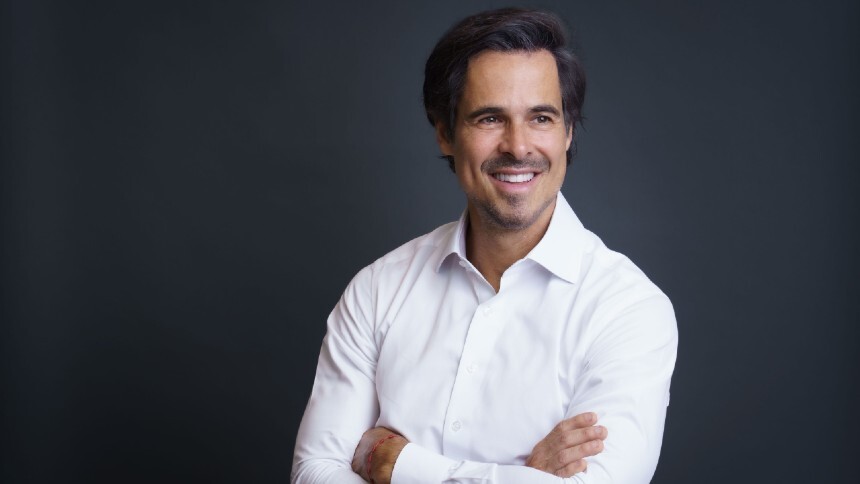
Eduardo Sirotsky Melzer, founder and CEO of eB Capital, who has played a strategic role in this partnership, highlights, in a statement, the results of this association and the new movement of Orizon:
“From the moment we joined, we saw in Orizon a rare combination of execution capacity, quality management, and a clear opportunity for consolidation in a structurally attractive sector with strong growth potential. The incorporation of Vital confirms this assessment.”
Orizon's shares closed Tuesday's trading session, December 16th, down 1.35%, quoted at R$ 68.18. However, year-to-date through 2025, the shares have appreciated by 80.1%, giving the company a market value of R$ 6.5 billion.