

Three months after announcing a plan to separate its operations into two listed and independent companies, Kraft Heinz is adding a new ingredient to the table in its preparation for that process.
The food company announced on Tuesday, December 16th, that Steve Cahillane will assume the role of its new CEO, effective January 1st, 2026. The executive will replace Carlos Abrams-Rivera, who will serve as a consultant to the company until March 6th as part of this transition.
“I am confident that the planned separation will accelerate the company’s ability to compete and win in the current landscape and will unlock the immense opportunity ahead. I look forward to working with the team and writing this exciting next chapter together,” said the new CEO in a statement.
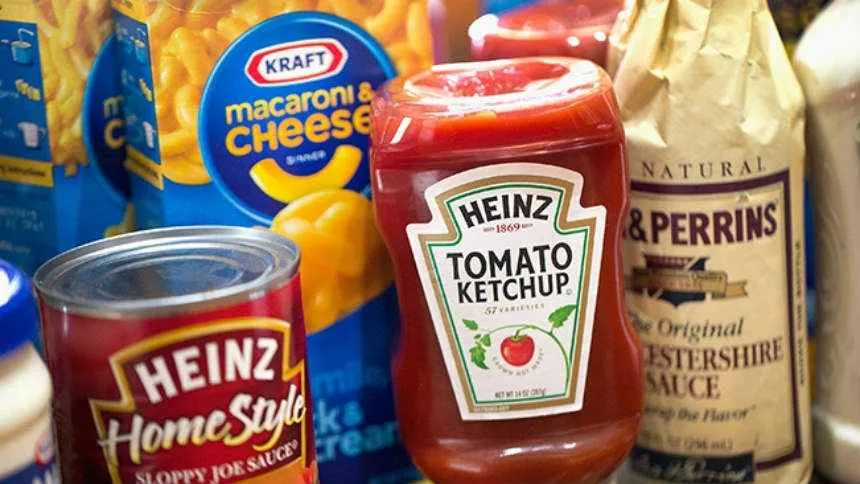
Cahillane will also occupy a seat on the board of directors of Kraft Heinz. And, in the unfolding of this plot, she will act as CEO of Global Taste Elevation Co., one of the companies resulting from the spin-off, which will have a global focus and will bring together the sauces, mayonnaises and seasonings businesses, with brands such as Heinz and Philadelphia.
The group highlighted the executive's vast experience. In one passage that resonates with Kraft Heinz's current situation, he led the Kellogg Company in separating its North American cereal business and launching Kellanova , the manufacturer of snack brands such as Pringles and Cheez-it.
After this transition, he led Kellanova for seven years until Mars Inc., the candy giant that owns brands such as M&M's and Snickers, announced the purchase of the operation in December 2024, in a deal worth US$35.9 billion, which was completed in December of this year.
With over 30 years of experience in the industry, Cahillane's resume also includes stints as a high-level executive at companies such as the health and wellness retailer The Nature's Bounty Co., The Coca-Cola Company, and AB InBev, where she spent eight years.
“Steve possesses unique qualifications to lead this organization into the future, and we are delighted that he will assume the role of CEO. His career and experience in the industry are unparalleled and will be invaluable in this new phase,” said Miguel Patricio, Chairman of the Board of Kraft Heinz.
Other changes were announced along with the arrival of the new CEO. Patricio will step down as chairman of the board, but will remain a member. John T. Cahill, who was previously the vice-chairman of the board, will assume the position.
At the same time, Kraft Heinz announced that its board will begin a global search for a CEO to lead North American Grocery Co., the second company resulting from this spin-off , which will focus on North America and grocery products, with brands such as Oscar Mayer and Lunchables.
In the statement, the company reiterated that the separation of its operations aims to maximize the group's capabilities and brands, reducing complexity and allowing the two new companies to allocate resources more effectively to their respective strategic priorities.
According to Kraft Heinz, the proposed separation should be tax-free for the company and its shareholders. The expectation is that this spin-off will be fully completed in the second half of 2026.
Aside from those expectations, today's announcement brings changes to the plan originally released three months ago. At the time, the company highlighted that Abrams-Rivera, who had been CEO of the group since the beginning of 2024, would lead the North American Grocery Co.
At the same time, the decision to split its operations goes against the dream nurtured by Warren Buffett and the Brazilian asset manager 3G Capital , led by Jorge Paulo Lemann, Marcel Telles, and Beto Sicupira, who, in 2015, orchestrated the merger of Kraft Foods with Heinz.
The ambition of the American billionaire and the Brazilian trio was to create a global giant in the food market, which would gain traction precisely from the scale obtained with this merger. Initially, the operation created the fifth largest global group in the sector, with combined revenue of US$28 billion.
This dream began to crumble, however, a few years later, when Kraft Heinz started to experience weakening demand for some of the main products in its portfolio, largely due to consumers' search for healthier products.
In this direction, and in an attempt to turn things around, the group began to renew part of its portfolio. But it has had difficulties in reaping good results from this movement, especially due to its extensive range of offerings – almost 200 brands under its umbrella.
In this context, the company reported a net loss of US$6.4 billion for the period from January to September 2025, reversing the profit of US$613 million recorded in the same period a year earlier. On the same basis of comparison, net revenue fell 3.5% to US$18.5 billion.
Released in October, along with the third-quarter results, these figures were accompanied by the announcement of a revision to the company's guidance for the full year, due to worsening consumer confidence and resistance to rising food prices.
Traded on Nasdaq, Kraft Heinz shares were up slightly by 0.84% around 10:20 AM (local time), giving the company a market value of US$29.2 billion. However, the company's shares have accumulated a depreciation of 19.5% by 2025.