


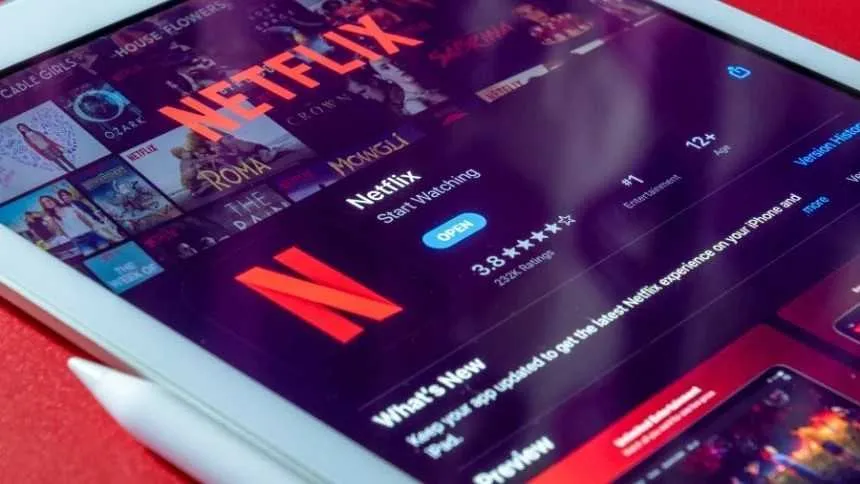
Netflix has resolved the main source of controversy surrounding its acquisition of Warner Bros. Discovery, the biggest corporate gamble in its recent history: the payment method. The company presented a cash version of its offer for a stake in its competitor, including the studios and streaming arm, such as HBO Max.
The offer reportedly had the unanimous support of HBO's owner, maintaining the purchase price at US$82.7 billion. But instead of a combination of cash and stock, Netflix is now offering US$27.75 per share, entirely in cash. The idea is that this will end negotiations with rival Paramount .
According to the Wall Street Journal , the new version of the acquisition plan should ease the path to approval and speed up the process, with a shareholder vote expected by April.
The shift has a clear target: Netflix's own volatility. Since the initial announcement of the deal on December 5, 2025, the shares have fallen almost 15%, which reduced the value of the equity portion of the proposal and, in practice, brought uncertainty to the Warner shareholder's pocket and gave Paramount ammunition to say that its proposal was better.
By converting the stock portion into more cash, Netflix delivers what Warner 's management calls "value certainty" and "immediate liquidity" at closing.
In the original design, Netflix would pay $23.25 in cash + $4.50 in stock for each Warner share, with mechanisms to handle stock price fluctuations (the kind of structure that makes sense when the buyer wants to preserve cash and the seller wants to "ride" the upside ).
On the other hand, Paramount had been insisting that its offer was "simpler" and "cleaner": $30 per share in cash for the entire Warner Bros. Netflix, in turn, is targeting only the core of intellectual property and streaming. The "rest" (the channels and traditional TV, with assets like CNN and TNT Sports) would remain in a separate company, Discovery Global, which would be spun off before the deal is finalized.
And that's precisely where the paradox lies. Warner's board continues to say that Netflix's offer is superior even with a nominally smaller number than its rivals, because the shareholder would retain a stake in the "spin-off" company.
In other words, the “$27.75” wouldn't be the final check, but rather the most coveted piece, plus the option to retain a share of the other party's business. And that's another point of contention in the dispute.
What is Netflix buying?
Market analysts believe that Netflix is attempting, through acquisition, to achieve what it has spent the last decade building through licensing and production: direct control of an intellectual property library and a content machine that includes the Warner studio, a historical catalog, and the HBO brand in streaming.
Netflix doesn't want to carry the weight of the traditional pay-TV and linear channel model – precisely the part of the industry experiencing structural compression in terms of audience and advertising. That burden goes to Discovery Global, the spin-off that remains central to comparisons between the two companies.
From Netflix's perspective, the stock-for-cash swap sends a double message: for Warner's board, it eliminates pricing risk; for the market, it signals conviction and a willingness to back that conviction with cash, even in a deal that is already seen as transformational.
The dispute also turned into a valuation battle over what is being phased out from under Netflix's umbrella. To counter the criticism that Discovery Global is "virtually worthless," Warner opened a range of valuations for the future role of the separate company.
The negotiation advisors worked with different methodologies and arrived at a range that goes from US$1.33 per share (in the most conservative scenario) to US$6.86 (in the scenario where the company becomes the target of a transaction later on).
It's not a technical detail: it's the central point of the argument for why Netflix's "$27.75" could surpass Paramount's "$30." If the market buys into the thesis that the spin-off is worth more than a few dollars per share, the valuation math changes.
Paramount, for its part, tried to expedite the release of this information through the courts so that shareholders could compare proposals. But a judge in Delaware rejected the request, maintaining the disclosure schedule at the pace that Warner considers appropriate.