

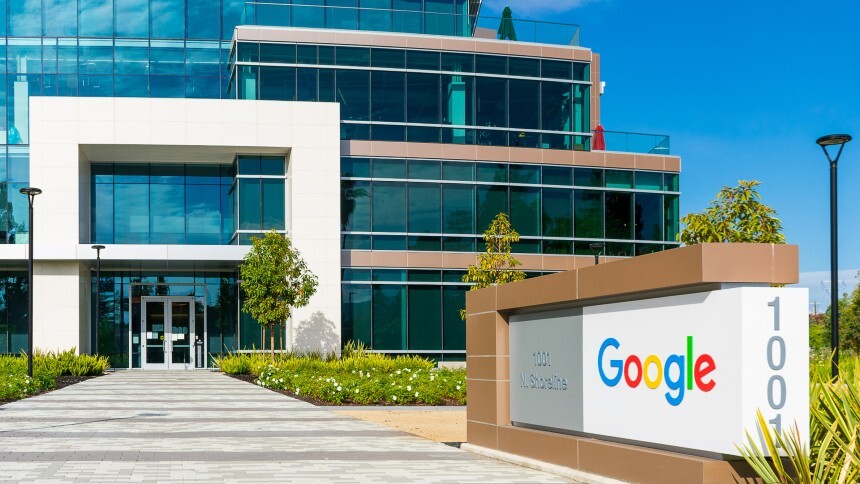
The tech giant Alphabet , owner of Google , has decided to take another step towards advancing in the artificial intelligence (AI) market. On Monday, December 22nd, the company announced the complete acquisition of the data center infrastructure company Intersect for US$4.75 billion.
According to the tech giant, which already held a minority stake in the company, the M&A will help the company meet the enormous energy demand to power the expansion of AI, through the construction of new data centers. The deal is expected to close in the first half of 2026.
The company is valued at US$3.74 trillion and is on track for a market cap of US$4 trillion, a move that keeps Alphabet away from any risk of impact from a potential bubble in the global AI market.
This move comes at a time when other major technology companies are ramping up investments in energy companies, while U.S. power grids struggle to keep up with the growing demand for electricity generated by generative AI.
“Project Intersect will help us expand capacity, operate more agilely in building new power generation plants in sync with the new demand from data centers, and reimagine energy solutions to drive innovation and leadership in the U.S.,” says Sundar Pichai, CEO of Alphabet, according to the Financial Times .
Under the agreement, Google's parent company will acquire all of Intersect's energy and data center projects that are under development or construction. The company has $15 billion in assets, including projects in operation and under construction.
The expectation is that, by 2028, Intersect's projects, representing approximately 10.8 gigawatts (GW) of energy, will be operational or under development. This is equivalent to more than 20 times the electricity produced by the Hoover Hydroelectric Power Plant in the United States.
Market analysts believe that Intersect's operations should remain separate, under their own brand, and continue to be led by Sheldon Kimber, the company's CEO and founder.
Alphabet stated that the company will also explore a range of technologies to increase and diversify its energy supply, while supporting Google's investments in data centers in the United States to meet the demand of Google Cloud customers.
In October, Google's parent company announced plans to increase investments in computing power for AI in 2026. The company raised its capital expenditure estimates for 2025 to a range between US$91 billion and US$93 billion, compared to US$52.5 billion allocated in 2024.
Google has also been working to improve its AI model and the Gemini chatbot. Sales from its cloud division, which sells computing power to data centers, increased by 34% in the third quarter of 2025 compared to the same period of the previous year.
In December 2024, Intersect announced a funding round with Google and stated that the companies intended to invest $20 billion in data center capacity by the end of the decade.
The acquisition of Intersect adds to a series of investments and partnerships by Alphabet in the energy sector. In early December, the utility company NextEra expanded its partnership with Google Cloud to build new energy sources for its operations in the United States.
Founded in 2016, Intersect provides scalable, low-carbon solutions for clients in the energy sector and is part of the portfolio of TPG Rise Climate, TPG's private equity fund focused on climate issues.
In contrast to other big tech companies, Alphabet's shares have accumulated significant appreciation in recent months. By 2025, the shares of Google's parent company are projected to be up 63.2% on the Nasdaq. On Monday the 22nd, the shares rose 0.6% around 3:45 PM (Brasilia time).