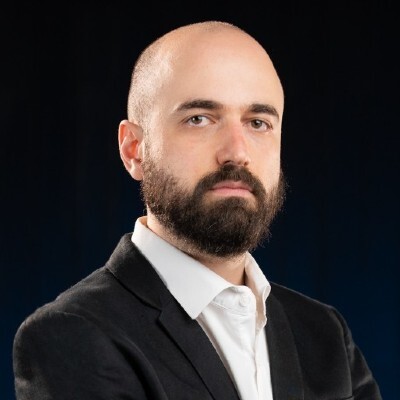


Braskem 's shareholder structure has been undergoing major changes. On the evening of Wednesday, January 21, the petrochemical company announced that Victor Adler, one of the main individual shareholders in Brazil, known for his positions in Eternit, Unipar, and Oi, acquired just over 5% of the company's Class B preferred shares.
Before the start of 2026, the saga over who would control Braskem finally showed signs of coming to an end with the news that IG4 Capital is set to acquire the 50.1% stake in the petrochemical company's voting capital previously held by Novonor, after the main creditor banks of the former Odebrecht – Itaú , Bradesco , Santander , Banco do Brasil and BNDES – sold approximately R$ 20 billion in debt secured by the petrochemical company's shares to a fund linked to the asset manager.
The transfer, which still needs approval from regulatory authorities, ends a discussion that has dragged on for almost a decade. But it doesn't even come close to solving Braskem's problems.
Analysts and managers interviewed by NeoFeed highlight that Paulo Mattos's management company will find a highly leveraged company at a time when the petrochemical industry is going through one of the longest downturns ever seen, having lost almost R$ 39.1 billion in market value in the last five years, according to a survey by the consulting firm Elos Ayta.
Combined with the problems faced in Mexico and the environmental liabilities of Alagoas, the result is that Braskem's resumption of operations will depend on a series of measures, some beyond its control, meaning the recovery will take time.
"Braskem has been suffering on several fronts for a long time, so there is no cure for its problems in the short and medium term," says João Daronco, an analyst at Suno Research.
Heavy debt
Braskem's dire financial situation has been dragging on year after year. It is already known that the company has extremely high leverage – the ratio between net debt and recurring EBITDA, in dollars, closed the third quarter of 2025 at 14.7 times, above the 10.6 times recorded in the previous quarter.
But the fragility of the capital structure became evident at the end of last year, when Fitch downgraded the long-term rating in local and foreign currencies from “CCC+” to “CC”. The rating indicates a “very high level of credit risk”, with some type of default “appearing likely”.
The rating agency says it made the decision due to uncertainty regarding "Braskem's propensity to honor its debt obligations nearing maturity," and the possibility of a short-term debt restructuring. It states that the company faces concentrated coupon obligations of approximately US$130 million in January 2026.
Although it reported $1.3 billion in cash in the third quarter and fully utilized its $1 billion standby credit line, Fitch states that the reliance on balance sheet liquidity and bank credit lines demonstrates "reduced financial flexibility amid high event risks and uncertainty regarding the recovery of operating cash flow."
Some observers point out that Braskem took advantage of the high prices in the petrochemical sector between 2020 and 2021 to pay more dividends and spend more, when leverage was not a problem – the company ended 2021 with a net debt to EBITDA ratio of 1 time.
“A series of decisions were made that didn’t take into account the sector’s cycles, something common in commodities, which have periods of lows and highs,” says a manager who asked not to be identified. “During a bull market, companies need to prepare for turbulent periods, and Braskem was more leveraged than it should have been.”
Leverage has gained significant importance due to the current situation in the petrochemical sector. According to Gabriel Barra, an analyst at Citi , there has been a strong increase in installed capacity, mainly after the pandemic, a movement driven by China , which has put pressure on product spreads.
An analysis by the International Energy Agency (IEA) indicates that, between 2019 and 2024, China added more production capacity of ethylene and propylene – the two main petrochemical components – than Europe, Japan, and South Korea combined.
The result was an impact on price benchmarks in the international market. In its third-quarter earnings report, Braskem stated that, compared to the previous three months, spreads in the international market were lower by 4%, 14%, and 13% for polyethylene (PE), polypropylene (PP), and polyvinyl chloride (PVC), respectively.
"When we look at Braskem's leverage level today, and consider this current situation as a backdrop, putting pressure on EBITDA, the company becomes quite leveraged," says Barra.
Tough restructuring
For a manager who was once in the role but is currently in a holding pattern, it's unlikely that Braskem will be able to organize itself by relying solely on the results of its operations.
"It's unreasonable to imagine that IG4 will be able to increase Braskem's EBITDA that much; I don't expect any transformational changes in the operation," he says, requesting anonymity.
"IG4 will have to reorganize its debt structure, which involves converting debt into equity and/or executing a capital increase that will result in a significant dilution of current minority shareholders," he added.
And this will not be easy, requiring a delicate agreement between various stakeholders , including Petrobras , which holds a 47% stake in the voting capital and should have more involvement in the company's day-to-day operations than it did during the Novonor era, in addition to the various creditors.
In a "back-of-the-envelope calculation," the manager took the market projection for Braskem's EBITDA in 2027, of R$ 9.2 billion, and the historical multiple of 6 times the EV/EBITDA. The company's EV (debt plus equity ) should be close to R$ 55 billion.
Even considering a conversion of R$ 20 billion of debt into equity to achieve a structure of 33.3% equity and 66.7% debt, the company will still be in a delicate situation.
“In the consolidated scenario, the current equity should be worth R$ 355 million, versus the current R$ 6.5 billion. This means that the new capital structure will still register a financial leverage of 4 times,” he says. “And the entire restructuring process has to be agreed upon 'with the Russians,' the debenture holders, who will have to take a reasonable haircut .”
The hope of accelerating the improvement of Braskem's capital structure would be a recovery in the petrochemical market, something that is not expected to happen anytime soon. "When you look at 2026, 2027 and 2028, we don't see any signs of improvement in spreads," says Barra. "Perhaps the recovery in margins will only come at the end of the decade."
Meanwhile, the expectation is that IG4 will manage the situation, supported by the turnaround work it has already promoted, as happened at Iguá Saneamento , from which it exited in 2024. Along with the financial restructuring, the management company should try to capture operational efficiencies. The current administration is already in the process of cutting production costs.
According to Daronco, Braskem needs a more present controlling shareholder to face the challenges, which also include the restructuring of more than US$2 billion in debt from its Mexican subsidiary Braskem Idesa, amid a stalemate between the companies and creditors, and a definitive resolution to the Alagoas case, for which the company has provisioned R$3.8 billion.
“Without a close controlling shareholder, the agility for decision-making is reduced, and often decisions are not the ones that should be made, or made at the speed they should be made,” he says. “We saw Braskem talking about reassessing its capital structure. If the controlling shareholder had been more present, these moves could have been made sooner.”
Contacted by NeoFeed , Braskem said it would not comment. IG4 stated that it would not comment as it is in a quiet period.