

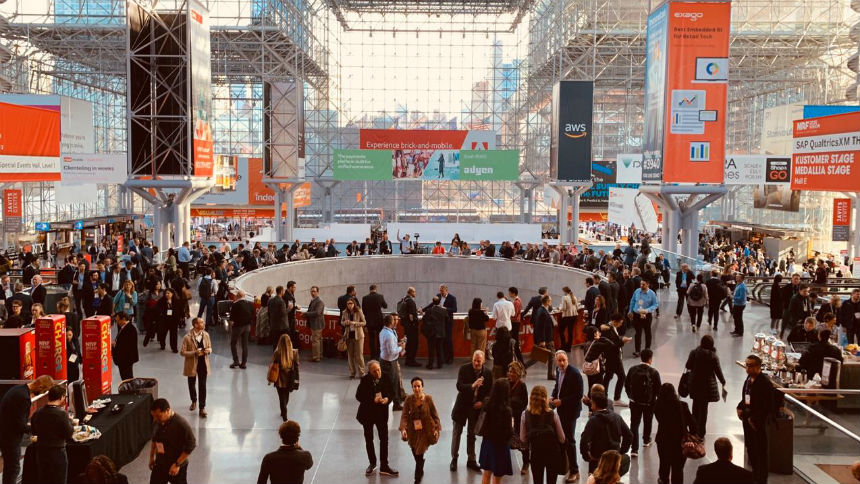
New York - Once again, at the beginning of this year, the annual meeting of the National Retail Federation (NRF) took place in the Big Apple, bringing together the most important thinkers (and executors) in the global retail industry since 1911.
The traditional event brought together 38,000 participants from 99 countries, all drawn to the theme 'Vision 2020'. That is, the vision of what retail can be this year and in the future.
This is a sensitive topic, full of opportunities and challenges, for a sector that has been highly impacted by impressive technological evolution.
Among the points discussed at the 2020 NRF edition was the observation of a decline in foot traffic in physical stores, given that online stores, e-commerce, direct channels, and marketplaces are gaining importance each year.
Digital channels influence 75% of purchases made in physical stores. Consumers get their information online and, when they enter the store, they usually already know the product and model they want to buy.
Previously, as reported by the German automaker Mercedes-Benz, consumers would visit the dealership up to seven times before making a purchase. Currently, this number has dropped to around 1.6.
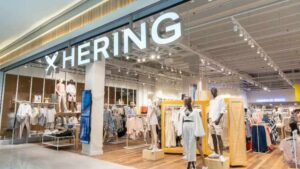
Furthermore, this "new" consumer seeks identification with the brand, which needs to be inclusive and socially responsible. They also expect the store to provide a friendly and welcoming physical environment, with pleasant service, and for their experience to be complemented by "extra" attractions, such as cafes or restaurants.
Discussions at NRF proved that physical stores, despite the somewhat gloomy predictions of a short time ago, remain strong. "Sales are not the only objective of a physical store; building a brand, branding, and engagement are also key," emphasized Martin Urrutia Islas, global head of retail innovation at Lego.
Trends like "pick up" (online sales and in-store pickup) are already a reality in retail operations. Besides eliminating logistics costs, the consumer receives the product in a short amount of time, managing their needs more efficiently.
When consumers go to pick up a product in-store, more than 39% end up buying another product.
When consumers pick up a product in-store, more than 39% end up buying another product. In other words, in addition to the logical objective of selling, physical stores become points of distribution, logistics, and entertainment.
Another trend that was widely discussed at NRF was PeopleConnect. After all, as Kevin Plank, CEO of the sports apparel brand Under Armour, reminded us, "retail is made up of people. It's customers, salespeople, and suppliers—people interacting with each other."
Plank emphasized that technology is meant to improve life, not distance people. Therefore, he said, "brands tend to have a vintage movement, of getting to know their consumer better and better."
He even gave practical examples of the challenges the brand faces. “We need to understand that someone who runs 2km is different from someone who runs 5km, and even more so from someone who runs 10km. In other words, all the technology that retail has at its disposal today could take our sector back to decades past, when we knew our customers by name.”
Reinforcing this idea, in a conversation with the Acelera Varejo group, the relationship director of Apple's flagship store on Fifth Avenue highlighted that the brand's sales representatives "have as their main objective to transfer knowledge of the technology and bring the company closer to the end customer."
With every purchase at Apple, everyone receives a customer satisfaction survey to better understand each service/sale conducted by the company.
The 109th edition of NRF has given us the certainty that we are moving towards a new inflection point. The omnichannel model is already a reality where artificial intelligence, business intelligence (BI), computer vision, collaborative networks, new formats, and disintermediation open up new possibilities every day.
Along these lines, John Furner, CEO of Walmart in the US, spoke about the role of retail as the market's main employer and the need to generate value for the community and employees.
Satya Nadella, Microsoft's global CEO, discussed how cloud computing will integrate all processes in the retail chain and how computer vision and artificial intelligence resources will automate processes, empower employees, and facilitate store operations. "We need to demystify technology, creating simple solutions that start from within the operation to reinvent the business model," said Nadella.
Among the challenges of this "new" retail landscape, in addition to the intensive use of data and the complete integration of channels, is voice commerce, which, due to its practicality, can be as impactful as web commerce and mobile commerce were.
In other words, voice assistants like Amazon's Alexa, Apple's Siri, and others could become powerful sales tools. After all, more and more people want to make the most of their time, managing it between work and family.
But at the same time, "it's no use thinking about delivering by drone or investing in some amazing technology if the basics aren't being done," says Sucharitta Kodali of the Forrester Group consultancy.
“There’s no point in thinking about drone delivery or investing in some amazing technology if the basics aren’t being done,” says Sucharitta Kodali of the Forrester Group consultancy.
At a time when global economies are experiencing high liquidity levels, low or even negative interest rates and inflation, it is necessary to ensure that this capital is invested in real businesses and that the retail sector receives investments in the expectation of increasingly broad returns.
The issue of liquidity could be a driving force to boost sales and retail in the coming years. The timing is right, and we want to believe that this will happen.
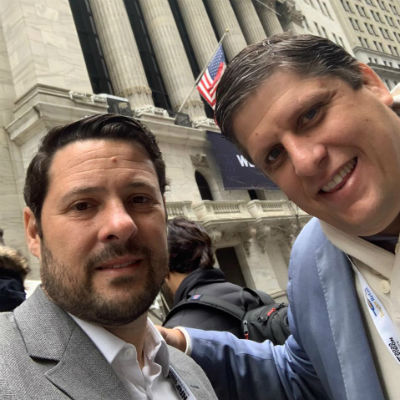
Pompeu Belusci and Rafael Parmigiano are co-founders of the Acelera Varejo Group, which brings together 2,000 retailers with a total revenue of R$ 60 billion per year.
Follow NeoFeed on social media. We're on Facebook ,LinkedIn , Twitter , and Instagram . Watch our videos on our YouTube channel and subscribe to our newsletter to receive daily news.