

The Central Bank decided to keep the benchmark interest rate unchanged at the Monetary Policy Committee meeting on Wednesday, December 10th. The monetary authority considers the Selic rate at 15% per year to be the most appropriate.
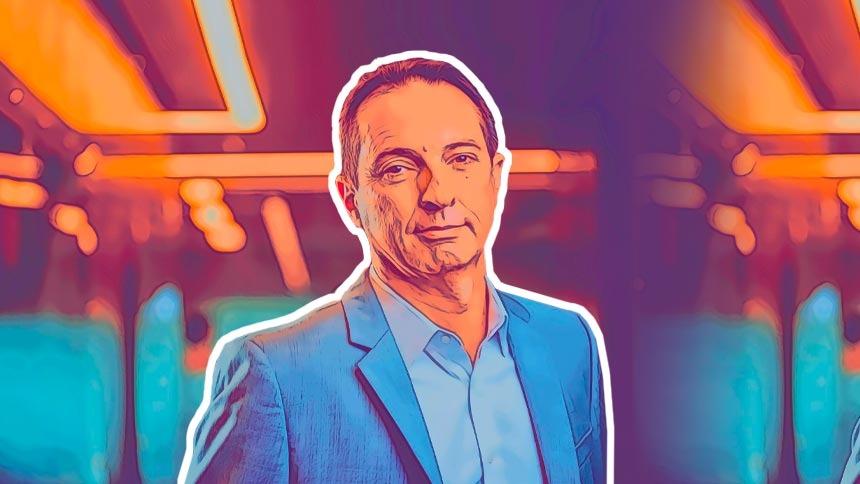
According to Marcelo Tangioni , president of Mastercard Brazil , the high Selic rate is a "bitter pill" to swallow in order to keep inflation close to the target center. The result, he says, is a slowdown in consumption, but this is necessary for the sustainability of the Brazilian economy.
“Of course, if interest rates were lower, we would probably sell more. But this is a time to be mindful. We can't just think about the short term,” says Tangioni, in an interview with NeoFeed .
“When you try to cool down consumption a bit, it has a direct impact on our business. But it’s a significant sacrifice that needs to be taken into account, thinking about the medium and long term,” he adds.
In the executive's view, Gabriel Galípolo's first year as head of the Central Bank has been marked by sound decisions. He believes there is a continuity in the path that had been followed by his predecessor, Roberto Campos Neto.
On Wednesday, the Brazilian Institute of Geography and Statistics (IBGE) announced that inflation in November reached 0.18%, bringing the Broad Consumer Price Index (IPCA) to 4.46% over the past 12 months.
With this, the index returns to the limit established by the government, of 4.5%, after 13 months outside the range. The target midpoint is 3% over 12 months, with a margin of 1.5 percentage points above or below.
In the interview, Tangioni also spoke about business, such as the recently launched World Legend card, aimed at ultra-high-income individuals, which will offer benefits such as a free business class ticket for a companion on select international routes.
Below are the main excerpts:
What is your assessment of Gabriel Galípolo's first year as head of the Central Bank?
He's doing very well. There's a continuity of work in relation to Roberto Campos Neto's term and in everything the Central Bank has been doing. Not only in relation to monetary policy, but also regarding our means of payment. With Galípolo, the Central Bank remains open and listening to us. He's been helping to increase competition and open up the market. From a management perspective, there has clearly been continuity in what existed before.
A large part of the productive sector has complained about the Selic rate remaining at 15% per year for an extended period. Do you consider this level to be bad?
It's not bad. It's necessary. The Central Bank's objective in maintaining the interest rate at this level is primarily to contain inflation, which is very bad for all sectors. For us, it is very important that inflation is under control. Unfortunately, this high rate is a bitter pill to swallow, but it is important for the sustainability of the economy.
"Unfortunately, this high [Selic] rate is a bitter pill to swallow, but it's important for the sustainability of the economy."
And how does a rate at this level help to contain inflation?
This ends up mitigating consumption. When you try to cool down consumption a bit, it has a direct impact on our business, which is very much tied to it. But it's an important sacrifice that needs to be taken into consideration, thinking about the medium and long term. We understand that there is an intention to bring inflation closer to the target. Even if it negatively impacts our business, it's important. Even if the impact isn't positive in the short term, we understand that this move is very necessary.
But isn't the impact on Mastercard significant in the short term, with this slowdown in consumption?
Of course, if interest rates were lower, we would probably sell more. But this is a time for awareness. We can't just think about the short term. Like other measures taken by the Central Bank, this one is justifiable. High inflation is bad in any scenario and bad for everyone. I remember the time of hyperinflation, which was a crazy scenario. Even though Brazil has advanced in financial inclusion, many people still don't have the means to save and protect themselves against currency devaluation.
In your view, then, are the reasons given by the president of the Central Bank to explain the current level of the Selic rate correct?
Yes, they are. I understand that all efforts necessary to reduce inflation are important at this time. And the interest rate is one of them.
"I understand that all efforts necessary to reduce inflation are important at this time. And the interest rate is one of them."
Mastercard recently launched its version for ultra-high-income earners, the World Legend. What are the prospects for its adoption in Brazil?
This launch is an important milestone. It's a product that will occupy the top of the pyramid, in terms of what we already offer in the high-income market. It will occupy the space that Mastercard Black has occupied over the years since its launch 19 years ago. It was a global launch, and Brazil was the second country to launch it, behind only the United States.
How many issuers are there now to offer the card?
So far, we already have seven issuers (Banco do Brasil, C6, BTG Pactual, Itaú, Picpay, Sisprime, and Sicredi). We are in negotiations with others who want to issue the card. And we expect to have the card distributed to consumers later this year. Even though we have more issuers, a limit has been established for each one. We want to keep this product very exclusive.
Is there a set volume?
We're talking about 0.1% of the Brazilian population (around 200,000 people). But this product isn't about large numbers. We'll have control. We're not going to rush into offering a bunch of cards. On the contrary.
What is the big difference?
There is a range of global benefits, including a gastronomic experience at major airports around the world. In Brazil, the first of these will be in Terminal 3 at Guarulhos Airport and is expected to open by the end of the year. The concept is by chef Alex Atala. Another example is the fast pass . In addition, there are local benefits. And, within World Legend, there is an even more exclusive benefit for private banking clients, defined by the issuers, which is Legend Exclusive.
What makes this line even more exclusive?
In addition to all the others, there is a complementary benefit: a complimentary business class ticket for a companion on selected international routes, granted upon entry. The bank decides who will receive this benefit.
Overall, how was 2025 for Mastercard in Brazil?
It was a very good year. We continue to grow quite robustly. We had important revolutions, such as click-to-pay (an electronic payment method without needing to enter card details), which is gaining traction with the entry of more commercial establishments. Today, our penetration of tokenized transactions in the country is over 50%. And Brazil is the number one market in tokenization. For eight years, Mastercard has been the leader in the Brazilian card market, with a 60% share . And this share increases every year.